This Intense 25-Minute ‘Twilight Zone’ Episode Still Feels Uncomfortably Real

Lloyd 'Happy Trails' Farley: the man, the myth, the legend. What can be said about this amazing - and humble - man that hasn't been said before? Or, more accurately, what can be said in public? Born in Calgary, Alberta, Canada, Lloyd is a master of puns and a humorist, who has authored one pun book to date - Pun and Grimeish Mint - and is working on a second. His time with Collider has allowed Lloyd's passion for writing to explode, with nearly 1,000 articles to his name that have been published on the site, with his favorite articles being the ones that allow for his sense of humor to shine. Lloyd also holds fast to the belief that all of life's problems can be answered by The Simpsons, Star Wars, and/or The Lion King. You can read more about Lloyd on his website, or follow his Facebook page and join the Llama Llegion. Happy trails!
Sign in to your Collider account
Every parent has experienced some version of it: You can hear your child, but you can't immediately find them. The sensation is unlike anything else, an inexplicable mix of panic, terror, and futility. It may last for mere seconds or, in very tragic cases, decades. But few people have the forum to talk about their experiences, let alone use one to craft one of The Twilight Zone's most terrifying episodes. That's exactly what famed sci-fi writer Richard Matheson did with "Little Girl Lost," inspired by an incident involving his own daughter.
"Little Girl Lost" Brings a Terrifying Incident Into 'The Twilight Zone'
As recounted in Marc Scott Zicree's The Twilight Zone Companion, Matheson explains the story's origins:
["Little Girl Lost"] was based on an occurrence that happened to our daughter... she cried one night and I went to where she was and couldn't find her anywhere. I couldn't find her on the bed, I couldn't find her on the ground. She had fallen off and rolled all the way under the bed against the wall. At first, even when I felt under the bed, I couldn't reach her. It was bizarre, and that's where I got the idea.
That painfully ordinary beginning is what makes the episode so unsettling 64 years later. The portal may belong to science fiction, but the fear driving the story remains instantly recognizable: A parent hears a frightened child calling out and cannot reach them. The incident was turned by Matheson into "Little Girl Lost," where parents Chris (Robert Sampson) and Ruth Miller (Sarah Marshall) hear the cries of their daughter Tina (Tracy Stratford, voiced by Rhoda Williams) from her bedroom, but she's nowhere to be found. She's not in her bed, nor is she under it, but has simply disappeared, as does their dog, Mac, when he runs under the bed to find her.
Chris reaches out to his friend Bill (Charles Aidman), a physicist, who comes over and discovers a portal on the wall that opens into what he theorizes as a fourth dimension. After Tina says that Mac is trying to pull her, they prompt Tina to follow Mac. Chris then walks through the portal and calls out to Mac in an effort to guide him home, but unbeknownst to him, the portal is slowly closing.
"Little Girl Lost" Helped Shape Decades of Sci-Fi
Matheson's daughter didn't disappear into another dimension, of course, but "Little Girl Lost" takes that brief panic and pushes it to a terrifying extreme, thanks to the performances of both Sampson and Marshall, who perfectly capture how any parent would react given a similar, albeit unlikely, situation. And while having a physicist friend is certainly convenient, Aidman does an excellent job of articulating the high-level theory, simplified in the script, in a respectful, non-condescending manner. Williams, too, manages to find that same level of panic from the child's point of view, unable to find her parents in a warped reality.
Collider Exclusive · Sci-Fi Personality Quiz Which Sci-Fi Hero Are You Most Like? Paul Atreides · Captain Kirk · Princess Leia · Ellen Ripley · Max Rockatansky
Five iconic heroes. Five completely different ways of facing an impossible universe. One of them shares your instincts, your values, and your particular way of refusing to back down. Eight questions will tell you which one.
🏜️Paul Atreides
🖖Capt. Kirk
✊Princess Leia
🔦Ellen Ripley
🔥Max Rockatansky
01
How do you lead when the stakes couldn't be higher? The way you lead under pressure is the most honest thing about you.
02
What is your greatest strength in a crisis? The quality that keeps you alive when everything else fails.
03
What is the thing you'd sacrifice everything else for? Your deepest motivation is your truest compass.
04
How do you relate to the people around you? Who you are to others under pressure is who you really are.
05
You're facing a threat that no one else believes is real. What do you do? How you respond when you're the only one who sees it defines everything.
06
What has your heroism cost you personally? Every hero pays. The question is what — and whether they'd pay it again.
07
How do you feel about the rules of the world you're in? Every hero has a relationship with the system. What's yours?
08
When everything is on the line, what keeps you going? The answer is the most honest thing about you.
Your Hero Has Been Identified Your Sci-Fi Hero Is…
Your answers point to the iconic sci-fi hero who shares your instincts, your values, and your particular way of facing the impossible.
Paul Atreides
You carry a weight most people would crumble under — the knowledge of what you're capable of, and the burden of what you might have to become.
- You see further ahead than others and you plan accordingly, even when the vision frightens you.
- You are driven by loyalty to your people and a sense of destiny you didn't ask for but can't escape.
- Paul Atreides is not simply a hero — he is someone who understands the cost of power and chooses to bear it anyway.
- That gravity, that willingness to carry what others won't, is exactly you.
Captain Kirk
You lead with instinct, warmth, and an absolute refusal to accept a no-win scenario — because you've always believed there's a third option nobody else has thought of yet.
- You take the mission seriously without ever taking yourself too seriously.
- Your crew would follow you anywhere, not because you demand it, but because you've earned it.
- Kirk's genius isn't tactical — it's human. He reads people, bends rules with purpose, and wills outcomes into existence through sheer conviction.
- That combination of warmth, audacity, and relentless optimism is unmistakably yours.
Princess Leia
You are the kind of person who holds the line when everyone else is losing faith — not because you're fearless, but because giving up simply isn't something you're capable of.
- You lead through conviction. Your voice carries because your belief is unshakeable.
- You gave up everything ordinary the moment you chose the cause, and you've never looked back.
- Leia is not a supporting character in her own story — she is the moral centre of the entire rebellion.
- That same fierce, principled, unbreakable core is what defines you.
Ellen Ripley
You are not reckless, not grandiose, and not particularly interested in being anyone's hero — you just refuse to stop when it matters.
- You see threats clearly, you document the truth even when no one listens, and when the time comes you handle it yourself.
- Ripley's heroism is earned, not performed. She doesn't have a speech — she has a flamethrower and a plan.
- You share her composure under the worst possible pressure, and her refusal to pretend the monster isn't there.
- When it counts, you don't flinch. That's everything.
Max Rockatansky
You have been through fire that would break most people — and what came out the other side is something the world underestimates at its peril.
- You don't ask for help, don't need validation, and don't wait for anyone to tell you the rules no longer apply.
- Your loyalty, when it finally arrives, is absolute — but it's earned in silence and tested in action, not in words.
- Max is not a nihilist. He is someone who lost everything and found, against his will, that he still has something worth protecting.
- That bruised, stubborn, ultimately human core is exactly yours.
Matheson's incident with his daughter not only inspired "Little Girl Lost," but also indirectly inspired other productions as well. The most obvious comparison is with 1982's Poltergeist, where a little girl, Carol Anne (Heather O'Rourke), is similarly drawn into another dimension, only by sinister forces, not happenstance. Like "Little Girl Lost," she can be heard, but not seen, and it's a parent who dives into the other dimension to rescue her, her mother, Diane (JoBeth Williams). Although no one has explicitly stated that Matheson's story inspired the film, Matheson states: "Well, Poltergeist was inspired by one of mine [stories], and I never got credit for it... They sort of used that idea and made their own concept of it." The recently wrapped sensation that is Stranger Things, too, has parallels to "Little Girl Lost," which stretched the concept across five full seasons.
One production that The Twilight Zone's "Little Girl Lost" definitely did inspire is a segment from The Simpsons' "Treehouse of Horror VI": "Homer³." It's a parody of the episode, with Homer (Dan Castellaneta) stepping in for Tina and Professor Frink (Hank Azaria) for Bill. As Frink explains it, Homer is in the third dimension, one up from their second dimension, and draws a box around the portal that's identical to the one that Bill draws in "Little Girl Lost." Bart (Nancy Cartwright) is the one sent in to save him, but, unfortunately, can not, with Homer landing in our world ("Mmmm... erotic cakes..."). That's quite the legacy, and for a single incident that befell writer Richard Matheson to leave such a lasting one is something out of The Twilight Zone itself.
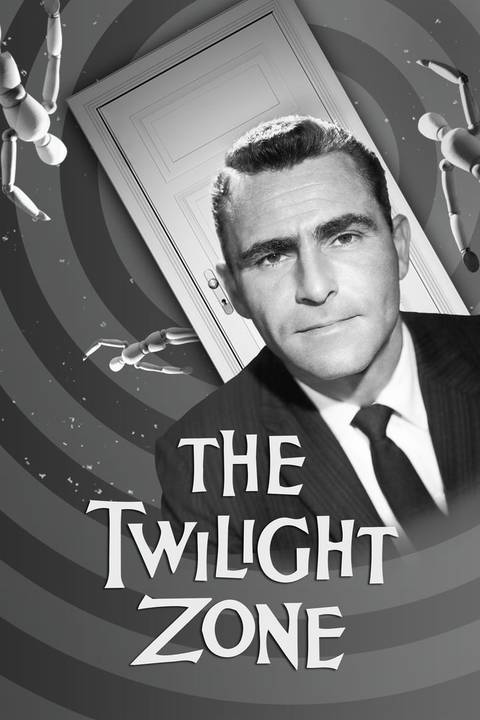
The Twilight Zone
- Release Date
- 1959 - 1964-00-00
- Network
- CBS
- Showrunner
- Rod Serling
- Directors
- John Brahm, Buzz Kulik, Douglas Heyes, Lamont Johnson, Richard L. Bare, James Sheldon, Richard Donner, Don Medford, Montgomery Pittman, Abner Biberman, Alan Crosland, Jr., Alvin Ganzer, Elliot Silverstein, Jack Smight, Joseph M. Newman, Ted Post, William Claxton, Jus Addiss, Mitchell Leisen, Perry Lafferty, Robert Florey, Robert Parrish, Ron Winston, Stuart Rosenberg
KioskNews shows a cleaned-up reading view extracted from the publisher’s page — the original always lives on their site, not ours.