The sky behind Van Gogh’s ‘Starry Night’ — Norfarazieda Hassan
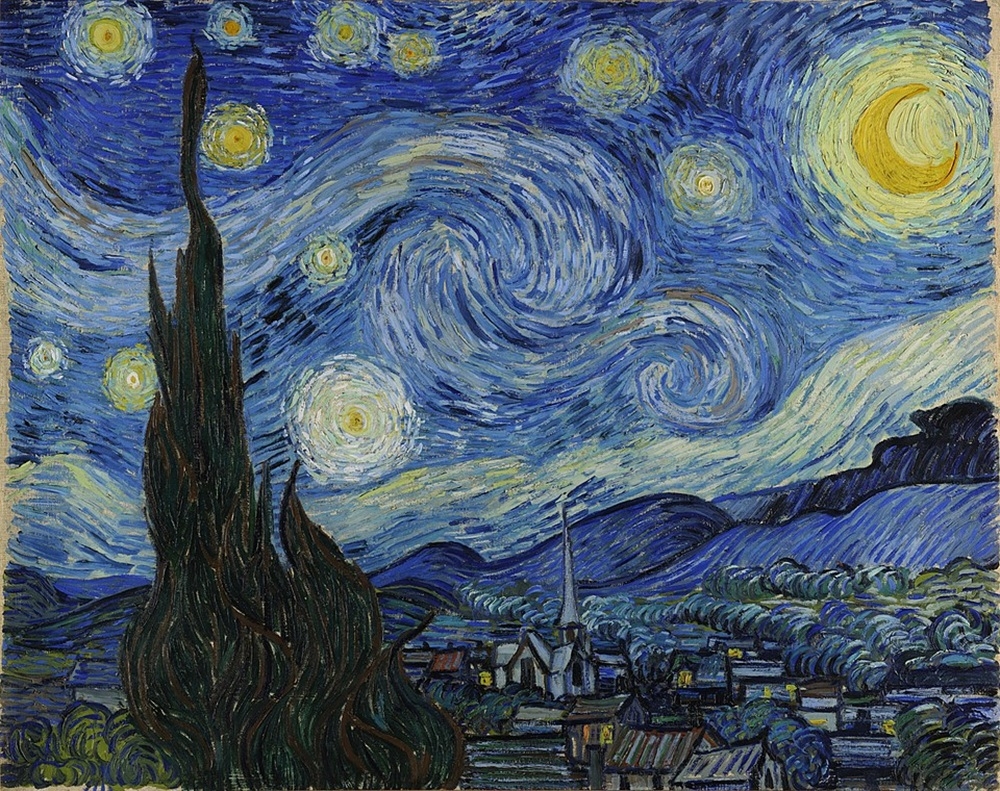
NOVEMBER 6 — More than a century after Vincent van Gogh painted one of the world’s most celebrated masterpieces, scientific research is offering a fascinating new perspective on the night sky that may have inspired it. For generations, Vincent van Gogh’s The Starry Night has captivated audiences with its swirling skies, luminous stars and extraordinary sense of movement.
But what if the celestial arrangement in this iconic painting was inspired by an actual morning sky?
A study published in Scientific Reports, part of the Nature Portfolio, explores precisely this possibility. Using astronomical simulations, historical records and mathematical analysis, researchers reconstructed the sky over Saint-Rémy-de-Provence, France, where Van Gogh was staying in 1889.
For generations, Vincent van Gogh’s ‘The Starry Night’ has captivated audiences with its swirling skies, luminous stars and extraordinary sense of movement. — Google Art Project pic
Their findings suggest that the arrangement of the Moon, Venus and the Hyades star cluster on July 22, 1889 closely resembles elements of the celestial composition depicted in the painting.
Can we see the beauty of the universe in the microscopic world of cells?
From a biological perspective, this discovery invites an interesting comparison between the vastness of the cosmos and the microscopic world of living cells. Look at stars and galaxies through a telescope, then observe cells and their intricate structures under a microscope. Both reveal fascinating patterns, clusters, networks and complexity. Despite their unimaginable differences in scale, they remind us of the extraordinary ways nature creates and organises its structures, from the architecture of a single cell to the vastness of the universe.
As a cancer immunologist, this parallel offers another way of appreciating the beauty of science. The cellular world, much like the night sky, holds patterns and interactions that are not always visible to the naked eye. Sometimes, it takes a different lens to discover the extraordinary within what initially appears ordinary.
The researchers combined astronomy with art history to investigate the possible origins of Van Gogh’s masterpiece. Their findings offer another perspective on how observation and imagination can come together to create something extraordinary.
Importantly, the study does not establish the definitive date on which the painting was completed. Rather, it presents a compelling scientific hypothesis about the sky that may have inspired its creation.
More than 137 years later, The Starry Night continues to reveal new dimensions of its beauty. From the vastness of the cosmos to the microscopic architecture of a cell, perhaps nature has always been creating art in patterns we are only beginning to understand. Sometimes, all it takes is a different lens to discover that the universe and the microscopic world are not so different after all.
* The author is a University Lecturer at Pusat Kanser Tun Abdullah Ahmad Badawi, Universiti Sains Malaysia and Visiting Scientist at the International Agency for Research on Cancer, World Health Organisation.
** This is the personal opinion of the writer or publication and does not necessarily represent the views of Malay Mail.
KioskNews shows a cleaned-up reading view extracted from the publisher’s page — the original always lives on their site, not ours.