Uranium cubes reveal why the German nuclear project failed
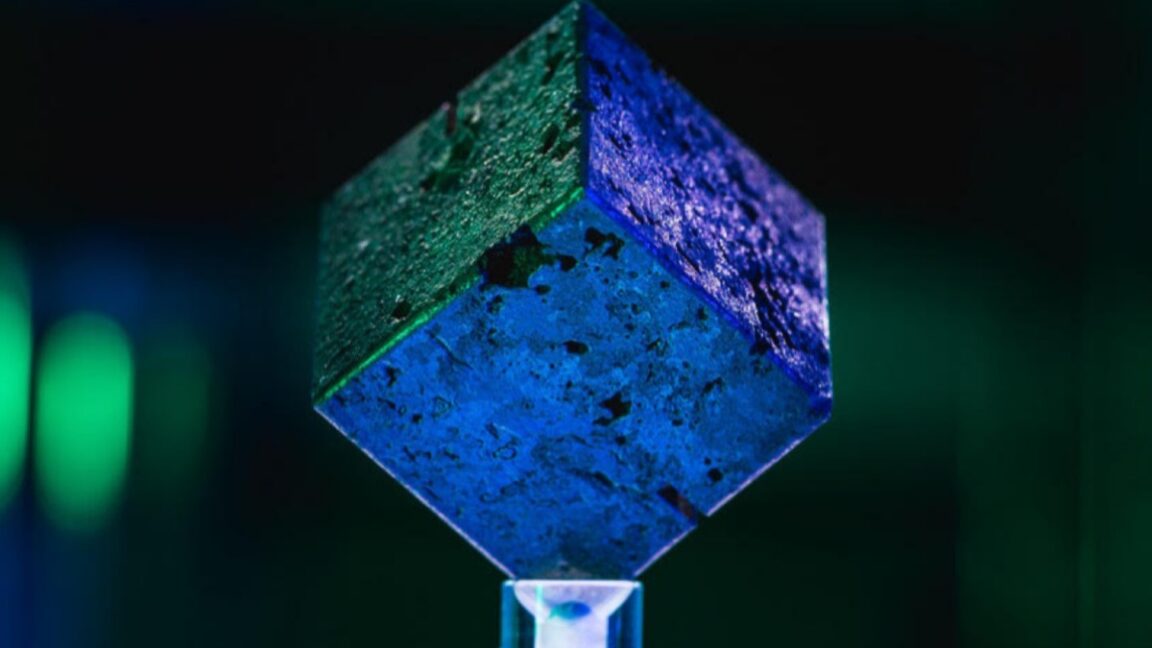
Koeth and Hiebert uncovered a box of declassified documents about German uranium in the National Archives and found about 400 other uranium cubes from a separate reactor experiment by the Gottow group. They concluded that the combined inventory would have been more than enough to achieve criticality in the B8 reactor, suggesting that Germany’s secretive, isolationist approach hampered their nuclear program because the two groups weren’t sharing information or resources.
This latest paper builds on that earlier work but reaches a different conclusion. Koeth, Hiebert, and their co-authors analyzed two of the surviving uranium cubes, along with combing through historical records, technical reports, correspondence, and similar archival sources to learn more about the uranium, heavy water, and graphite blocks used for the B8 reactor experiment.
Among their findings: The B8 reactor would have needed between 1,292 and 1,775 uranium cubes to achieve criticality, and twice the heavy water produced by the Norsk Hydro plant in Vemork, Norway—the only source at the time—over the course of the entire war. In short, “Our calculations suggest Heisenberg significantly underestimated the materials required,” the authors wrote.
The authors also cited prior work noting key differences in American and German graphite production. The former used petroleum coke. While some of this supply reached Germany, the British naval blockade in January 1940 deprived the Germans of that vital resource. The German nuclear physicists had to use metallurgical coke from the Ruhr, which had twice as many impurities as American coke. (The US scientists had similar issues until they located an unusually low-boron coke in Pennsylvania.) Thus, “no natural uranium, graphite-moderated pile could have gone critical” with the materials available to the German scientists at the time.
PNAS Nexus, 2026. DOI: 10.1093/pnasnexus/pgag282 (About DOIs).
KioskNews shows a cleaned-up reading view extracted from the publisher’s page — the original always lives on their site, not ours.