Mindanao can cut ‘dirty’ fuel use by 50% by 2030 – green groups
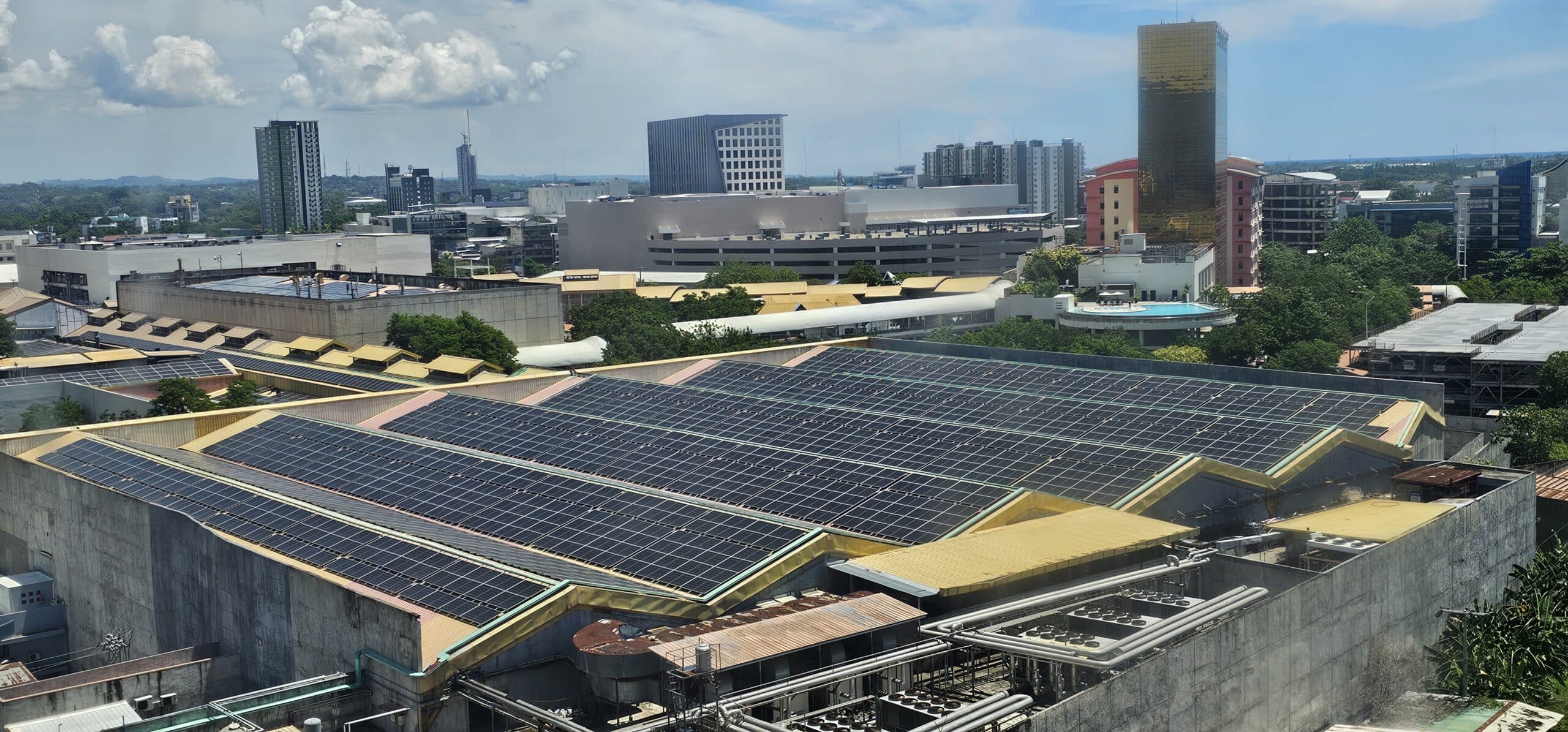

GENERAL SANTOS CITY– Renewable (RE) energy advocates have expressed confidence that Mindanao can be weaned away from its reliance on dirty, expensive fossil fuels to power its homes and industries by 50 percent by 2030, earlier than the rest of the country.
Under the country’s nationally determined contribution to reducing global greenhouse gas emissions, Mindanao has set a target to make renewable energy half of the region’s energy mix by 2030, on par with fossil fuels, mainly coal.
The Mindanao target is more ambitious than the national goal of setting renewable energy at 35 percent by 2030, and 50 percent by 2040.
Article continues after this advertisement
READ: Renewables, grid investments key to PH energy security
FEATURED STORIES
NEWSINFO
NEWSINFO
NEWSINFO
Speaking at the 4th Mindanao Clean Energy Forum (MCEF) here on Oct.22, Energy Assistant Secretary Sabine Marie Romero acknowledged the region’s “strong RE foundation,” citing the large combined capacity of state-owned hydroelectric power plants along the Agus and Pulangi rivers.
“Mindanao is where RE can thrive,” Romero said, adding that the region can lead the way in ensuring a clean energy future for the country.
The two-day MCEF this year was convened by Peace and Equity Foundation (PEF), Mindanao Development Authority (MinDA), Institute for Climate and Sustainable Cities (ICSC), Pinoy Aksyon for Governance and the Environment, the local government of General Santos City, General Santos City Chamber of Commerce and Industry Inc., and the Regional Development Council 12.
According to a study by the multi-stakeholder Mindanao Renewable Energy Acceleration and Coordination Hub (Minreach), the region needs 1,400 megawatts (MW) of additional installed RE capacity to achieve the 50:50 goal by 2030.
Article continues after this advertisement

Romero noted that as of July this year, the Department of Energy (DOE) had recorded 25 committed RE projects that have a total potential capacity of 1,026 MW, expected to be delivered between 2026 and 2029. Of these, the bulk, or 675.96 M, is solar capacity.
She said the DOE forecast RE to reach 56 percent of Mindanao’s energy mix by 2030 “if all committed and green energy auction projects come online as scheduled.”
Article continues after this advertisement
READ: The opportunities and challenges in solar power generation
Based on DOE data, Mindanao’s total installed energy capacity is as follows: renewable energy at 32.5 percent in 2025, while 35 percent of gross power generation, with 20 percent from hydro.
According to Romero, the agency has set policies and programs to enable RE investments in the country, such as easing the foreign ownership limit, the preferential dispatch of all RE resources in the wholesale electricity spot market, and a framework for developing offshore wind resources.
The DOE set a 10-year green energy auction plan that will offer a cumulative total of 25 gigawatts (GW) of RE capacity that will deliver power from 2027 to 2035.
For Mindanao, Romero cited a 20 GW integrated renewable energy and energy storage system, 20 MW roof-mounted solar, and a 175 MW run-of-river hydro plant. She added that these will be offered in upcoming green energy auctions.
READ: Advocates push to hasten RE transition in Mindanao
She emphasized the need to ensure the energy is “reliable, affordable and sustainable” so that it can power Mindanao’s industrialization, agribusiness expansion, urbanization and the rise of micro, small and medium enterprises.
“Every megawatt we build must answer” to the needs of the people, she emphasized, adding the need for transmission and distribution assets in the region to be ready to handle the increased generation capacity.
BenCyrus Ellorin, project director of Consumers for Renewable Energy Action in Mindanao, welcomed the “DOE buy-in” to step up building RE capacity in Mindanao and across the country.
Ellorin noted that Mindanao became dependent on coal-fired capacity in 2016, when the aging Agus and Pulangi plants could no longer serve the region’s expanding needs. This prompted distribution utilities to sign long-term supply contracts with coal-fired plants, sidelining RE capacities.
The shift to RE gained a sense of urgency as fossil fuel prices steadily climbed, especially due to the ongoing crisis in the Middle East, which raised electricity rates in the region, he added.
Cheap option
“Renewable energy is the cheapest option today,” said energy planner Alberto Dalusung III, ICSC energy transition adviser.
Dalusung said that moving forward, energy planning in the region must be sensitive to the needs of industries that underpin massive job creation, citing, for one, the planned expansion of a steel-making plant in Davao.
Assistant Secretary Romeo Montenegro, MinDA deputy executive director, emphasized the need for reliable, affordable energy to drive Mindanao’s “phenomenal growth,” inviting RE investors to locate on the island to help sustain its development.
Dalusung noted several path-breaking RE efforts started in Mindanao, including the installation of the first solar power farm and a hydropower plant designed to run in tandem with a solar capacity, all in Misamis Oriental, and a biomass power facility in Maguindanao del Norte.
He also pointed to the underutilized potential for rooftop solar capacity in Mindanao, which could add 5.1 GW to meet daytime peak demand. ICSC has placed the current utilization of this potential at less than one percent.
READ: Advocates want green energy projects hastened
Cauchie Garcia, PEF executive director, said laying the foundation for sustained RE investments requires addressing policy, financing, and implementation challenges.
Your subscription could not be saved. Please try again.
Your subscription has been successful.
Several entities have already “take[n] the first step,” Garcia said. Today, what is needed is “to encourage others to take the next step,” she added./coa
KioskNews shows a cleaned-up reading view extracted from the publisher’s page — the original always lives on their site, not ours.