Supermarket sales of essential goods spike after government call to stock up in case of crisis
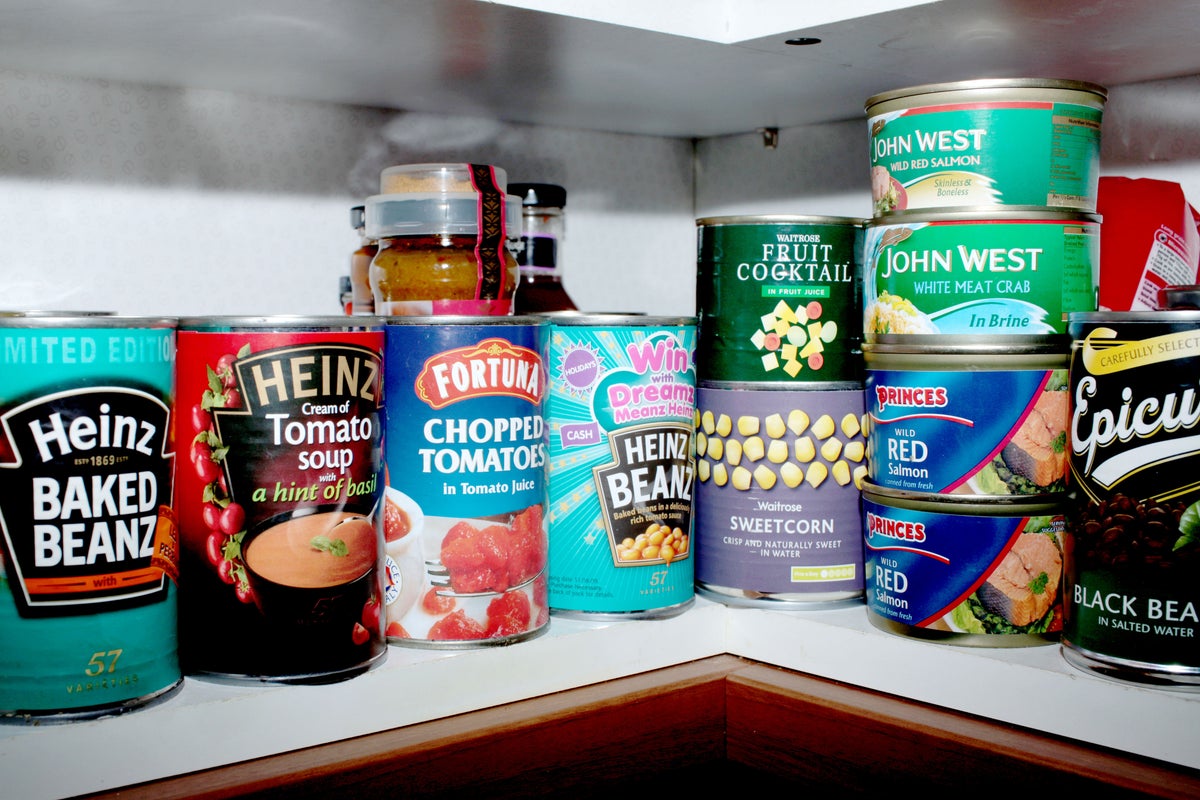
Sales of tinned food, wind-up radios and torches have all spiked after the government told people to stock up in case of a crisis.
Supermarket chain Iceland said sales of tinned food increased by 40 per cent over the weekend along with a spike in bottled water sales.
Meanwhile, Robert Dyas reported a 160 per cent increase in sales of radios compared to last week.
Maplin also said the sale of radios increased by 92 per cent, torches by 284 per cent and power banks by 106 per cent, since the same time last month, according to a report by BBC Newsnight.
It comes as the British public is being urged to prepare for food shortages and widespread disruption from cyber attacks and emergencies under a new national initiative.
UK households are advised to take simple steps in case everyday services are disrupted, like keeping a three-day supply of cash, bottled water and tinned food at home.
In response to the increase in retail sales of certain items, the defence secretary, Wes Streeting told BBC Newsnight: "It's encouraging that people are taking practical steps to be ready.
“Having a few everyday essentials at home, from tinned food to torches, helps households prepare for disruption, whether that's flooding, power cuts or burst pipes. We can all play our part in making Britain more resilient."
Iceland also reassured that their “supplies of these products remain healthy” and added that it was “clear” the public listened to the government's message.
What is included in the ‘Be Ready’ checklist?
The government says people should put together an emergency kit that includes key provisions you and your household would need during a short-term incident lasting three days, such as a power failure or a disruption to your water supply.
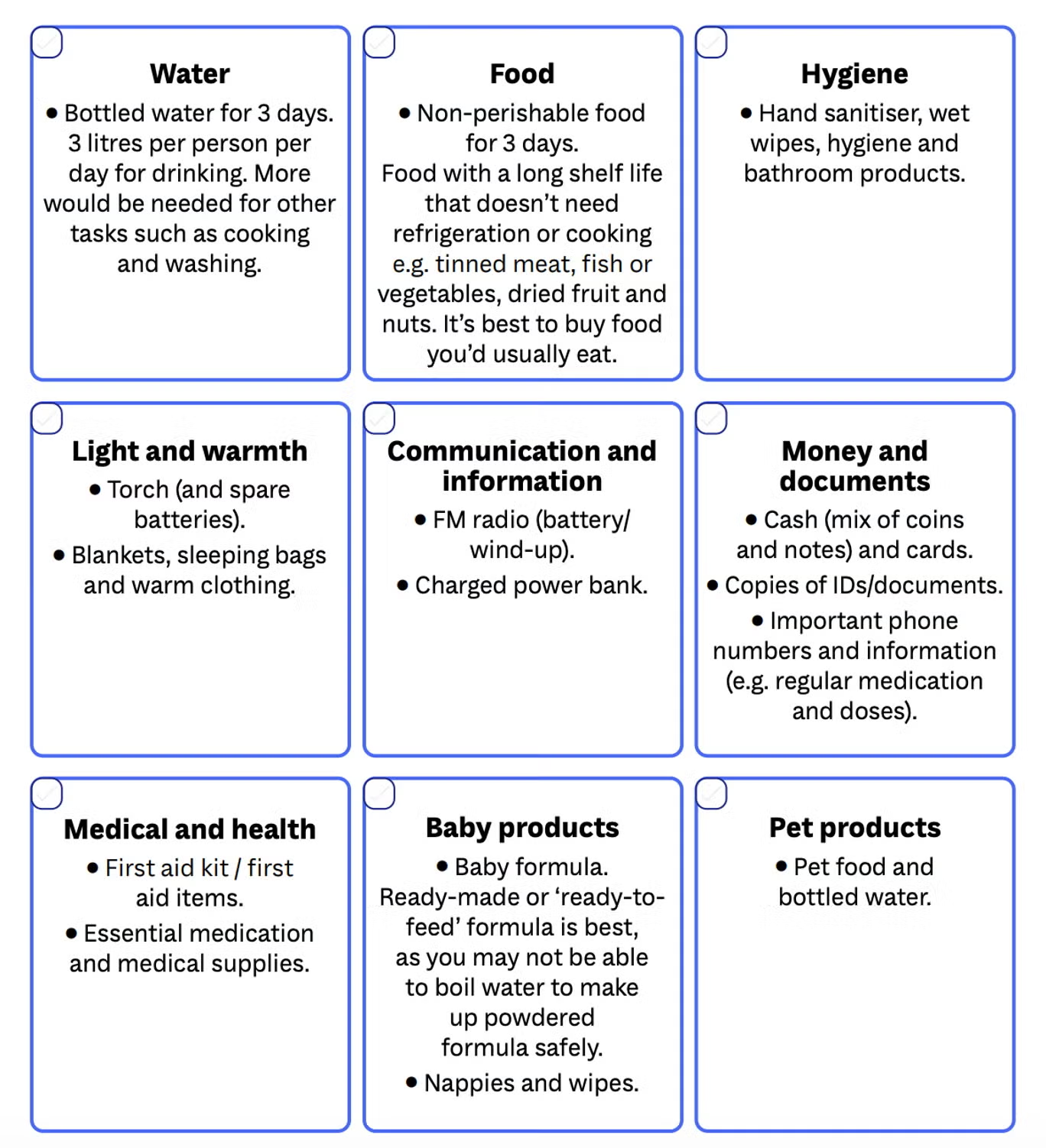
The checklist includes:
- Bottled water - enough bottled water for three days. Each person needs about 3 litres for drinking a day in addition to water needed for cooking and washing.
- Non-perishable food that doesn’t need cooking, such as ready-to-eat tinned meat, fruit or vegetables (and a tin opener). As with water, how much you need will vary based on your own circumstances. Don’t forget food for pets.
- Hand sanitiser and wet wipes for hygiene purposes when the water is off.
- Light and warmth – pack a torch and spare batteries as well as blankets, sleeping bags and warm clothing
- A portable power bank for charging your mobile phone.
- A battery or wind-up radio to get updates during a power cut – a car radio can be used, however in severe weather it might be safer to stay inside.
- A first aid kit (or some first aid items) including items such as waterproof plasters, bandages, a thermometer, antiseptic, eyewash solution, sterile dressings and gloves, medical tape for dressings, and tweezers.
- Baby supplies such as nappies and baby formula – ready made or ‘ready-to-feed’ formula is best as you may not be able to boil water or sterilise bottles.
- Money and documents - Keep cash in a mix of notes, coins and cards. Copies of IDs and documents. Also write down any important phone numbers and information such as regular medication and doses.
KioskNews shows a cleaned-up reading view extracted from the publisher’s page — the original always lives on their site, not ours.