US Congress lame-duck session explained: Key bills Republicans may push before January 2027
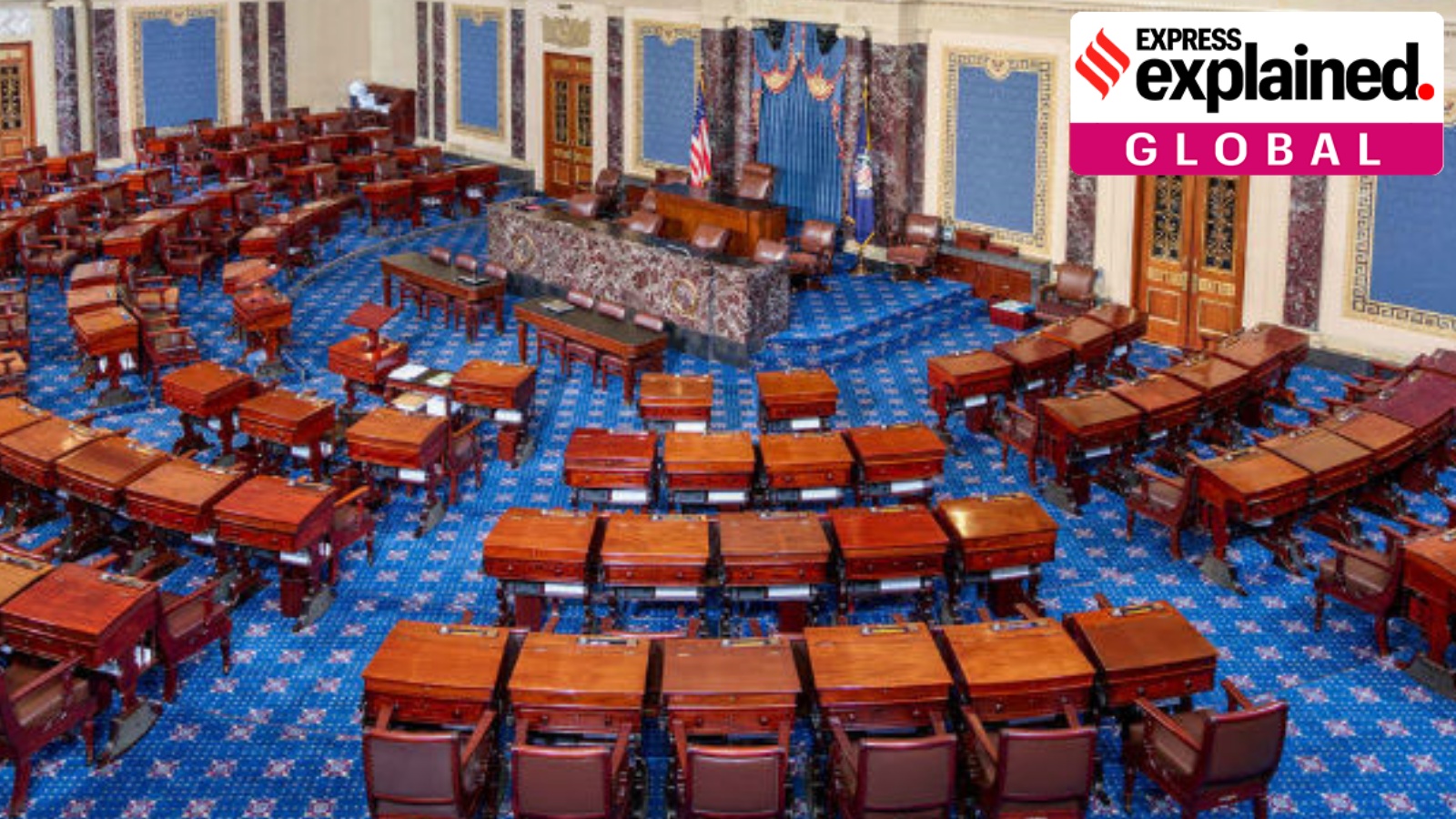
The newly elected 120th US Congress is scheduled to assume office on January 3, 2027.
Before that, however, the 119th Congress still has roughly seven weeks in office to pass key pending legislation — many of which require urgent attention — since a Congressional change resets any existing bills not passed into law back to square zero.
Known as the ‘lame-duck’ session, this period between shifts is the final opportunity the Republican dominant Congress has to push forward its agenda before acceding power. What are the bills that they are likely to prioritise? And are there any restrictions to their powers in this period? We explain.
What is the lame-duck period?
The ‘lame-duck’ period refers to the gap in time after when federal elections have occurred but before the newly elected members have officially taken office.
The members of Congress till January 3 retain all legislative powers and the ability to vote and pass bills. Any bill left unpassed — regardless of its completion progress — is considered permanently scrapped and the legislative process must be restarted should the bill remain on the Congressional docket.
It is also the period where lawmakers due to be replaced operate in a low-stakes environment since the question of re-election has already been answered. The term ‘lame-duck’ refers more to the waning political power which the sitting Congress is subject to as opposed to a limitation on its constitutional powers.
Story continues below this ad
What is the progress on pending legislation?
Today, several legislative proposals remain on the agenda. The immediate priority is the question of government funding.
Each year, the United States Congress is to pass 12 appropriation bills that provide federal agencies with the authority to incur obligations and make payments for government functions such as defence, transportation, healthcare and education. The funding runs on a cycle that begins on October 1 each year.
Currently, federal agencies are operating under a temporary arrangement under resolution P.L.119-103 — which expires on December 11. Leading up to October 1, Congress was unable to agree on a permanent budget which invoked the need for the Continuing Resolution (CR) providing interim funding. Should the budget fail to be agreed upon or another CR not be passed, there would be a funding lapse triggered from December 12. This may force federal agencies to suspend non-essential operations.
Three of the 12 appropriation bills have been cleared by the full House. The Senate, meanwhile, has yet to report any of its versions of the 12 bills, with disagreements over overall spending levels and President Trump’s proposed defence budget holding up negotiations.
Story continues below this ad
Congress may also seek to address healthcare funding extensions, infrastructure and permitting reforms, and outstanding presidential and judicial nominations.
How about defence spending? What does this mean for the Iran War?
Given the year that the US military has had with its dealings in the Middle East, defence remains yet another priority which must be resolved.
The National Defense Authorisation Act (NDAA) is a series of federal laws which form the framework for specifying the budget, expenditures and broader policies of the US Department of Defense (DoD). For FY2027, a version of the NDAA has been cleared by the House of Representatives and is currently awaiting Senate clearance.
Congress must reconcile the House and Senate versions before sending a final bill to Trump for approval.
Story continues below this ad
The implications of the NDAA extend beyond routine military expenditure. The Iran War, which began on February 28, 2026, has placed considerable pressure on American military resources, particularly its stockpiles of precision-guided munitions and missile interceptors.
The Trump administration has already sought additional funding to address these requirements. In June 2026, the White House submitted a supplemental defence funding request of approximately $67.1 billion for the Department of Defense, covering military operations against Iran as well as other defence priorities. This included funding for operational costs, replacement of damaged or depleted equipment, and accelerated munitions production.
Democrats, however, have questioned the scale of the administration’s defence spending demands. Under the new Congress, the NDAA could also become an avenue for lawmakers to seek greater reporting on military operations, weapons stockpiles and the use of defence funds
What restrictions does the outgoing Congress face?
Constitutionally, there are no special restrictions imposed on a lame-duck Congress. Until the 119th Congress concludes its term, its members retain the same legislative authority as they had before the midterm elections.
The several procedural limitations, however, are:
Story continues below this ad
- Currently, Congress has less time to complete its agenda. The second session of the 119th Congress ends on January 3, 2027, leaving little room for prolonged negotiations.
- A bill must ordinarily secure approval from both the House and Senate in identical form before it is presented to the President. Disagreements between the chambers can therefore delay legislation.
- Even if Congress passes a bill, Trump can veto it. Congress can override the veto only with a two-thirds majority in both chambers.
- Republican electoral defeat weakens their bargaining position.
The lame-duck session is hence a political contest over which policies the outgoing Republican majority can secure before Democrats assume control on January 3, 2027.
KioskNews shows a cleaned-up reading view extracted from the publisher’s page — the original always lives on their site, not ours.