‘Jensen’s nightmare’: Huawei, DeepSeek narrow AI chip ecosystem gap with Nvidia: report
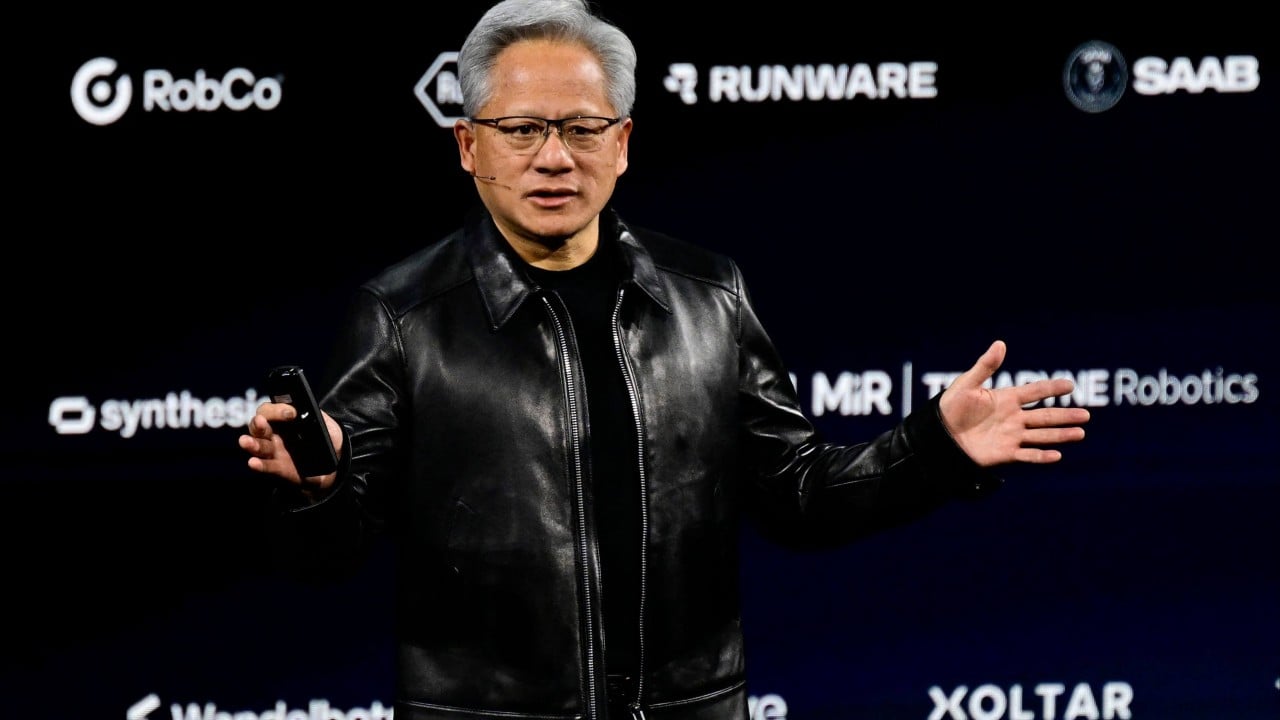
Deepening “symbiosis” with artificial intelligence model start-up DeepSeek is helping Chinese tech champion Huawei Technologies catch up with Nvidia’s chip hardware and software ecosystem in a scenario that could mean Jensen Huang’s “nightmare is starting to come true”, according to a new report.
DeepSeek’s latest software releases, on top of its increased experimentation with Huawei’s powerful Ascend 950PR chips, reveal that the technological gap with the US is closing, as the two firms increasingly harness their respective strengths to accelerate domestic innovation, research firm SemiAnalysis said in a report published on Thursday.
The research comes weeks after DeepSeek released software tools tailored to the Ascend chip ecosystem, including six software modules that mirror ones that the Hangzhou start-up had previously developed for Nvidia chips.
Among the releases was an Ascend-compatible version of TileLang, a custom programming language designed to streamline the development of high-performance kernels – essential code for operating chip hardware.
The Ascend version of TileLang can help promote a more “independent and controllable” domestic software ecosystem for graphics processing units, DeepSeek said late last month.
Growing symbiosis between DeepSeek and Huawei means that DeepSeek was likely to rely “primarily” on Huawei’s “already mature and well developed” technology stack by 2027 or 2028, SemiAnalysis said, “especially with the external and internal pressure to build a fully domestic Chinese ecosystem”.
Beijing has made tech self-reliance a national priority amid US export controls on China’s access to advanced chips, including Nvidia’s, and chipmaking equipment.
As Nvidia has increasingly found itself sidelined in the Chinese market, Huang has become increasingly outspoken about the significant impact of these restrictions on both his business and for US tech competitiveness.
In a podcast aired in April, just ahead of the launch of DeepSeek’s V4 foundation model, Huang said it would be “a horrible outcome” for the US if DeepSeek optimised its models to be trained and run on Huawei chips, claiming that China “will become superior to” the US as a result.
“From the software results so far and testing on 950PR, the ecosystem gap is definitely closer with DeepSeek’s help on top of Huawei’s work. Jensen’s nightmare is starting to come true,” SemiAnalysis said in its report.
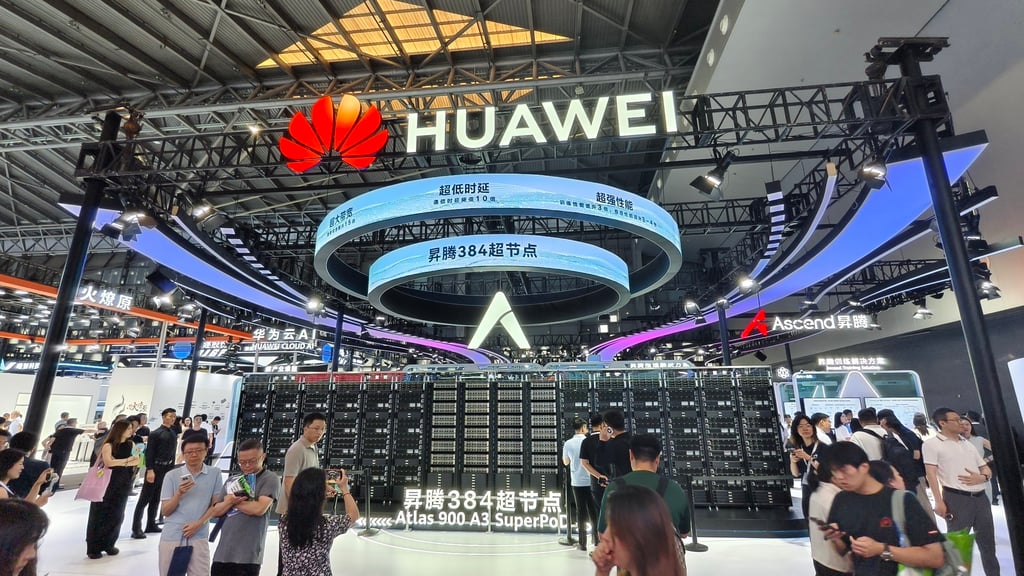
The latest analysis provides further details on how the two companies work together to accelerate innovation, such as DeepSeek’s testing of model-specific workloads on the Ascend hardware and software ecosystem.
DeepSeek has also provided Huawei with early access to the models themselves, with Huawei announcing “Day-0” inference support – the chips that run an AI model, not the chips used to train the model – for major updates like DeepSeek V4 and V4.1.
Still, the Ascend 950PR – unveiled by Huawei in March – lags Nvidia’s H100 in absolute performance, SemiAnalysis said. Nvidia began shipping the H100 in 2022. However, Huawei engineers are demonstrating “good work”, with their best Ascend kernels achieving high levels of efficiency at 99.7 per cent of their theoretical ceiling.
The report also noted remaining challenges such as hardware configurations outside DeepSeek’s specific supernode set-ups, which may face compatibility hurdles for the broader industry.
Most optimisations to date have focused on large-scale supernodes, leaving unresolved issues for developers attempting to run Ascend hardware on standard x86 host processors instead of Huawei’s native architectures.
However, benefits from continued collaboration between the two companies could also be multiplied in the future. “Other operators serving DeepSeek can reuse kernels and deployment practices, while other labs can build new models on shared compiler capabilities,” the SemiAnalysis analysts wrote.
“If these users contribute fixes and optimisations back, the gains can compound.”
KioskNews shows a cleaned-up reading view extracted from the publisher’s page — the original always lives on their site, not ours.