9 Perfect Hard Sci-Fi Books That I Knew Would Be Masterpieces From the First 10 Pages

Diego Pineda has been a devout storyteller his whole life. He has self-published a fantasy novel and a book of short stories, and is actively working on publishing his second novel.
A lifelong fan of watching movies and talking about them endlessly, he writes reviews and analyses on his Instagram page dedicated to cinema, and occasionally on his blog. His favorite filmmakers are Andrei Tarkovsky and Charlie Chaplin. He loves modern Mexican cinema and thinks it's tragically underappreciated.
Other interests of Diego's include reading, gaming, roller coasters, writing reviews on his Letterboxd account (username: DPP_reviews), and going down rabbit holes of whatever topic he's interested in at any given point.
Sign in to your Collider account
Sometimes—most often, it's probably fair to say—hard science fiction books take at least a few chapters to really pick up steam and completely hook the reader. Even the genre's greatest masterpieces are subject to such a phenomenon, which should really not be surprising. After all, a hard sci-fi author has been tasked with introducing the reader to a whole new version of reality while remaining loyal to hard sciences like physics and biology, and building the scaffolding for that world can take some time.
Some famous hard sci-fi masterpieces out there, however, take no longer than 10 pages to immediately scream "masterpiece." There's nothing wrong with a book that's more slow-burning, but people who prefer sci-fi novels that immediately assert their stratospheric level of quality ought to check these out. When talking about these legendary sci-fi books, you could very well close the book right as you hit page 10 and reasonably think to yourself, "I'm convinced that what I'm about to read will be a 10/10."
'Children of Time' (2015)

Various authors are currently working in the field of hard science fiction who could very deservedly be considered absolute masters of the subgenre, and Adrian Tchaikovsky is one. People looking for a good entry point into his work needn't look much further than Children of Time, the first book in the series that carries its name. When it won the Arthur C. Clarke Award in 2016, the director of the award program described the novel as having a "universal scale and sense of wonder reminiscent of Clarke himself."
This is, indeed, one of the best sci-fi books of the past 20 years, and you can tell that that's the sort of experience that you're in for well before you hit the book's 10th page. Instead of easing the reader into his universe with slow, meticulous exposition, Tchaikovsky throws them right into a tragic scene that perfectly encapsulates the book's themes of scientific hubris on a potent scale.
'Tau Zero' (1970)

The winner of seven Hugo Awards and three Nebula Awards, Poul Anderson was one of the cornerstone authors of 20th-century speculative fiction who helped build the bridge between the Golden Age of science fiction and the genre's modern era. The novel most often regarded as his magnum opus is Tau Zero, based on his short story To Outlive Eternity. It does what every hard sci-fi masterpiece should do, striking a perfect balance between complex physics and deeply moving human drama.
The best part? You don't need to get too deep into Tau Zero to become thoroughly captivated by its narrative and Anderson's wonderfully efficient prose. Constructed purely on the scientific basis of Einstein's theory of relativity, this exquisitely breezy novel (which is only slightly longer than 200 pages) finds poetry in rigorous science right as it kicks off. By framing the departure from Earth as a solemn, tragic sacrifice, Anderson builds an immediate sense of emotional and narrative scale that's hard to resist.
'Red Mars' (1992)

Covering the settlement and terraforming of Mars over nearly two centuries, Kim Stanley Robinson's Mars trilogy is widely considered a major turning point in the modern history of hard sci-fi. The first book in the series, Red Mars, is particularly strong, which led it to win the Nebula Award for Best Novel in 1993. Thanks to its scientific rigor, sociopolitical nuances, and philosophical depth, it has aged as one of the best space sci-fi books of its era.
Indeed, Red Mars is often considered one of the best sci-fi books of the 1990s, and the reasons why become immediately clear as soon as one opens the book and begins reading. Robinson instantly and effectively establishes a vibrant, dazzlingly enrapturing utopian world. But as soon as the author has painted this beautiful picture of the heights of humanity's scientific achievements, he quickly subverts that beauty with a scene of political betrayal and cold-blooded violence.
'Dragon's Egg' (1980)

Written by American physicist and author Robert L. Forward, a writer whose background in aerospace engineering and gravitational wave detection research always profoundly informed his speculative fiction work, Dragon's Egg is one of the most awfully underrated science fiction gems of the '80s. Even though people who aren't hardcore hard sci-fi fans are likelier to find its rigorous language a bit too complicated, those already in love with the subgenre are almost guaranteed to love it.
It would have been easy for Forward to throw the reader right into extensively technical exposition dumps, but instead, the first 10 pages of Dragon's Egg are a masterclass in balancing raw scientific language with deeply compelling worldbuilding. Forward uses these pieces to track the history of a massive star, describing it with such mind-boggling precision that hard sci-fi fans who somehow haven't read Dragon's Egg are seriously missing out.
'Seveneves' (2015)

Neal Stephenson is another one of the most massively celebrated speculative fiction authors currently working, a completely groundbreaking titan of the sci-fi genre who has crafted some of the most perfectly written hard sci-fi books ever. One such masterpiece is Seveneves, a hugely ambitious spectacle that employs nearly 1,000 pages to chronicle 5,000 years of futuristic human history while somehow still feeling rapidly paced from cover to cover.
The book opens with one of the most legendary opening lines in the history of science fiction literature: "The Moon blew up without warning and for no apparent reason." If that's not an instant hook, what could possibly be? Stephenson then spends the next 10 pages laying out the science, establishing the scale of the incident, and completely recontextualizing virtually every aspect of humanity's existence. Though you can get to page 10 convinced that Seveneves will be a masterpiece, it's tough to stop there and not want to continue reading onward.
'The Martian' (2011)
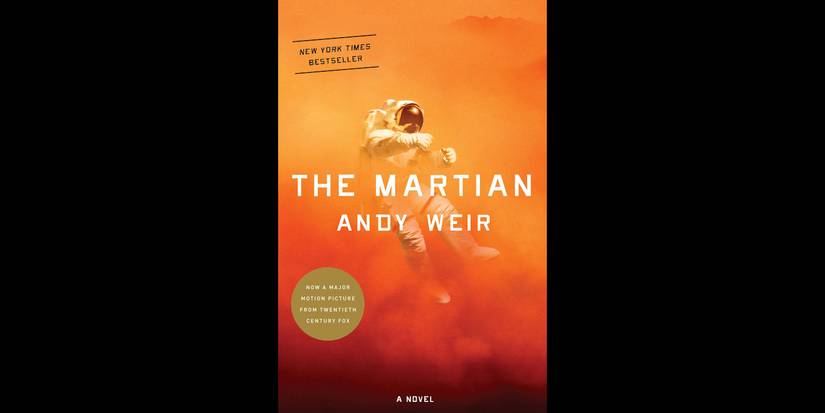
Andy Weir has only three published novels under his belt thus far, yet that has already been more than enough for him to steadily establish himself as one of the most universally beloved and hugely accessible hard sci-fi authors currently working. And as far as ideal gateway points for people who have never read a hard sci-fi novel go, it doesn't get much better than The Martian, one of the best techno-thriller books of all time.
One of the main reasons why The Martian is so refreshingly accessible even for people who have never read any hard sci-fi is Weir's admirable balance between scientific rigor and delightful wit. Nowhere is that clearer than in the book's introductory pages. Quickly and quite amusingly, Weir establishes the urgency of protagonist Watney's situation, the character's instantly compelling tone of voice, and the goal of the story as a whole. You don't get to read the opening line "I'm pretty much f—d" and not want to keep reading.
Collider Exclusive · Sci-Fi Personality Quiz Which Sci-Fi Hero Are You Most Like? Paul Atreides · Captain Kirk · Princess Leia · Ellen Ripley · Max Rockatansky
Five iconic heroes. Five completely different ways of facing an impossible universe. One of them shares your instincts, your values, and your particular way of refusing to back down. Eight questions will tell you which one.
🏜️Paul Atreides
🖖Capt. Kirk
✊Princess Leia
🔦Ellen Ripley
🔥Max Rockatansky
01
How do you lead when the stakes couldn't be higher? The way you lead under pressure is the most honest thing about you.
02
What is your greatest strength in a crisis? The quality that keeps you alive when everything else fails.
03
What is the thing you'd sacrifice everything else for? Your deepest motivation is your truest compass.
04
How do you relate to the people around you? Who you are to others under pressure is who you really are.
05
You're facing a threat that no one else believes is real. What do you do? How you respond when you're the only one who sees it defines everything.
06
What has your heroism cost you personally? Every hero pays. The question is what — and whether they'd pay it again.
07
How do you feel about the rules of the world you're in? Every hero has a relationship with the system. What's yours?
08
When everything is on the line, what keeps you going? The answer is the most honest thing about you.
Your Hero Has Been Identified Your Sci-Fi Hero Is…
Your answers point to the iconic sci-fi hero who shares your instincts, your values, and your particular way of facing the impossible.
Paul Atreides
You carry a weight most people would crumble under — the knowledge of what you're capable of, and the burden of what you might have to become.
- You see further ahead than others and you plan accordingly, even when the vision frightens you.
- You are driven by loyalty to your people and a sense of destiny you didn't ask for but can't escape.
- Paul Atreides is not simply a hero — he is someone who understands the cost of power and chooses to bear it anyway.
- That gravity, that willingness to carry what others won't, is exactly you.
Captain Kirk
You lead with instinct, warmth, and an absolute refusal to accept a no-win scenario — because you've always believed there's a third option nobody else has thought of yet.
- You take the mission seriously without ever taking yourself too seriously.
- Your crew would follow you anywhere, not because you demand it, but because you've earned it.
- Kirk's genius isn't tactical — it's human. He reads people, bends rules with purpose, and wills outcomes into existence through sheer conviction.
- That combination of warmth, audacity, and relentless optimism is unmistakably yours.
Princess Leia
You are the kind of person who holds the line when everyone else is losing faith — not because you're fearless, but because giving up simply isn't something you're capable of.
- You lead through conviction. Your voice carries because your belief is unshakeable.
- You gave up everything ordinary the moment you chose the cause, and you've never looked back.
- Leia is not a supporting character in her own story — she is the moral centre of the entire rebellion.
- That same fierce, principled, unbreakable core is what defines you.
Ellen Ripley
You are not reckless, not grandiose, and not particularly interested in being anyone's hero — you just refuse to stop when it matters.
- You see threats clearly, you document the truth even when no one listens, and when the time comes you handle it yourself.
- Ripley's heroism is earned, not performed. She doesn't have a speech — she has a flamethrower and a plan.
- You share her composure under the worst possible pressure, and her refusal to pretend the monster isn't there.
- When it counts, you don't flinch. That's everything.
Max Rockatansky
You have been through fire that would break most people — and what came out the other side is something the world underestimates at its peril.
- You don't ask for help, don't need validation, and don't wait for anyone to tell you the rules no longer apply.
- Your loyalty, when it finally arrives, is absolute — but it's earned in silence and tested in action, not in words.
- Max is not a nihilist. He is someone who lost everything and found, against his will, that he still has something worth protecting.
- That bruised, stubborn, ultimately human core is exactly yours.
'Blindsight' (2006)
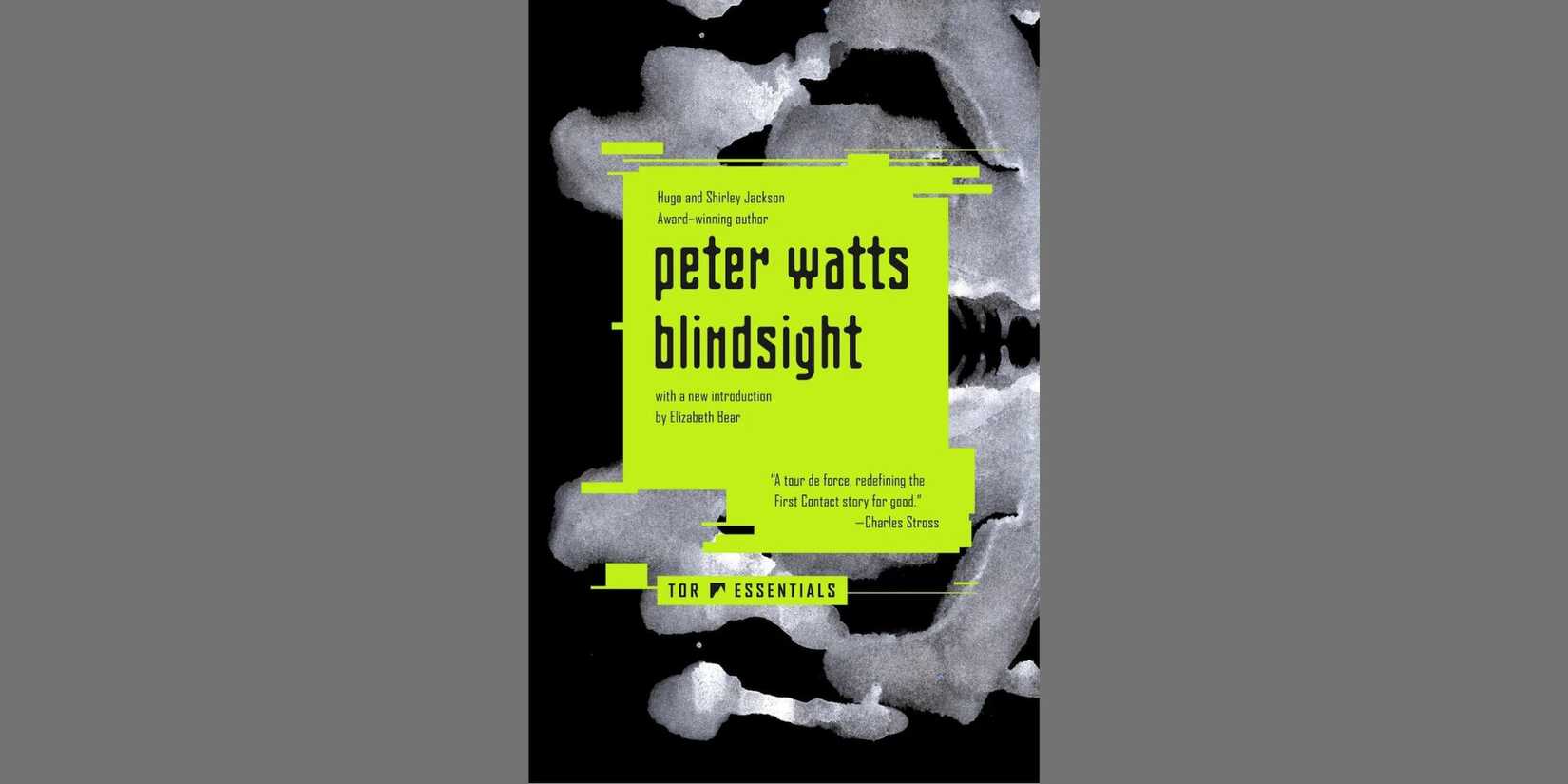
The world of Canadian science fiction is one filled to the brim with literary masterpieces that often don't receive nearly as much love as they deserve, and Peter Watts' Blindsight is arguably one such novel. Where most stories about humanity's first contact with an alien species pretty much immediately assume that the aliens will be interested in somehow interacting with humans, Blindsight is built on the premise of an alien race that possesses no self-awareness and sees consciousness as humanity's biggest weakness.
Blindsight is one of those sci-fi books that keep you hooked throughout, and that's largely because from the moment those first 10 pages kick off, you get all the thematic and narrative richness of that aforementioned fascinating premise. There's cosmic horror, compelling character writing, a terrifyingly bleak description of humanity, and cutting-edge scientific prose. What more could a hard sci-fi lover possibly ask for?
'Diaspora' (1997)

Australian writer and mathematician Greg Egan is one of the greatest and most uncompromising hard science fiction authors of the modern era, celebrated for how he blends math and physics into the deeply emotional and philosophical core of his stories. One such masterpiece is Diaspora, based on the short story Wang's Carpets. Post-humanism became a defining theme in sci-fi during the '80s, and Diaspora is one of the defining cornerstones of the genre's fascination with the concept.
The book's first pages are actually a glossary explaining many of the novel's unique concepts, since Egan created several new fictional physics theories for the book. With this basis, the actual first 10 pages of the story are made all the more gripping. The book's first chapter, which describes a digital consciousness being born out of pure math inside a supercomputer, is as hyper-detailed as it is surprisingly beautiful. After page 10, Egan has completely prepared the reader to explore a cosmos where the limitations of flesh and blood are downright irrelevant.
'The Three-Body Problem' (2008)
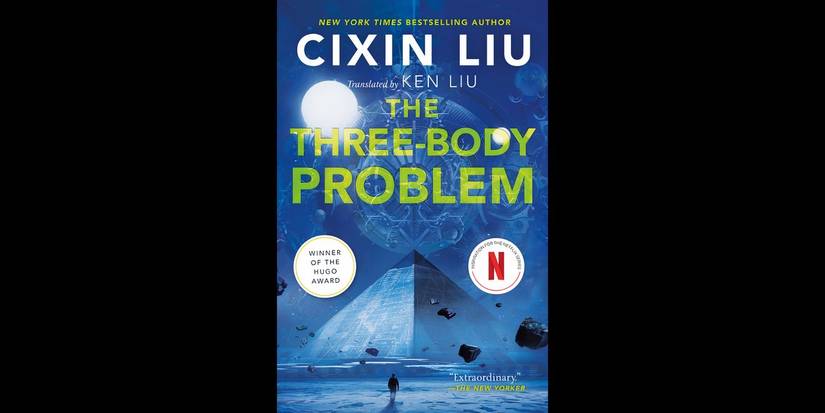
Chinese computer engineer and sci-fi writer Liu Cixin penned the Remembrance of Earth's Past trilogy, which is easily among the greatest hard sci-fi book sagas of all time. It's one of the sci-fi book series with the best lore, and it all begins with the book that many would argue is where the series peaked: The Three-Body Problem, named after the eponymous physical concept from orbital mechanics. The book was originally written in Chinese, while its English translation became the first novel by an Asian writer to win a Hugo Award for Best Novel.
The praise for Three-Body Problem seems to not have died down in the slightest in nearly two decades, and that's entirely well-deserved. The whole trilogy is largely modeled after and deeply reflective of Chinese history and culture, and the first book's introductory pages make the bold choice of opening in 1967 Beijing, tracking a shootout between rival bands of teenage Red Guards. By first painting the deepest irrationality of human nature, the hard sci-fi that Three-Body Problem follows is made all the more compelling.
KioskNews shows a cleaned-up reading view extracted from the publisher’s page — the original always lives on their site, not ours.