10 Great Hammer Horror Movies Nobody Talks About
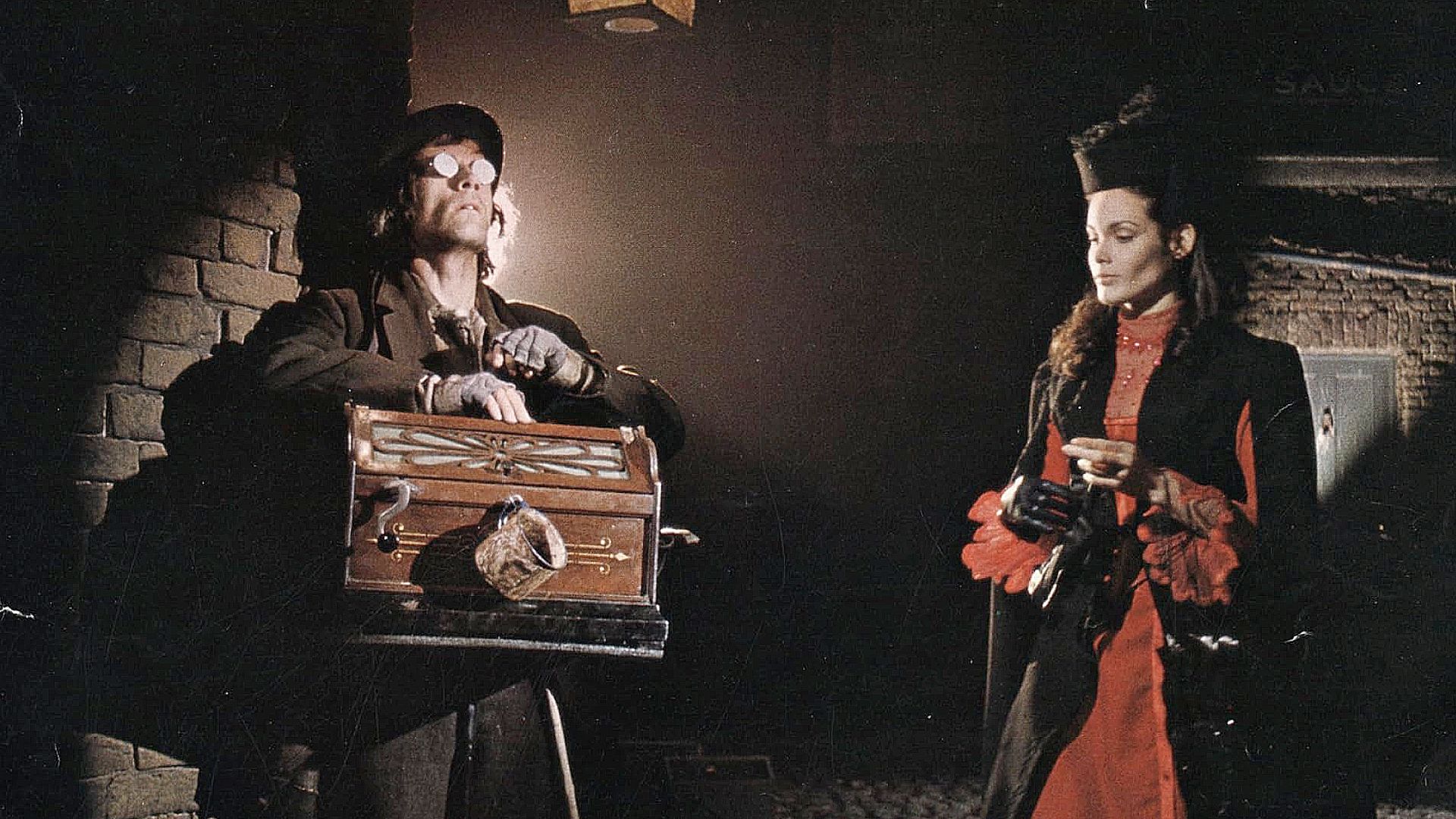
Hammer Films is synonymous with horror, but some of its greatest installments often go overshadowed. The British studio helped define the horror genre in the 1950s, 1960s, and 1970s through its lavish Gothic productions, iconic monsters, and recurring stars like Christopher Lee and Peter Cushing. Movies such as Horror of Dracula, The Curse of Frankenstein, and The Devil Rides Out are cornerstones of horror history – and deservedly so.
The downside of Hammer's success is that many of the studio's most interesting films have been overshadowed by its biggest classics. While audiences continue to celebrate Dracula, Frankenstein, and the Mummy, some of Hammer's strangest, most ambitious, and most atmospheric productions have quietly slipped under the radar. These include psychological thrillers, folk-horror precursors, unusual literary adaptations, and movies that experimented with genres far beyond traditional Gothic horror.
These British horror films are particularly rewarding because many of them feel so different from Hammer's popular image. Some feature Christopher Lee and Peter Cushing in unexpected roles. Others push the studio toward psychological suspense, adventure storytelling, or dreamlike surrealism. Together, they reveal a company that was often more adventurous than its reputation suggests. For viewers who have already seen Hammer's most famous titles, these underrated gems offer some of the studio's most fascinating discoveries.
Dr. Jekyll & Sister Hyde (1971)

Few Hammer films are as inventive as Dr. Jekyll & Sister Hyde. Loosely adapting Robert Louis Stevenson's classic novella, the movie transforms the famous scientist's alter ego into a woman rather than a monstrous male counterpart.
The premise allows Dr. Jekyll & Sister Hyde to explore themes of gender, identity, and transformation in ways that feel surprisingly modern. Ralph Bates gives an excellent performance as Jekyll, while Martine Beswick is equally compelling as the seductive and increasingly dangerous Sister Hyde.
Despite its provocative concept, Dr. Jekyll & Sister Hyde never loses sight of its entertainment value. It combines Gothic horror, Victorian melodrama, and dark humor into a uniquely enjoyable package. More than fifty years later, it remains one of Hammer's boldest reinterpretations of a literary classic and one of the studio's most fascinating cult favorites.
Captain Kronos: Vampire Hunter (1974)

If Hammer had successfully launched a horror equivalent of James Bond or Zorro, it might have looked something like Captain Kronos: Vampire Hunter. Starring Horst Janson as the titular swordsman, Captain Kronos follows a professional vampire hunter who travels the countryside and battles supernatural threats.
Captain Kronos is simultaneously a vampire film, a swashbuckling adventure, a mystery, and an action movie. Kronos himself is a refreshing departure from the scholars and doctors who typically populate Hammer productions. He fights monsters with a sword and approaches vampire hunting like a seasoned gunslinger.
Many consider Captain Kronos one of Hammer's great missed opportunities. The character feels perfectly suited to an ongoing franchise, and the film's energetic blend of horror and adventure remains hugely entertaining decades later.
Vampire Circus (1972)

By the early 1970s, Hammer was experimenting with ways to refresh its vampire formula. Few results were as unusual or memorable as Vampire Circus. Rather than relying on Gothic castles and aristocratic bloodsuckers, Vampire Circus introduces a traveling circus whose performers conceal a deadly secret.
Vampire Circus feels almost dreamlike. Director Robert Young deploys a lot of surreal imagery, bizarre transformations, and a carnival atmosphere that often borders on the hallucinatory. The circus performers themselves are among Hammer's most distinctive villains, creating an unsettling sense that danger could emerge from any act or attraction.
Vampire Circus is particularly interesting because of how different it feels from most Hammer vampire films. There is a fairy-tale quality to its visuals, while the story embraces a darker and stranger mood than many of the studio's more traditional productions.
The Abominable Snowman (1957)

Hammer's version of The Abominable Snowman is far removed from the lurid Gothic horror often associated with the studio. Adapted by Nigel Kneale from his own television screenplay, The Abominable Snowman is a thoughtful science-fiction adventure starring Peter Cushing as a botanist searching for the legendary Yeti in the Himalayas.
The Abominable Snowman is remarkably restrained – which makes it so much more effective. Rather than focusing too long on monster attacks, it explores questions about humanity, nature, and the dangers of arrogance. Cushing delivers one of his most sympathetic performances, portraying a man whose curiosity is matched by genuine respect for the unknown.
The Abominable Snowman’s mountain setting creates a striking atmosphere, while Val Guest's direction emphasizes mystery over spectacle. Gentle, intelligent, and surprisingly classy, The Abominable Snowman reveals a side of Hammer that rarely receives the attention it deserves.
Captain Clegg (1962)

Released in the United States as Night Creatures, Captain Clegg feels remarkably modern for a film made in the early 1960s. Set in an isolated English coastal village haunted by tales of ghostly marsh riders, Captain Clegg blends adventure, mystery, and horror into one of Hammer's most distinctive productions.
Peter Cushing is excellent as the local vicar, whose calm demeanor conceals deeper secrets. Captain Clegg gradually reveals a conspiracy involving smugglers, hidden identities, and local legends, creating a rich atmosphere of paranoia and folklore.
Viewed today, Captain Clegg feels surprisingly close to what would later become folk horror. The isolated community, eerie landscape, and blending of superstition with local tradition all anticipate films such as The Wicker Man. It may not be a pure horror movie, but it is one of Hammer's most atmospheric and influential hidden gems.
The Nanny (1965)

When discussing Hammer horror, Bette Davis is rarely the first name that comes to mind, which is one reason The Nanny remains such an overlooked gem. Directed by Seth Holt, The Nanny is closer to a psychological thriller than a traditional horror movie, but its atmosphere of unease is every bit as effective as Hammer's monster classics.
Davis delivers a wonderfully unsettling performance as the seemingly devoted nanny of a troubled young boy who believes she is responsible for his sister's death. Much of the tension comes from uncertainty, and Davis expertly walks that line throughout the story.
Because it lacks vampires, monsters, and Gothic castles, The Nanny is often forgotten in discussions of Hammer's horror output. Yet its eerie tone, sharp performances, and mounting psychological dread make it one of the studio's finest non-supernatural thrillers.
Rasputin The Mad Monk (1966)

Christopher Lee played Dracula so often that it is easy to overlook some of his most entertaining non-vampire performances. Rasputin the Mad Monk gives him one of the most gloriously unhinged roles of his career as the infamous Russian mystic Grigori Rasputin.
Rather than presenting a historically accurate portrait, Hammer transforms Rasputin into an almost supernatural force of personality. Lee dominates every scene, shifting effortlessly between charm, menace, humor, and outright madness. His hypnotic stare and booming presence make Rasputin feel as dangerous as any Hammer monster.
The Mad Monk occupies a fascinating middle ground between horror movie and historical biopic. While it lacks the prestige of Hammer's Dracula films, it features one of Lee's most intense performances and is one of Hammer's most delightfully strange installments.
The Reptile (1966)

Among Hammer's many monster movies, The Reptile is one of the most visually impressive. Set in a remote Cornish village plagued by mysterious deaths, The Reptile gradually uncovers a terrifying secret connected to an ancient curse.
Unlike many monster films, The Reptile prioritizes atmosphere over action. Director John Gilling takes his time establishing the village and its inhabitants, creating a sense of creeping dread that builds steadily throughout the story. It is slower than some Hammer productions, but also considerably moodier.
The Reptile’s production design is particularly striking. Hammer's familiar Bray Studios sets are transformed into a convincing rural community, while the colorful cinematography gives the movie a rich visual texture. The Reptile may not be among the studio's most famous creature features, but it is certainly one of its most beautiful.
The Gorgon (1964)

The Gorgon is one of Hammer's most charming oddities. Inspired by Greek mythology rather than classic Gothic literature, The Gorgon imagines the legendary monster living in a nineteenth-century European village and turning victims to stone.
The Gorgon unfolds at a deliberate pace, focusing heavily on mystery and atmosphere. Peter Cushing and Christopher Lee both appear, although neither plays the central villain, giving the narrative an unusual dynamic compared to many Hammer productions.
The Gorgon is so memorable because of its visual elegance. Director Terence Fisher creates a fairy-tale atmosphere filled with misty forests, crumbling buildings, and Gothic romanticism. The creature itself appears relatively sparingly, but The Gorgon's charm lies less in its scares than in its distinctive mood. It is one of Hammer's prettiest and most endearing fantasy-horror hybrids.
Paranoiac (1963)

Hammer's psychological thrillers rarely receive as much attention as its monster movies, and Paranoiac deserves rediscovery. Starring Oliver Reed in one of his earliest major roles, Paranoiac centers on a wealthy family whose supposedly dead brother unexpectedly returns years after his apparent suicide.
Rather than relying on supernatural horror, Paranoiac explores manipulation, greed, mental instability, and family dysfunction. Reed is especially impressive as the alcoholic and deeply unpleasant Simon Ashby, delivering a performance that is both charismatic and threatening.
Paranoiac's twists and shifting loyalties create an atmosphere of constant uncertainty, while director Freddie Francis keeps viewers questioning what is really happening. For audiences familiar with Hammer's vampires and monsters, Paranoiac offers a refreshing change of pace and flaunts Hammer's ability to craft compelling psychological suspense.

- Release Date
- January 7, 1963
- Runtime
- 80 minutes
- Director
- Freddie Francis
- Writers
- Jimmy Sangster
- Producers
- Anthony Hinds
-

Janette Scott
Eleanor Ashby
-
Oliver Reed
Simon Ashby
-
Sheila Burrell
Aunt Harriet
-
Maurice Denham
John Kossett
KioskNews shows a cleaned-up reading view extracted from the publisher’s page — the original always lives on their site, not ours.