COALITION COUNTDOWN: ANC NEC to decide Gauteng coalition strategy as DA to meet ActionSA
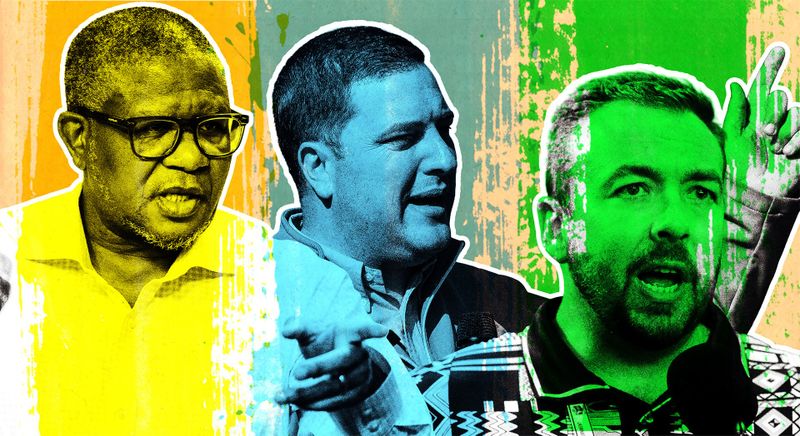
The African National Congress (ANC), Democratic Alliance (DA) and ActionSA are preparing for crucial coalition negotiations that will determine who governs Johannesburg, Tshwane and Ekurhuleni. They have just two weeks to form them.
The DA emerged as the leading party in all three Gauteng metros, but failed to secure an outright majority, setting the stage for crucial coalition talks.
The results have left the ANC weighing whether to work with its national government partner or pursue alternative arrangements involving ActionSA and smaller parties. ActionSA, meanwhile, has appeared as a potentially decisive player, with its support likely to influence which political formation can secure enough backing to govern.
Amid this, a crucial meeting of the ANC’s National Executive Committee (NEC) on Thursday, 12 November, is expected to provide direction on the party’s coalition strategy as negotiations gather pace across the province.
Here’s the state of play.
ANC biding its time
The DA secured the largest share of the vote across all three Gauteng metros, leaving the ANC facing the prospect of losing control of key municipalities.
The results leave the blue party with the possibility of forming a two-party coalition with either the ANC or ActionSA, depending on the negotiations and the support available from other parties.
The ANC has begun considering how it can retain political influence in the hung municipalities. Its National Working Committee (NWC) met on Monday to assess the election outcome and consider how the party could salvage influence from its losses. The NEC is expected to meet on Thursday to deliberate on the results and provide direction on the way forward.
Secretary-general Fikile Mbalula leads the ANC’s coalition task team, which also includes Trade, Industry and Competition Minister Parks Tau, Finance Minister Enoch Godongwana and Mineral and Petroleum Resources Minister Gwede Mantashe.
The party has opted to centralise the coalition process, giving its provincial and regional structures limited power to decide which parties the organisation should work with.
So far, the ANC has only held an initial engagement with ActionSA, with no other formal coalition discussions having taken place. Further engagements are expected to depend on the outcome of Thursday’s NEC meeting.
The NWC has also recommended that Thursday’s NEC meeting concentrate on establishing the framework for coalition negotiations instead of undertaking a wider post-election review.
The ANC is said to be weighing three possible approaches to the negotiations, according to a News24 report. These include entering a formal coalition with the DA; pursuing a broader arrangement involving ActionSA, the EFF and smaller parties; or reaching an agreement with the DA under which the two parties would govern independently in municipalities where each is the largest, while providing each other with support to sustain their administrations.
Under the third arrangement, the parties would support one another in electing mayors and opposing motions of no confidence, without necessarily forming a conventional coalition government. The ANC’s Top Seven officials are expected to present these options to the NEC.
Resistance to an ANC-DA arrangement, however, is coming from within the party and among potential coalition partners. Gauteng Premier Panyaza Lesufi has previously signalled his preference for a coalition without the DA, accusing it of being “anti-transformation”, while the ANC Youth League has declared the DA and other “right-wing” parties a no-go area for any coalition involving the ANC.
The EFF has called on the ANC to reconcile with its “lost kids” – the EFF, MK party and SACP – while the MK party has also ruled out working with the DA. The SACP, meanwhile, has called for greater unity among left-wing formations through the Council of the Left.
The ANC has not formally aligned itself with this grouping, with secretary-general Fikile Mbalula confirming that the party would not attend the council’s meeting on 11 November.
Mbalula, however, told Daily Maverick that the party wanted to approach negotiations with a clear set of principles rather than simply pursue positions in government.
“It is important to talk to people and to negotiate with them in good faith, and at the same time we are looking for stable councils,” he said.
He said the party was working on a guiding framework to ensure that its coalition decisions were informed by the interests of residents and the organisation.
“We’ve got experience now. Since 2016, we’ve been swimming in coalitions,” Mbalula said.
He warned that the ANC would need to continuously assess its approach, saying failure to do so could have serious consequences for the party.
“If we don’t do that, we in the ANC will be facing existential crisis and total defeat,” he said.
DA’s crucial meeting
The DA is preparing to enter negotiations from a stronger electoral position, although it will still need support from other parties to form administrations.
The party’s Federal Executive met earlier this week to consolidate its coalition approach ahead of engagements with potential partners.
The DA has indicated that it will engage political organisations that share its commitment to clean and accountable government, fighting corruption, improving service delivery, upholding the rule of law and non-racialism. It has also previously floated a Government of Local Unity (GLU) model as one possible arrangement for hung municipalities.
Under the proposal, several political parties would be brought into municipal administrations to secure substantially more than the minimum 50% support required to govern.
DA leader Geordin Hill-Lewis said the party had spent considerable time preparing detailed coalition frameworks, which would be made public once agreements were concluded.

The model is intended to provide broader political support and stability in municipalities where no party has secured an outright majority.
The DA is expected to engage ActionSA on Thursday, with discussions with the ANC anticipated after the latter’s NEC meeting.
However, the DA’s willingness to work with the ANC could be complicated by the political tensions between the parties, particularly in Johannesburg, where the ANC is also weighing its options ahead of its national leadership meeting.
ActionSA’s broad engagements
ActionSA has emerged as a key player in the Gauteng negotiations, with its performance positioning it to potentially determine who governs the three metros.
The party has already engaged several other parties, including the ANC, EFF, MK party, Rise Mzansi, Patriotic Alliance and Freedom Front Plus.
Its national chairperson, Michael Beaumont, has previously indicated that ActionSA is prepared to engage parties across the political spectrum, provided they commit to its coalition principles. These include a commitment to aggressively tackle corruption in municipalities and use municipal powers to address illegal immigration while ensuring residents receive dignified services.
But the most significant development in the negotiations has been leader Herman Mashaba’s proposal to the DA in an attempt to break the political deadlock between the two parties, as reported by Sowetan.
Mashaba has offered to withdraw from the Johannesburg mayoral race if the DA’s mayoral candidate, Helen Zille, also steps aside.
In a letter to DA federal leader Geordin Hill-Lewis dated 7 November, Mashaba proposed that the DA retain the mayoral position in Johannesburg by nominating an alternative candidate whom ActionSA would support.
Under his proposal, ActionSA would take the deputy mayor position, with the remaining terms of a possible coalition agreement negotiated between the parties. In Tshwane, Mashaba also proposed that DA mayoral candidate Cilliers Brink relinquish his council seat and that the DA nominate a deputy mayoral candidate acceptable to ActionSA.
In return, the DA would support ActionSA’s mayoral candidate, Dr Nasiphi Moya.
The proposal followed a telephone discussion between Mashaba and Hill-Lewis on 7 November, during which the ActionSA leader called for negotiations on the Gauteng metros to begin as soon as possible.
The proposal places the mayoral positions at the centre of the negotiations, particularly in Johannesburg, where the DA has emerged as the largest party, but faces competition from ActionSA and the ANC for control of the administration.
ActionSA’s position also gives it room to negotiate with either of the two larger parties, potentially influencing whether Gauteng’s metros are governed through DA-led or ANC-led arrangements.
However, the relationship between ActionSA and the DA remains complicated by previous coalition disputes, particularly in Johannesburg. The two parties are expected to meet on Thursday, when Mashaba’s proposal and the possibility of an agreement across the three metros could come under discussion. DM
KioskNews shows a cleaned-up reading view extracted from the publisher’s page — the original always lives on their site, not ours.