Opinion: Opinion| If Ram Manohar Lohia Met Gen Z Today
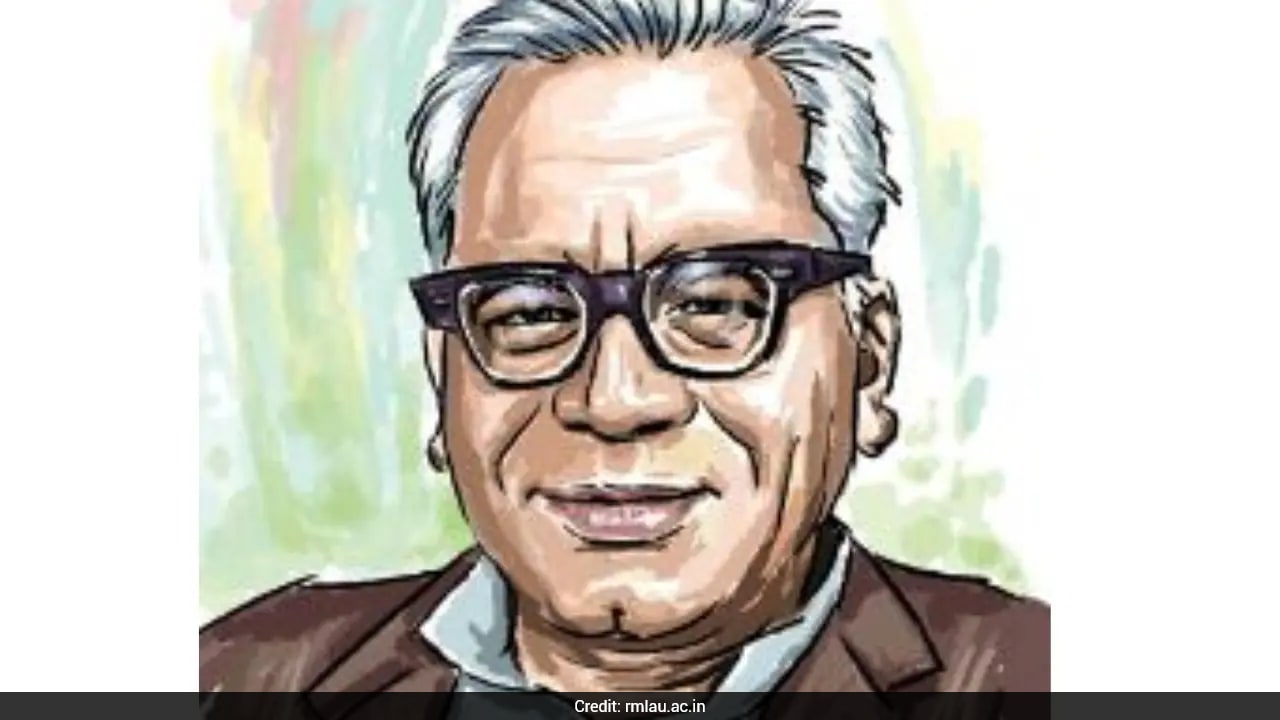
Ram Manohar Lohia once remarked, "Log meri baat sunenge jarur, lekin mere marne ke baad" (People will certainly listen to me, but only after my death). If Lohia were alive today, he might find that Gen Z has, in some curious and unintended ways, begun listening to him.
Ram Manohar Lohia lived without a bank account and without a home of his own. His life embodied aparigrah - a deliberate refusal to accumulate material possessions with strict adherence to socialist values. Gen Z, too, often prefers rented accommodation over home ownership, keeps bank balances at zero or minimum, or spends instantly on material desires. Both share a reluctance to own anything. Neither Lohia, nor Gen Z appears particularly attached to accumulation. The difference lies in orientation: Lohia rejected possessions to give up, while Gen Z rejects ownership while remaining deeply attached to consumption. The superstructure appears similar; the substructure is entirely different. Lohia practised material detachment, Gen Z does material mobility.
The contrast becomes even more interesting when it comes to relationships.
Lohia never married and rejected marriage as an unquestionable social institution. In the 1950s he lived openly in a relationship with a Miranda House professor - an extraordinary act at a time when the idea of live-in relationship was deeply uncomfortable for even western first world countries. Gen Z's greater acceptance of live-in relationships and its insistence on personal autonomy might have drawn them to him. Both fiercely place enormous value on individual freedom and resist social or familial restrictions or authority on private life. Yet Lohia paired that freedom with radical material detachment. Gen Z pursues similar autonomy without the same detachment. One may call Lohia's stance a form of spiritual individualism; Gen Z's, material individualism.
Lohia argued that Indian society was deformed by regressive views on marriage and sexual repression. He criticised the societal obsession with female chastity and virginity, which he saw as an instrument of control targeting a woman's body. The focus, he insisted, should be on a woman's dignity and work rather than antiquated standards of morality and purity. He also championed inter-caste marriage and inter-dining as practical means of dismantling caste. he even proposed that inter-caste marriages between high and low castes should count as a formal qualification for government jobs.
He held Draupadi, not Savitri, as the true symbol of the Hindustani woman - knowledgeable, mature, brave, courageous and sharp-witted. He acknowledged that he had not come across any woman like Draupadi, not only in India but in the whole world. In personal relationships he was very sensitive and perceptive and valued honesty, transparency and delicacy. He idealised the relationship between Draupadi and Krishna as one of utmost companionship. Gen Z could usefully absorb his insight that freedom in relationship requires sincerity, reciprocity and dignity.
Lohia's vision and lifelong struggle for the representation of backwards, SC, ST, women, rural poor, vernacular speakers and the economically disadvantaged among the forward caste (whom he called "false high castes") reshaped Indian politics and society. Born into a forward-caste Marwari Baniya family, he refused to allow his temporary identity of birth to define him by declaring: "Main Marwari baniye ke roop me paida jarur hua hu, lekin marunga nahi." Thus Lohia abandoned both privileges and social hierarchy attached to his identity for equality, which he called the greatest aim of life.
Lohia's approach resonated with John Rawls's idea of the original position and the veil of ignorance - choosing principles of justice without foreknowledge of one's own privileges, place in society or other identities such as gender, capabilities, ethnicity, or ideologies. Justice becomes easier to imagine when we don't know whether we would be born rich or poor, privileged or subaltern, male or female, part of a majority or minority.
Gen Z is often more willing than previous generations to question inherited identities and caste hierarchies, but it could conduct a similar experiment with caste.
Although caste cannot be changed in this life, Gen Z might ponder a hypothetical scenario: what if in some imagined previous or future birth one were born into the opposite caste group, or if departed elders now take birth in a different caste- would views on affirmative action, equal opportunity, caste pride or discrimination remain the same? Can Gen Z apply this yardstick through such an experiment to arrive at a fairer understanding of social justice envisaged by Lohia?
Lohia warned India suffers from the disease of "total separation of the abstract and the concrete" - a tendency of mind to maintain noble ideas in theory while behaving differently in practice. We proclaim equality but reproduce hierarchy. We praise freedom while policing women's choices. We celebrate merit while ignoring inherited advantage.
Can Gen Z bridge this separation for a better and more humane society? As Lohia writes in his essay "The Meaning of Equality," equality against those placed above one's own status is easy to practise in certain situations, but equality against those placed below is comparatively hard. His goal was not a narrow arithmetic equality but the greatest possible reduction of inequality and the optimisation of happiness quotient. He said Indians are the saddest people on earth due to the twin discriminations of caste and gender. Gen Z appears to be much more comfortable with celebration. It has embraced the language of happiness, self-expression, travel, leisure and personal choices.
Lohia valued interrogation - questioning oneself as much as questioning others. He believed that criticism from withincould create new frameworks of thought. Gen Z has no shortage of criticising others but the more difficult question is whether it can turn that critical energy inward. Can we interrogee our own privileges with the same intensity with which we interrogate other's prejudices?
Is Gen Z Ready To Undertake This Intellectual Labour?
Gen Z's individualism and freedom-oriented aspirations carry real promise. The question, therefore, is what Gen Z does with its freedom. If individual autonomy remains confined to lifestyle choices, it may simply produce a more sophisticated consumer society. But if that freedom is lifted toward broader societal emancipation - diluting materialism with a measure of minimalism, sustained self-questioning and commitment to social equality - it could open the way for a Lohia 2.0 - less austere perhaps yet with the eclectic approach of an indefatigable Lohia, technologically native, yet capable of resisting technological and material seductions. Perhaps that is where Lohia and Gen Z might finally meet. Not in their lifestyles, and certainly not in their politics, but in their shared impatience with inherited constraints.
Their conversation would probably be argumentative, uncomfortable and occasionally explosive.
(Authors are Additional Deputy Commissioner with Delhi Police & Defence Estate Officer, Pune Cantonment respectively)
KioskNews shows a cleaned-up reading view extracted from the publisher’s page — the original always lives on their site, not ours.