Pax Silica means peace. In the Philippines, it’s a fight
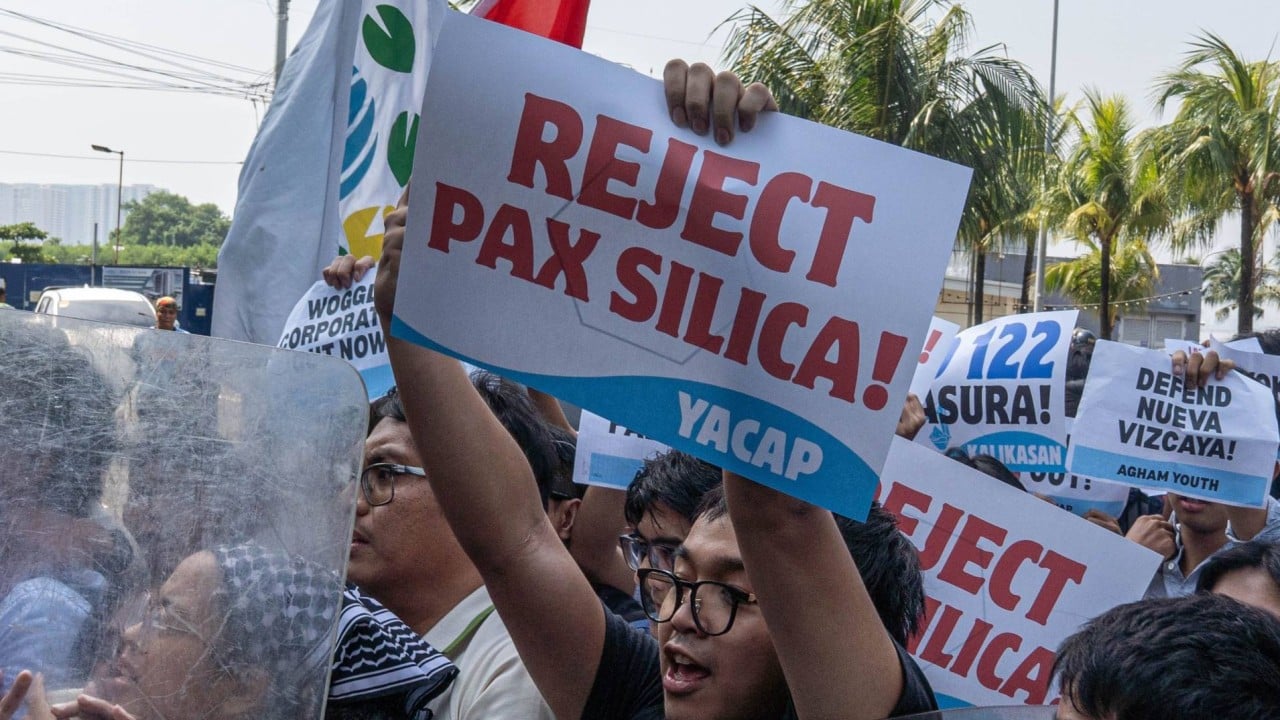
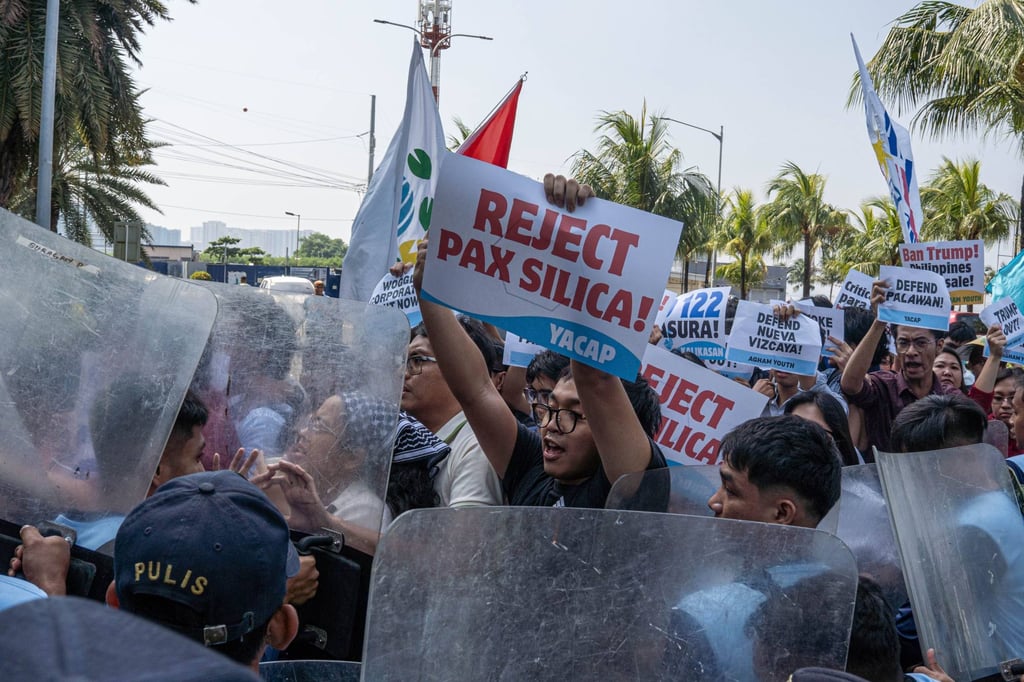
Outside the Grand Hyatt hotel in Manila earlier this year, five people were arrested as hundreds of activists chanting “Junk Pax Silica!” clashed with anti-riot police. Inside, Philippine President Ferdinand Marcos Jnr hobnobbed with some 600 investors, industry leaders and officials at a US-sponsored forum, urging them to sink their money into the US-led scheme.
The Philippines is planning to build a sprawling 1,620-hectare (4,000-acre) “Pax Silica” technology hub near a former American military base in Luzon, with the aim of luring chipmakers and other strategic industries away from China-centred supply chains.
Its backers say the project will inject billions of dollars into the Philippine economy and create hundreds of thousands of jobs. Indigenous communities, farmers and environmental groups ask who truly benefits, as key questions about power, water and land rights remain unanswered.

Pax Silica takes its name from the Latin word for peace and from silica, the raw material used to make the chips powering the artificial intelligence revolution. The name invokes the roughly 200 years of relative stability and order in the territories controlled by the Roman Empire, known as Pax Romana, and the post-World War II international order erected by the United States: Pax Americana.
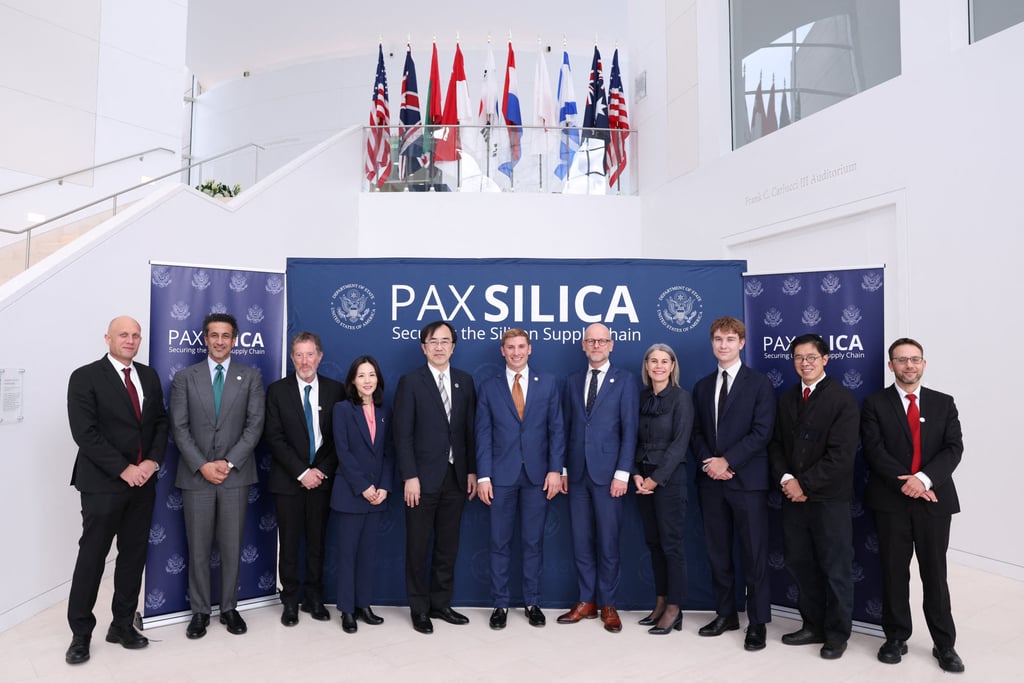
Launched in December last year by seven founding countries with the aim of securing the “global AI supply chain”, the US-led coalition has since grown to 26 signatories, including the Philippines.
Manila announced its plans for a Pax Silica hub in April, pitching it as an advanced manufacturing and semiconductor base in New Clark City, near Capas in Tarlac province, about 100km (62 miles) north of the Philippine capital.
The state-run Bases Conversion and Development Authority (BCDA), which redevelops former US bases, expects it to start operating within two years. Its outgoing president and chief executive Joshua Bingcang forecast in July that the hub could generate up to 180 billion pesos (US$2.8 billion) in annual revenue and create almost 200,000 jobs.
“Our goal is to achieve ‘brain gain’ rather than ‘brain drain’,” he said in Filipino at a press briefing at the presidential palace that same month. “Because we see that our engineers and our computer science graduates are abroad working for large companies. What if they worked right here in our own country instead and helped contribute to national development?”
Philippine officials had been pushing for a framework agreement on the hub to be finalised with Washington at this month’s Asean summit, which opens in Manila on Sunday.
But last Saturday Lee Lipton, the US ambassador to the Philippines, said in a statement that “no such announcement on the Pax Silica Economic Security Zone was ever planned”, adding that decisions would be made “in full consultation with the government of the Philippines at the appropriate time”.
US President Donald Trump is expected to attend the Association of Southeast Asian Nations summit in Manila this Tuesday.
Last Monday, a protest held near the US embassy and organised by Gabriela, a women’s rights group, featured banners declaring “stop the rape of our motherland” and “kick Trump out”.
A raw deal
Cathleen de Guzman, national coordinator of the environmental campaign group Kalikasan People’s Network for the Environment, estimates that around 20,000 Aeta indigenous people and 15,000 farmers are at risk of displacement from the Pax Silica project.
Residents of Capas in Tarlac province – at the heart of the planned project site – told the group that the BCDA had offered them a meagre 30 pesos (47 US cents) per square metre to leave their lands.
“This is deeply concerning,” De Guzman said. “These are not simply parcels of land that can be exchanged for a small amount of money … These lands are their homes, sources of livelihood and, for the Aeta, part of their ancestral domain and heritage.”
In July, around 3,000 Aeta – a collective term for several distinct indigenous ethnic groups in the Philippines – marched in Capas to protest against restrictions on access to their lands and basic supplies, which they said were partly linked to the hub.
Only one public hearing into the project has been held, according to De Guzman, adding that the BCDA reportedly plans to draw on the nearby Bangut River, a source of water for the Aeta community.
Another concern is the Sacobia watershed, the primary water catchment for the Clark area, which is at risk of drying up.
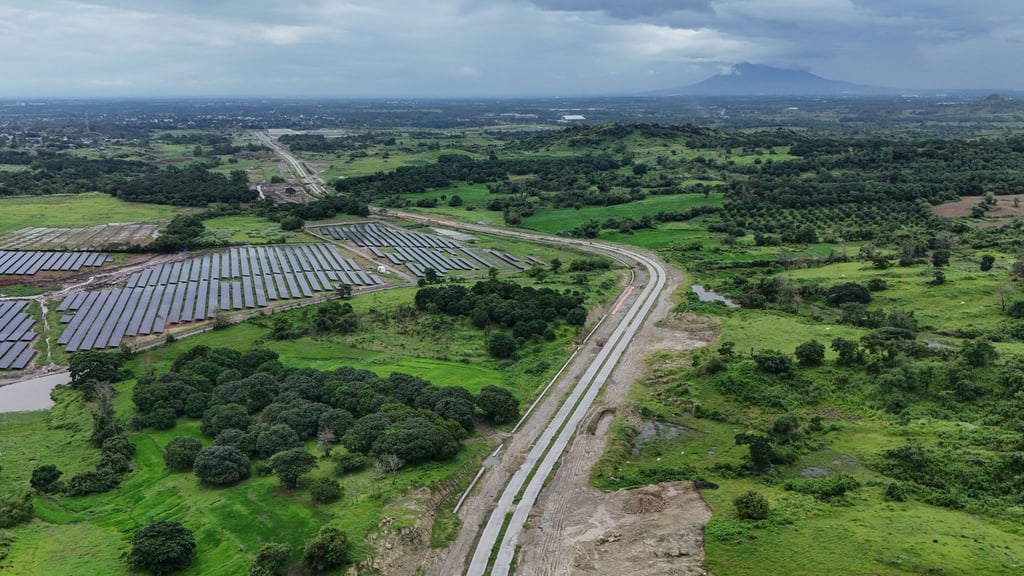
De Guzman said the Philippine government had partnered with South Korea’s state-owned water agency K-water “just to study whether there is enough water to support this development” – an arrangement she characterised as an “emergency agreement”.
“This raises serious concerns about the community’s access to water and displacement of communities in favour of Pax Silica.”
Opposition to the project is not confined to the communities directly affected by it. A survey of 1,487 Filipino adults released in August by pollster Momentum Research found that 33.9 per cent opposed the Pax Silica hub. Opposition was highest among Gen Z, at 43.2 per cent.
The proposed hub’s impact on water and power supplies was listed as respondents’ top concern. BCDA has estimated that the Pax Silica site will consume some 3 gigawatts of power once fully operational – roughly the output of three large power stations in the Philippines and more than last year’s projected peak electricity demand for the entire southern island group of Mindanao.
Giovanni Tapang, a physics professor with the scientists’ group Agham, has accused the BCDA of giving an incomplete account of the project’s potential impacts.
“The BCDA and the Marcos Jnr administration are clearly desperate to whitewash their environmentally destructive and unsustainable Pax Silica project with the United States,” Tapang said in a July statement released to local media.
“The facts are clear: a project of this scale will invariably impact local farming communities negatively and will not present any clear, long-term opportunities for the genuine development of our country.”
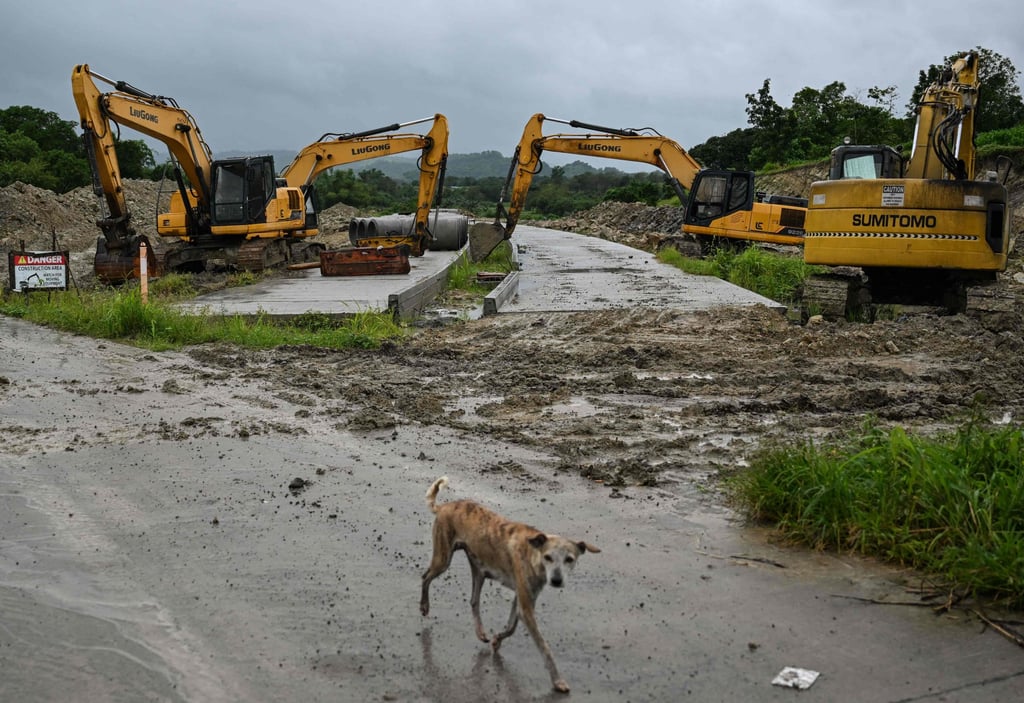
In a later interview with GMA News, Tapang said nothing had been put in writing guaranteeing technology transfer or the passing of skills and know-how to local companies.
“We are merely leasing out the land,” he said in Filipino. “They will come here to process the minerals, but they will leave the waste behind for us.”
No environmental impact assessment has been published for the project, according to Florence Principe Gamboa, managing editor and coordinator of non-profit organisation FACTS Asia and a technology policy fellow at the Pacific Forum, who also cited concerns about food security, indigenous consent and corruption.
“The government has not been doing a great job so far in addressing those,” she added.
Bingcang said in August that the BCDA was studying ways to avoid drawing on local water and power supplies, including the construction of a dedicated power plant and tanks to collect and treat rainwater, alongside water recycling systems.
BCDA had not responded to a request for comment from This Week in Asia at the time of publication.
Hard-earned doubts
Domestic opposition alone is unlikely to deter foreign investors, according to Scott Campbell, founder of SilicaSentinel, which advises companies on investing in the Pax Silica hub and the associated Luzon Economic Corridor.
Still, he said no publicly named commercial entity had signed a legally enforceable contract to become the project’s anchor tenant, referring to the first major occupant that others tended to follow.
Power and water were still very much at the planning stage, Campbell said, citing the proposals for a dedicated power plant, a new electrical substation and a water project from Manila’s Maynilad Water Services and K-water that had yet to move past the procurement stage.
Solar energy alone could not offer a reliable, guaranteed supply of electricity, he said, “and rain harvesting is not a dependable dry-season plan”.
“Serious investors are watching. They do not need a street protest to notice that there is not a master development plan, that water and power are not yet published as firm numbers and that a legal challenge can freeze a lease,” Campbell said.
He called for a signed framework that scored tenants based on the number of advanced packaging and design jobs they created for Filipinos “and a named official who is held accountable when the power or water isn’t there”.
The Philippines risked losing “a golden opportunity to have a world-class technology prosperity park” if the project stalled, Campbell said.
“Capital will not wait,” he added. “It will go to places that can show firm [reliable] power, dry-season water and public accountability.”

Gamboa made a similar point: “A semiconductor firm committing billions needs confidence that land, power, water and permits will hold for decades and that construction won’t be stalled repeatedly.”
She compared the proposed Pax Silica hub to the Philippines’ semiconductor sector, which she said had long been held back by a lack of state support.
“Our chip assembly and testing sector has existed for half a century but transferred little technology and produced no home-grown giant like Samsung or TSMC,” Gamboa said. “Critics have history on their side … their doubts are earned.”
Lianne Angelico Depante, a doctoral researcher at the National Graduate Institute for Policy Studies in Japan who has studied the history of the Philippines’ semiconductor sector, agreed that dismissing critics’ concerns would be a mistake.
Existing economic zones were scattered across the country and poorly linked, he said, calling instead for the clustering of lead firms, suppliers, research bodies and government agencies to cut costs and share knowledge.
Depante said Pax Silica held the promise of boosting the Philippines’ capacity to process critical minerals, much of which it currently exported for processing abroad.
“But of course, this is not guaranteed,” he said. “We also have to ensure that these investments do not come at the expense of local communities and the environment.”
01:49
Soaring energy costs sparked by Middle East conflict drive solar shift in the Philippines
Sonny Africa, executive director of the Ibon Foundation, a Manila-based think tank, wrote in August that successive Philippine governments had offered up cheap land, labour and natural resources, as well as tax incentives and looser foreign-ownership limits “in the vain hope that foreign industry will somehow become ours”.
He said a framework agreement for the Pax Silica project should favour Filipino firms, insist on Filipino ownership or joint ventures and leave Manila free to “trade and cooperate technologically with whichever countries we deem best to advance Philippine development”.
Only then would foreign investment become “a genuine tool for Filipino industrialisation and development”, Africa added.
Alvin Camba, a lead scientist and director of research at AI firm Lyvi, said building domestic industrial capacity inevitably had to involve the Philippines forging industrial partnerships and attracting foreign investment.
“Our objective should be to acquire the capabilities that eventually allow Filipino companies to compete internationally, rather than demand complete industrial independence before those capabilities exist,” he said.
Cutting out China?
The proposed Pax Silica hub is part of a wider US-led effort to move critical technology supply chains away from China and reduce dependence on Chinese supply chains, according to Camba, who is also a non-resident fellow at the Atlantic Council’s Indo-Pacific Security Initiative.
He said the pact aimed to coordinate incentives, grants, infrastructure spending and joint financing to make “trusted partner countries” more attractive to “non-Chinese firms”.
Observers say the Philippines makes for a natural choice of location from Washington’s perspective. Manila is not only the US’ long-standing ally in Southeast Asia, with a 75-year-old mutual defence treaty in place, it also repeatedly clashes with Beijing over their long-running territorial dispute in the South China Sea, among other issues.
However, the outcome of this month’s midterm elections in the US, which saw Democrats capture both chambers of Congress – overturning previous Republican majorities – complicates the picture, according to Gamboa.
She now expects stricter oversight of the Pax Silica project and tougher labour and environmental conditions to potentially slow funding.
Camba, by contrast, expects cross-party support to hold, noting that Democrats have previously accused the Trump administration of “selling out US foreign policy interests through concessions to China, particularly in AI chips”.
But she argued that building industrial capacity actually gave the Philippines “more leverage when dealing with China” – proposing that Manila could work with Washington and its allies on advanced chips and AI supply chains under tight safeguards, while continuing to trade with China “in mature, legacy chips for consumer goods and cars”.
Engaging with Pax Silica doesn’t mean shutting out China
“Engaging with Pax Silica doesn’t mean shutting out China,” Gamboa said. “We can choose, sector by sector, which partner serves us best.”
The Philippines could not change its geography, which placed it at the centre of great power rivalry, Gamboa said.
“What we can change is how we see ourselves: not as victims or pawns of great powers, but as a state with agency that knows its leverage and uses it to negotiate terms that benefit its people.”
As examples, she pointed to Vietnam and Malaysia, which she said had welcomed American and Chinese investments on their own terms.
“Neither country chose between foreign capital and national development,” Gamboa said. “They used foreign investment to build national industry.”
At whose expense?
Ultimately, the economic, environmental and social effects of the Pax Silica project would depend on which industries were established, what infrastructure was built and where the facilities were located, Camba said.
“A semiconductor packaging facility, a data centre and a critical mineral processing plant have very different requirements and environmental effects,” he said.
“The concerns about transparency, land rights, environmental safeguards and public consultation are legitimate, and the government should take them seriously … [but] it makes little sense to assume that every project will produce the same negative outcomes before these details are established.”
Gamboa stressed that the Philippines was “not starting from zero” – citing its established semiconductor industry and existing supply networks.
Still, for De Guzman, the biggest concern remains the displacement of the people currently living on the site.
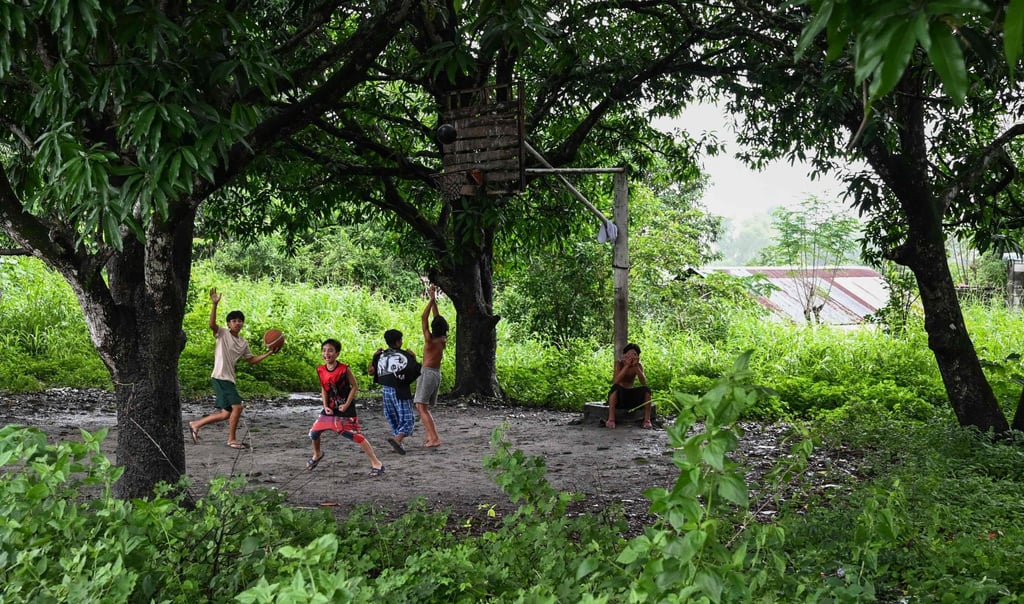
“Pax Silica threatens to uproot Aeta and farming communities from the lands they have long called home,” she said. “This means losing not only their homes but also their livelihoods … and, most importantly, their ancestral and agricultural lands.”
These people were being made to bear the costs of a project promoted as an economic opportunity for the country without their genuine participation or consent, De Guzman said.
“No meaningful consultations have been conducted with these communities, yet there are already efforts to condition them to leave their lands,” she said.
“The future of these communities should not be decided without them.”
KioskNews shows a cleaned-up reading view extracted from the publisher’s page — the original always lives on their site, not ours.