San Francisco dinner and ‘morality push’: Why Anthropic invited a Hindu monk to discuss AI
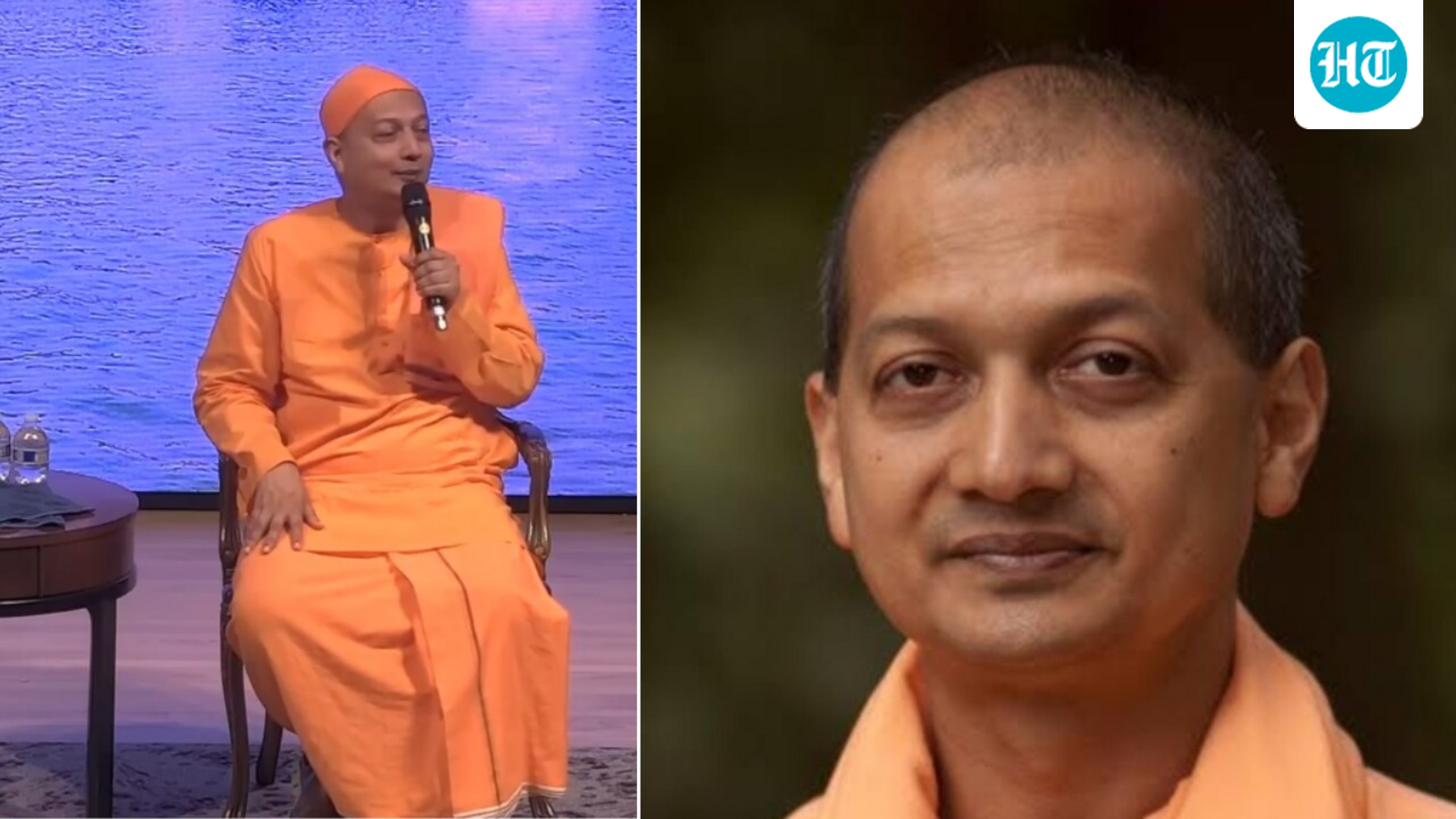
Although he did not reveal details covered by the NDA, Sarvapriyananda referred to Anthropic's “shiny kid on the block, Mythos” and “Project Glasswing”.

 Prefer HTon Google

AI giant Anthropic, which develops the Claude family of AI models, reportedly invited Hindu monk Swami Sarvapriyananda to its San Francisco headquarters for discussions on “artificial intelligence, ethics and morality.”
Videos of Sarvapriyananda speaking about his visit have gone viral on social media, drawing attention to Anthropic's reported engagement with religious scholars and philosophers as it explores questions around AI ethics and the future of increasingly advanced AI systems.
In one of such clips, Sarvapriyananda said Anthropic initially approached him for an online interview, clarifying that it was "not for a job." He was later invited to visit the company's San Francisco headquarters, the monk can be heard saying in the video.
According to the monk, an AI system arranged his flight and hotel for the visit. He was then asked to sign a non-disclosure agreement (NDA), limiting what he could publicly discuss about the meetings.
"We will show you some things, but you cannot talk about it to the world, But the world now knows about it," Sarvapriyananda said while recalling his visit to the Anthropic headquarters.
Although he did not reveal details covered by the NDA, Sarvapriyananda referred to Anthropic's "shiny kid on the block, Mythos" and "Project Glasswing" while discussing his visit.
He also said he met religious thinkers representing different traditions, along with counsellors and mental health professionals.
Watch video here
HT could not independently verify the authenticity of the video.
Why is Anthropic consulting religious thinkers?
Anthropic had been holding private discussions with thinkers from traditions including Catholicism, Judaism, Sikhism and evangelical Christianity, an article in The New York Times said.
“In a series of private meetings, the company consulted religious scholars to help instill morality into its AI models — and make the case that Claude could be conscious,” the New York Times reported.
The conversations reportedly examined questions such as how morality can be incorporated into AI systems and whether increasingly advanced AI could develop consciousness or possess some form of moral status, the report added.
San Francisco dinner and NDAs
The report also detailed a dinner hosted by an Anthropic leader for a group of religious thinkers at a “high-end tasting-menu restaurant” in San Francisco in April, following a day of discussions.
According to the New York Times, Anthropic had for months been “hosting private meetings like this one, shuttling in dozens of religious scholars from across the world, papering them with nondisclosure agreements and demanding that key aspects of many conversations remain confidential.”
Sarvapriyananda's alleged account has now brought renewed attention to those reported efforts.

Follow the latest breaking news, major developments and agenda-setting stories from India and around the world with the newsdesk at Hindustan Times. Operating round the clock, the desk brings together experienced editors, reporters and correspondents to deliver fast, accurate and contextual reporting across subjects that influence public policy, governance, business, society and international affairs. The HT News Desk covers politics, elections, government policies, the economy, business and markets, science and technology, the environment, law and order, infrastructure, education, climate issues and geopolitics, while closely tracking developments across states, institutions and global capitals. The team also leads coverage of major breaking news events, policy announcements, court proceedings, natural disasters, public emergencies and significant international developments. Reports published by the newsdesk are based on information gathered from reporters on the ground, official statements, government agencies, court records, regulatory filings, recognised institutions and other authoritative sources. Stories undergo editorial scrutiny and verification processes to ensure accuracy, fairness and relevance, and are updated as events evolve and additional information becomes available. Whether covering a key political decision in New Delhi, an economic policy shift affecting millions, a landmark court ruling or a major global event, the HT News Desk aims to provide readers with reliable, fact-based journalism that delivers not only the latest developments but also the context and analysis needed to understand their wider implications.Read More

KioskNews shows a cleaned-up reading view extracted from the publisher’s page — the original always lives on their site, not ours.