‘No-go’ to ‘go ahead’ areas: PM Modi hails ‘Samrudha Manthan’ for deep-sea exploration in Independence Day speech
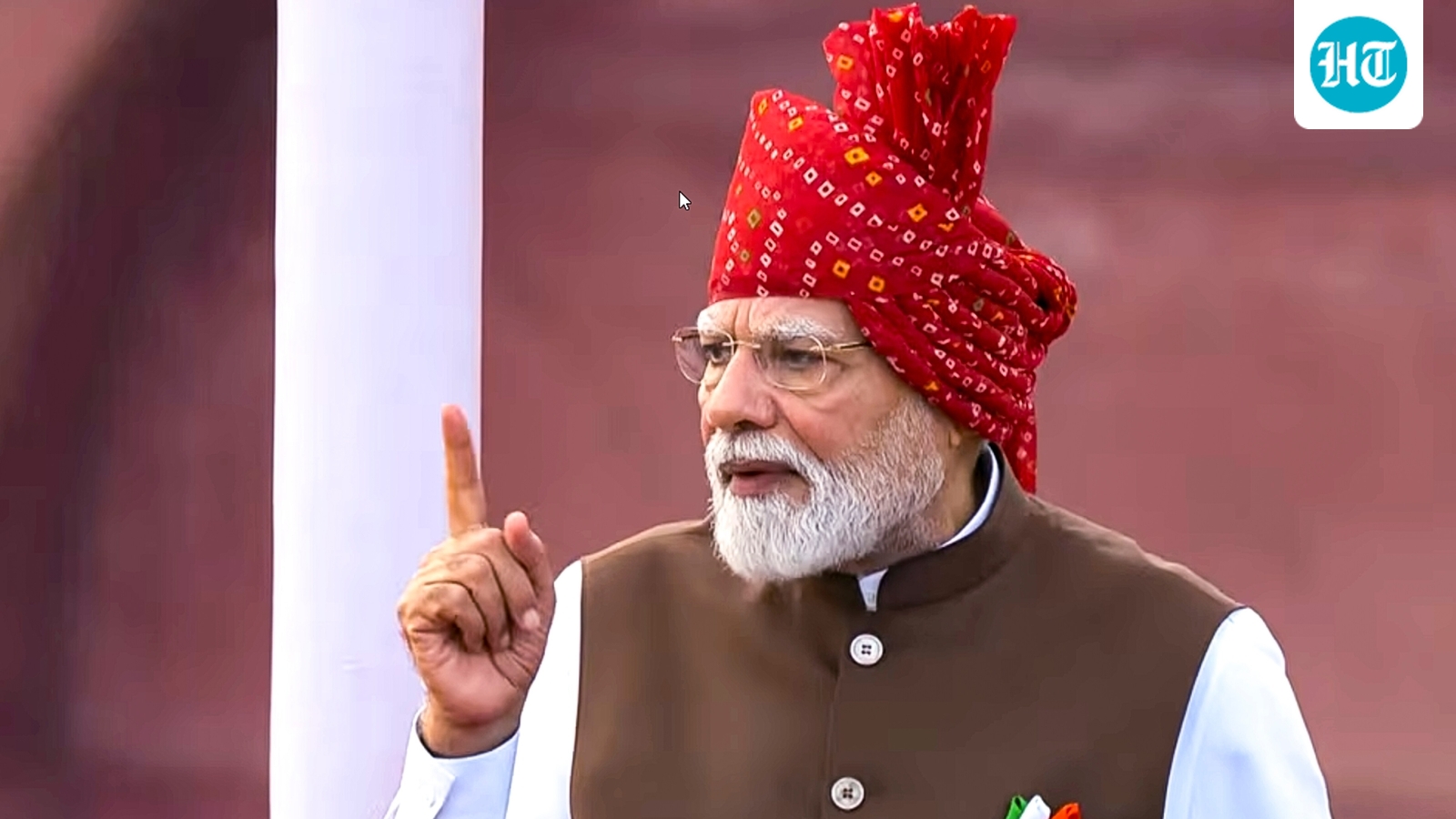
Prime Minister Narendra Modi on Saturday highlighted how almost all of India's coastal waters have been opened up for exploration with the aim of discovering new mineral reserves. Saying that a previously 'flawed' mindset had stopped exploration of our seas, PM Modi said that previously 'no-go areas' have been changed to 'go-ahead areas'.
Addressing the nation from the ramparts of Red Fort in New Delhi on the 80th Independence Day, PM Modi said, due to a flawed mindset, we had designated 99 percent of our coastal waters as "no-go areas," effectively deciding against offshore exploration. This was a poverty of thought. We decided that this could not continue."
PM Modi hailed how a majority of India's coastal waters have been opened up for exploration under the "Samrudhha Manthan" initiative.
"We have now opened up those areas--previously off-limits--as "go-ahead areas," and we are actively pursuing exploration and the discovery of new reserves beneath the sea. Last year, we announced the "Samudra Manthan" initiative to advance this effort, and recently, we decided to accelerate the work by allocating ₹85,000 crore for this purpose," the Prime Minister said.
Talking about the importance of energy security, PM Modi mentioned how alternative energy sources and optimisation of energy usage were needed for the country. He mentioned that before 2014, piped gas distribution was limited to 70 cities, but now, 12 years later, piped gas has reached 700 cities.
"In these 12 years, we have expanded that reach to 700 cities. That is the pace of progress; that is the scale of expansion. Prior to 2014, piped gas reached barely 20 to 22 lakh households; today, we are delivering piped gas to 1.75 crore households," PM Modi said.
Similarly, the country's solar capacity has increased too, with 160 gigawatts of solar energy being produced, up from only two gigawatts.
India's offshore basins hold vast untapped hydrocarbon potential. A basin is a large natural depression in the earth where hydrocarbons collect. Unlocking these resources requires modern exploration, reliable geological data, advanced drilling capabilities, and a strong domestic supply chain.
To accelerate this effort, Samudra Manthan - the National Offshore Exploration Scheme has been approved on 31 July 2026. With a Phase-I outlay of ₹84,084 crore up to FY 2030-31, it aims to boost the hydrocarbon exploration and production sector, according to the Central Government.
India is the world's third-largest consumer of crude oil. Its annual import bill is nearly USD 144 billion, or about ₹13 lakh crore. Recent conflicts which have interrupted oil and gas supply have shown that higher domestic output has thus become critical for a rapidly growing economy.
According to the Central government, much of India's future oil and gas potential lies offshore. Deepwater and ultra-deepwater basins are sea zones with very high-water depth. India's eastern and western offshore basins extend to water depths of up to 3,000 metres. They are estimated to hold over 5,600 MMTOE (Million Metric Tonnes of Oil Equivalent) of hydrocarbon potential.
KioskNews shows a cleaned-up reading view extracted from the publisher’s page — the original always lives on their site, not ours.