Treat our requests as binding orders: SC
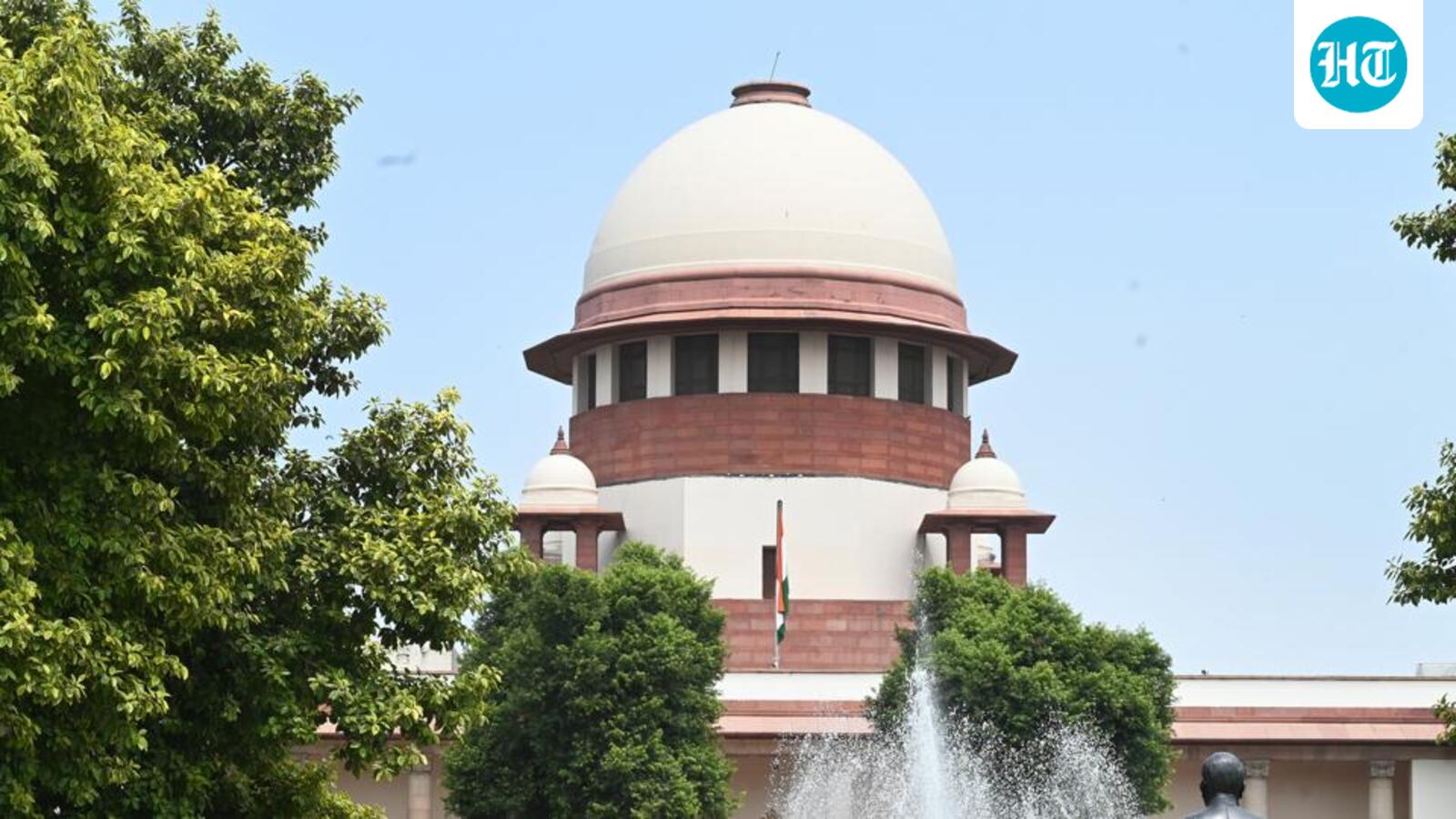
Making this clear, the top court has ruled that a “request” made by it to any court or tribunal is not a mere expression of expectation but must be treated as a binding direction, warning that any non-compliance will be viewed “very seriously”.
The observation by a bench of justices JB Pardiwala and K Vinod Chandran came after the court expressed dismay over the National Company Law Appellate Tribunal (NCLAT) failing to hear a matter despite a specific request to do so, allowing an insolvency petition against the company to be admitted in the meantime.
“We make it very clear that if there is any request made by the Supreme Court to any court or tribunal, the same shall be treated as a direction and non-compliance of such direction shall be looked into very seriously,” the bench said in an order released on Wednesday.
The court underlined that such requests are made out of institutional deference and respect for the judicial office held by members of the subordinate forum, and should not be mistaken for an absence of authority. “The request made is out of deference to their position and to ensure that the judicial office they hold is not belittled in any manner,” it observed.
The bench was hearing an application in a dispute arising from interim orders passed by NCLAT’s principal bench in New Delhi. On July 15, while disposing of appeals, the Supreme Court had made an “earnest request” to the appellate tribunal to ensure that the matter was heard on July 23. The urgency stemmed from the fact that the National Company Law Tribunal (NCLT) had reserved its order on a petition under Section 7 of the Insolvency and Bankruptcy Code (IBC), which allows a financial creditor to initiate insolvency proceedings against a company.
However, when the matter came up before the Supreme Court on Tuesday, senior advocates Kapil Sibal and Meenakshi Arora, appearing for the applicant, informed the bench that NCLAT had not heard the appeal even by then. Worse, NCLT had meanwhile pronounced its reserved order and admitted the company into insolvency.
“We are quite disturbed with the manner in which NCLAT has conducted itself in the present litigation,” said the bench, seeking an explanation from the tribunal for its failure to act despite the Supreme Court’s July 15 order.
NCLAT has fixed November 17 as the next date of hearing, the Supreme Court was informed. The bench issued notice, returnable on November 19, and directed the appellate tribunal to explain why it had not heard the matter despite the specific request made by the top court.
The bench also restrained the constitution of the committee of creditors (CoC) in the meantime, thereby preventing a further step in the insolvency process while it considers the explanation for the delay.
The dispute concerns a proposed rights issue by the company, under which existing shareholders would be offered shares in proportion to their holdings. The court had earlier refrained from adjudicating disputed questions of fact, leaving it open to the parties to raise their legal contentions before NCLAT.
KioskNews shows a cleaned-up reading view extracted from the publisher’s page — the original always lives on their site, not ours.