As Saudi Arabia steps up war against Yemen’s Houthis, Pakistan set to play support role
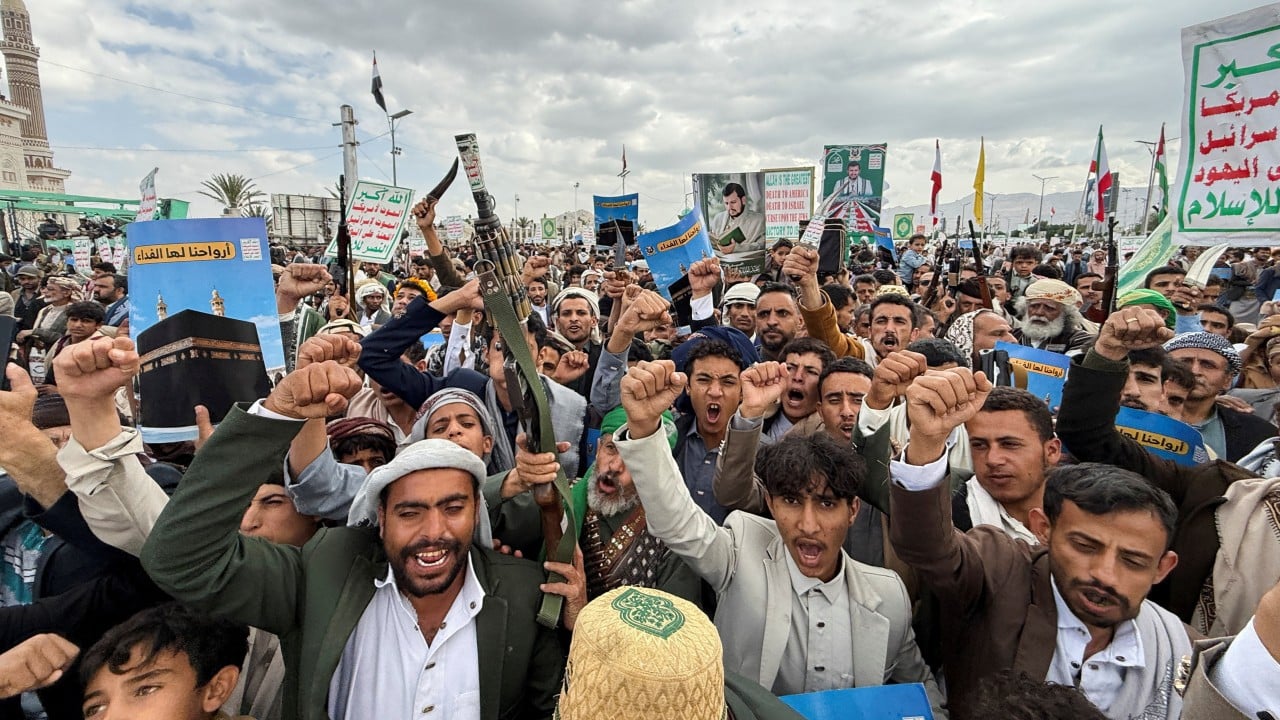
Pakistani troops are expected to take over various defensive functions for Saudi Arabia to enable the Middle East country to fight an all-out war aimed at defeating Yemen’s Iran-backed Houthi rebels.
According to defence analysts, Pakistani troops are not expected to participate directly in ground offensives against the Houthis being planned by Saudi Arabia and Yemen’s squabbling government factions.
Instead, their primary objective would be to free up Saudi forces to focus on what is likely to be a sustained conflict involving hundreds of thousands of Yemeni fighters on both sides.
“Saudi Arabia needs Pakistan to help defend Saudi Arabia so that Saudi forces have greater freedom to operate against the Houthis,” said Andreas Krieg, an associate professor of defence studies at King’s College London.
That means air and missile defence personnel, radar and early warning, intelligence, surveillance and reconnaissance, counter-drone capabilities, electronic warfare, intelligence fusion and command-and-control support.
Pakistan can also provide maintenance, munitions support, training, operational planning and potentially additional aircraft and unmanned systems for defensive patrols and surveillance.
Riyadh would value Pakistani surveillance, intelligence and potentially naval support around the Red Sea and Saudi approaches, Krieg said, particularly as the Bab el-Mandeb Strait, which straddles Yemen on the Arabian Peninsula and Djibouti and Eritrea in Africa, had become increasingly contested.
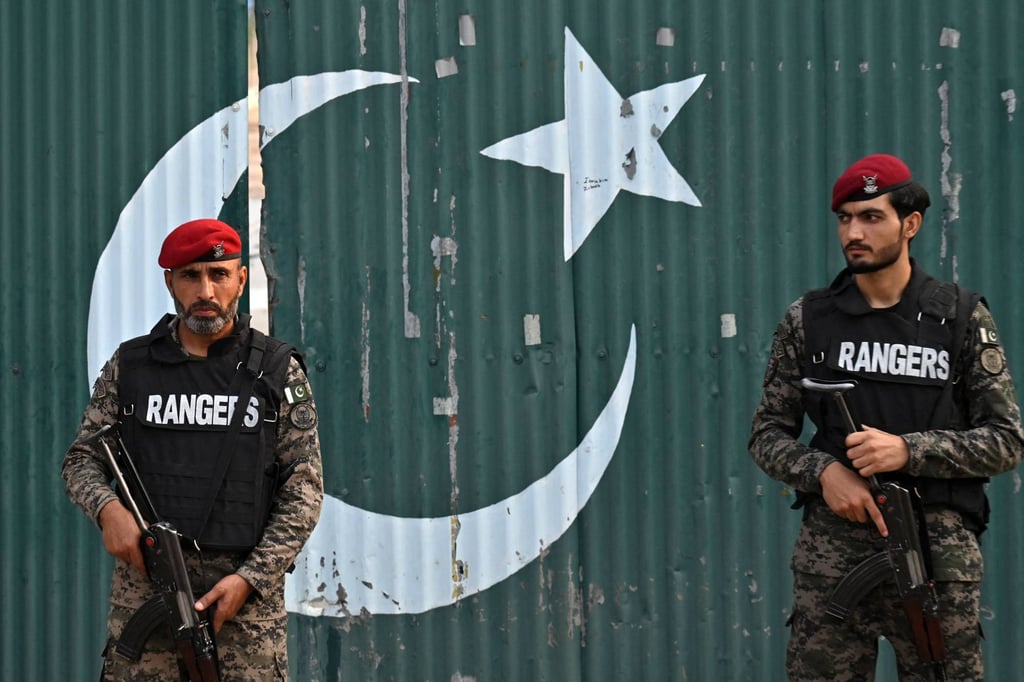
Dave Des Roches, a retired Pentagon official and senior non-resident fellow at the Gulf International Forum, said the Saudis wanted the Pakistanis to deploy across the “full range of military operations”.
The Pakistanis would likely not agree to such a comprehensive role, while the scope of the functions to be assumed by Pakistani forces and their area of duty would be under intense negotiation between both sides, he added.
According to Saudi political scientist Nawaf Obaid, some specialist Pakistani military units may already be providing intelligence and command-and-control support.
Writing for Al Jazeera English on September 26, Obaid claimed Saudi and Pakistani joint terminal attack controller (JTAC) teams were already “embedded” with major Yemeni government formations in the north of the country.
They are being pitted against Iranian military advisers, whom Western intelligence agencies reported as having played a critical role in the Houthi seizure of Yemen’s Red Sea coast and the Bab el-Mandeb Strait last month.
Obaid said the Saudi-Pakistani JTAC teams were “restoring an authenticated link” between government forces on the ground and the Saudi-led joint forces command strike system, following its disruption last month by Revolutionary Guards advisers who were supporting Houthi military communications.
The system reportedly operated by the Saudi and Pakistani JTAC teams was far more advanced than its Iranian counterpart, he wrote. Its deployment has enabled Saudi warplanes and drones to mount a sustained aerial counteroffensive against the Houthi command structure and massing ground forces.
According to Yemeni military spokesmen, several Revolutionary Guards advisers have been killed in “government” air strikes.
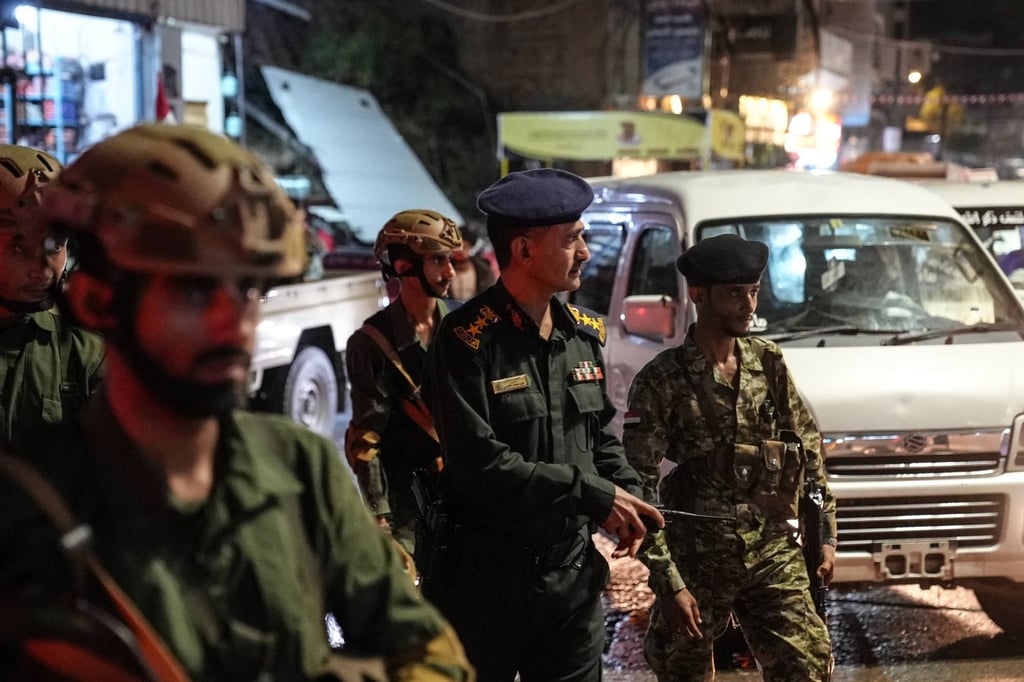
Security officials in Islamabad remain tight-lipped about the specifics of Pakistan’s role in the Saudi-Houthi conflict while privately telling journalists that their silence should not be misconstrued as a sign of inaction.
In April, Pakistan deployed some 8,000 troops, a squadron of JF-17 fighters co-developed with China, and Chinese-built HQ-9 long-range air defence systems to Saudi Arabia under their mutual defence pact signed in September 2025.
At the same time, political and military leaders have ratcheted up rhetoric about the extent of Pakistan’s commitment to the defence of Saudi Arabia.
“We are bound by this arrangement to defend Saudi Arabia. That means whatever means that are available at our disposal, they’ll be available to Saudi Arabia also,” Pakistani Defence Minister Khawaja Muhammad Asif told Al Jazeera on Wednesday.
To rally public support among their mostly Muslim populations, the Saudi and Pakistani governments have cloaked preparations for the decisive conflict in religious garb.
Riyadh has accused the Houthis of carrying out drone strikes against Islam’s two holiest shrines in Mecca and Medina in recent weeks, allegations that the Yemeni militia has dismissed as propaganda.
Echoing the Saudi narrative at the United Nations General Assembly on September 26, Pakistani Prime Minister Shehbaz Sharif said the first alleged drone attack on Mecca last month had “provoked the anger of Muslims throughout the world”.
Any threat to the security and sanctity of the two holy mosques “constitutes a red line that must not be crossed under any circumstances”, Sharif warned.
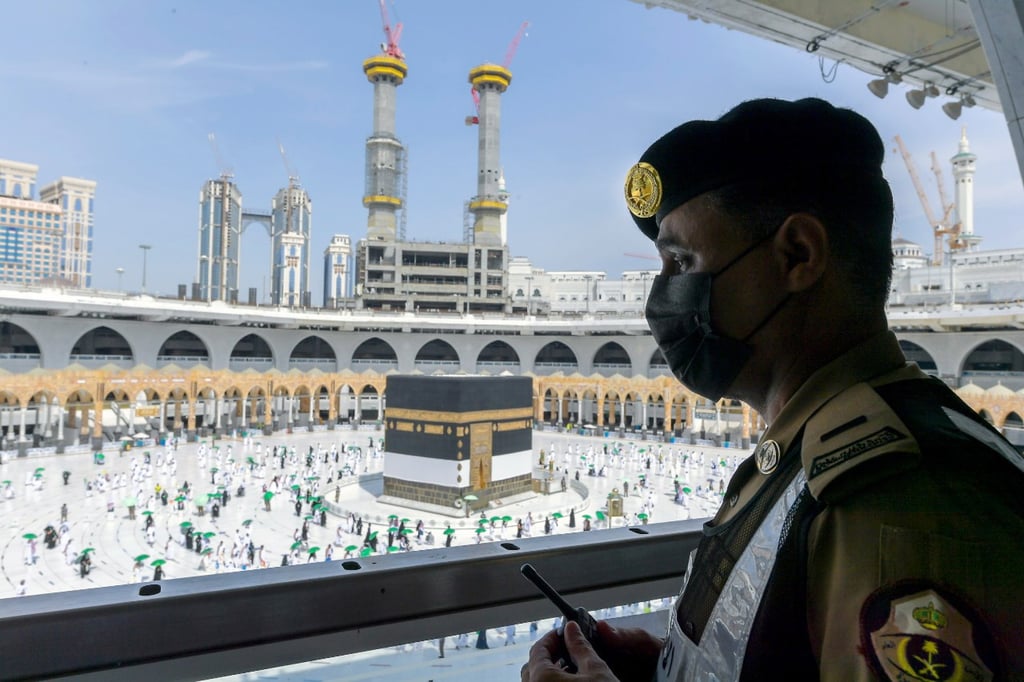
Des Roches saw the alleged Mecca attack as a “requirement” for Pakistani public opinion to support any enhanced military action against the Houthis, given some suspicion about the motives for defending Saudi Arabia.
“Pakistanis in particular know how things work in the Gulf, and they are extremely proud of their armed forces,” Des Roches said.
“Defending Mecca and Medina could meet the requirement.”
Sharif’s declaration at the UN coincided with three other significant developments on the same day.
The grand mufti of Saudi Arabia Saleh bin Fawzan bin Abdullah al-Fawzan issued an edict validating the actions of Saudi-led coalition forces against the Houthis.
“Preserving this great entity, defending its borders, repelling aggression against it, and punishing anyone who seeks to encroach upon even an inch of it, are among the greatest duties and the best acts of devotion, for which lives and souls are sacrificed in pursuit of God’s pleasure,” Fawzan declared in a written statement.
The military commanders of the Mecca Defence Alliance – comprising Saudi Arabia, Pakistan and Turkey – also met in Riyadh for the first time to “explore measures supporting” the Saudis under the pact signed in August.
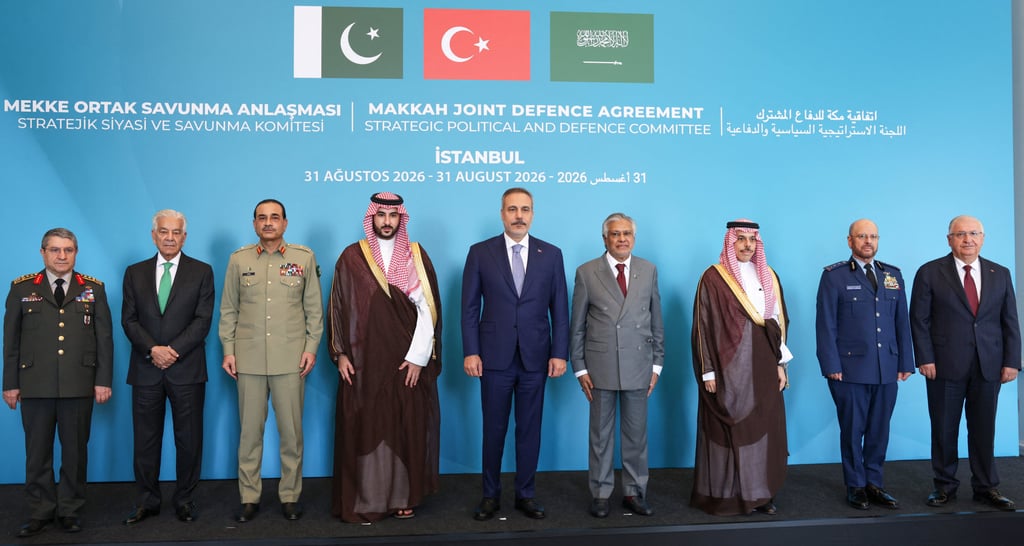
In addition, the leader of Yemen’s Presidential Leadership Council Rashid al-Alimi issued a call for general mobilisation with the unprecedented goal of comprehensively defeating the Houthis.
Saudi Crown Prince Mohammed bin Salman reiterated this goal in his annual address to the kingdom’s consultative assembly on Wednesday.
Krieg expected Pakistan to be cautious about the distinction between defending Saudi territory and conducting offensive operations inside Yemen.
“That distinction is politically useful to everybody,” he said.
Britain and France are adopting “essentially the same principle” but in different ways to enhance Saudi Arabia’s resilience, according to Krieg.
If Pakistan helps protect Saudi airspace, France protects oil infrastructure to enable oil exports via the Red Sea port of Yanbu, and British air force tankers keep Saudi aircraft airborne for longer, Riyadh can focus more on its operations in Yemen.
“The interesting consequence is that all these defensive contributions can indirectly enable a more offensive Saudi posture,” Krieg said.
“Defensive burden-sharing can therefore become an offensive force multiplier without any of those partners formally joining the war.”
KioskNews shows a cleaned-up reading view extracted from the publisher’s page — the original always lives on their site, not ours.