Only a matter of time until mass casualty event in Channel, border chief warns
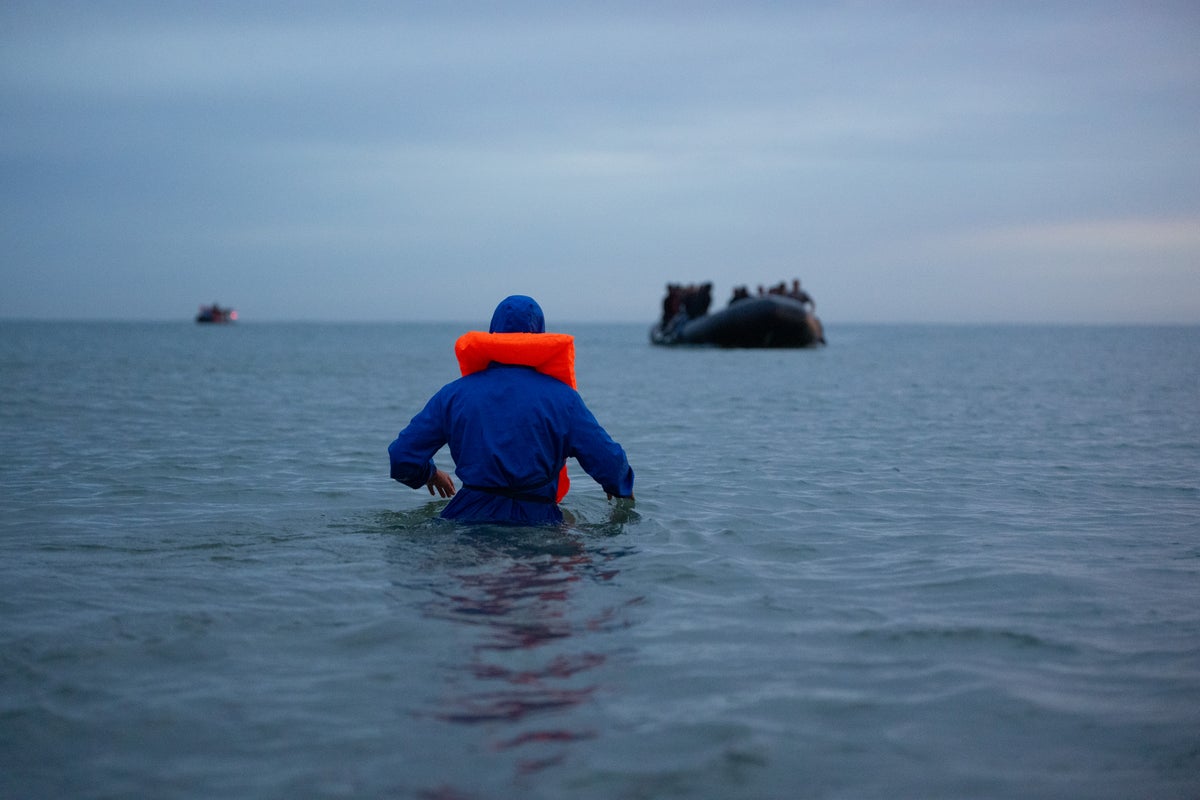
It is only a matter of time until there is a mass casualty in the Channel, the borders security chief has warned, as migrants hoping to come to the UK are crammed onto fewer bigger boats.
Major General Duncan Capps, the Home Office’s border security commander, told MPs on Wednesday that there are now double the normal amount of people in northern French camps waiting to make the perilous journey – with almost 3,800 across the two sites in Dunkirk and Calais.
The number of launches from French shores have dropped significantly as more police officers patrol the beaches, meaning smugglers are resorting to bigger dinghies and launches from further along the coast and even Belgium.
It also means people are waiting longer in the makeshift camps to cross, with migrants making six to seven attempts before they are successful, Maj Gen Capps said.
Speaking to the Home Affairs select committee in the Commons, Maj Gen Capps said: “I think the things that worry me most this year have been the increasing size of the boats and the increasing occupancy.
“You will have seen this year we had a boat with 230 people in it. Extraordinary, and I ought to put on record that it is only a matter of time till we have a mass casualty event in the Channel. It is extraordinary that that hasn’t happened so far.”
He said he had worked with international counterparts to “shut down” the attempts to launch from Belgium, and was working on stopping launches from Normandy with the French.
“It’s nearly 60 nautical miles. If people try that in the winter we are going to have loss of life”, he said, adding: “If I have a number one concern, that is probably it”.
Rob Jones, director general of operations at the National Crime Agency, said that the cost of paying smugglers to cross the Channel had broadly come down. “It is over 1,000 euros and under 2,000 euros”, he told MPs, saying the cost depending on people’s nationalities with those from Eritrea, Sudan and Somalia being packed onto enormous boats for less.
When asked about whether those who travel to the UK on small boats can be deported, Maj Gen Capps said it was “really difficult” to return migrants as those making the crossings often come from “countries that we don’t have returns agreements with”.
He said that “we’ve broadly, since the beginning of the small boats phenomenon in 2028, returned about five per cent of those that have arrived here, and so that number is under 7,000”. He pointed to the recently closed one in, one out agreement with France, saying this scheme had made a “big difference because it allowed us to return Afghans, Iranians, Yemenis, Somalians in a way that we weren’t able to do before”.
Maj Gen Capps added that foreign returns hubs could be an option that the Home Office looks at again, and also said that his work would be easier if the UK was part of a European returns agreement.
He said that he personally thought opening up more safe and legal routes for small boat migrants should be something that officials look at. Maj Gen Capps said there were up to 10,000 applications to come to the UK from asylum seekers in France through the one in, one out pilot, which saw small boat migrants removed back to Paris in exchange for asylum seekers.
Access to the legal route to the UK acted as a deterrent, he said, because it “meant there were 10,000 or so migrants who...didn’t cross during that period because they had their applications in place”.
KioskNews shows a cleaned-up reading view extracted from the publisher’s page — the original always lives on their site, not ours.