How shared stories loosen grip of Tai Po inferno on traumatised domestic helpers
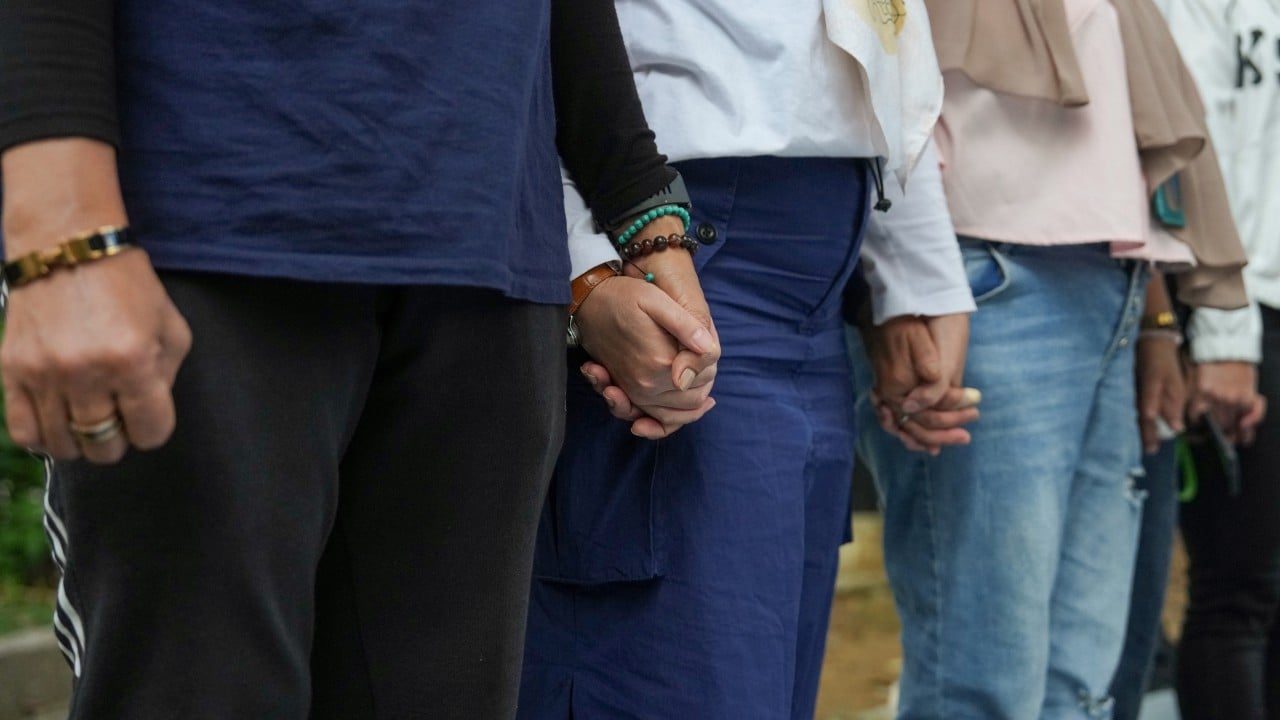
It has been a year since a catastrophic fire – Hong Kong’s deadliest in decades – tore through the towers of Wang Fuk Court. The charred debris from the site in Tai Po has long been cleared. But for many domestic workers who survived, the anxiety, grief and guilt have not been extinguished.
“Sometimes I suddenly struggle to breathe for no reason,” said Astina*, an Indonesian helper in her 50s, breaking down in tears as she recalled the inferno. “I still get anxious whenever I hear an alarm.”
Her ordeal is part of a quiet crisis among Hong Kong’s foreign domestic workers, whose trauma often manifests physically – from sleeplessness to sudden shortness of breath – long before they seek help.
The deadly blaze last November killed 168 people, including 10 domestic workers – Filipina Maryan Pascual Esteban, 39, and nine Indonesians – and displaced nearly 5,000 residents.
The tragedy underscored the fierce devotion of those who perished, including several helpers who chose to stay behind to protect their vulnerable charges rather than flee alone.
Among them was Sri Wahyuni, a 42-year-old Indonesian helper who was found locked in an embrace with her elderly employer. Esteban died alongside her five-year-old ward, Hannah.
A total of 235 domestic helpers from the Philippines and Indonesia were employed at the housing estate at the time.
Astina was in her employer’s middle-floor flat in Wang Chi House when she first saw the flames engulfing the neighbouring blocks on the afternoon of November 25, 2025.
Grabbing the sick three-year-old child in her care, she fled the apartment while calling a member of her employer’s family upstairs to tell them to evacuate immediately.
Leaving behind her valuables and financial documents and taking only her passport, Astina managed to catch the lift down to safety. Wang Chi House was the only block in Wang Fuk Court left largely undamaged by the blaze.
Across the harbour on Hong Kong Island, Astina’s 34-year-old daughter, Astrid*, who also works in the city, panicked when she heard the news and called her mother every hour to make sure she was safe.
Escaping the flames was only the beginning. Since then, Astina has been plagued by nightmares, and she relies on regular Sunday meetups with her daughter for comfort, still struggling to put her fear into words.
In early 2026, she began attending Sunday peer-support gatherings backed by a union.
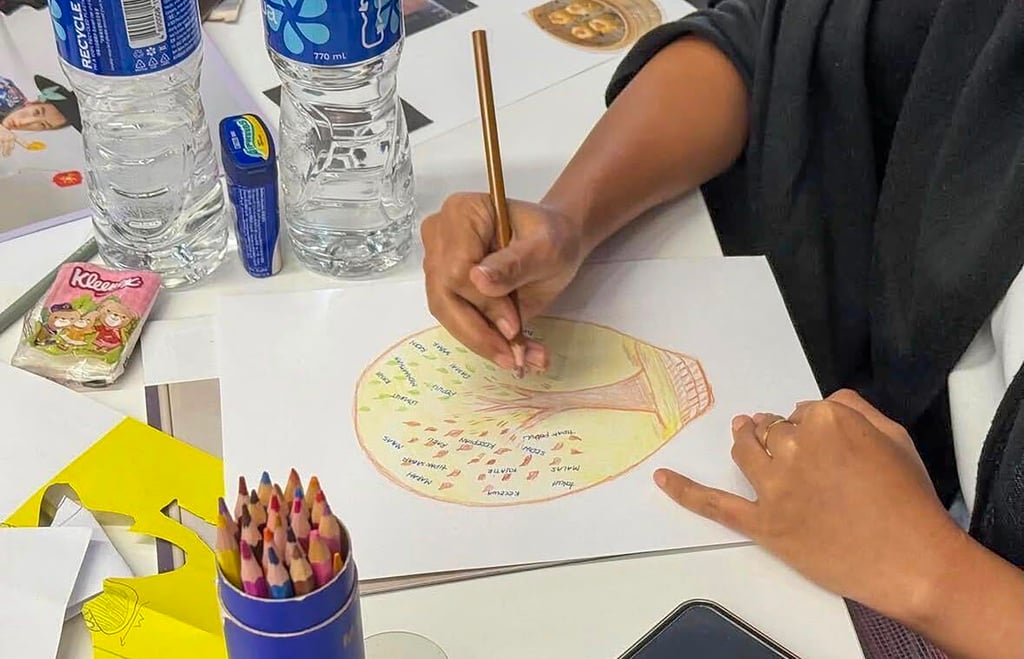
Encouraged by her daughter and by opening up in a safe space, she helped shape a stage play and illustrated book, What We Carry Under the Same Sky: II, with support from a Polytechnic University team.
The book pairs survivors’ accounts with photographs and drawings of their lives before and after the fire.
Other helpers who faced their grief alone have also taken part in the project.
For Tiania*, another Indonesian survivor in her 30s, putting pen and brush to paper became a lifeline – a way to process feelings she could not share in person with family members who were far away.
She lived and worked in a lower-floor flat in Wang Shing House, and was fortunate to be out buying groceries when the fire broke out. She returned to find the building engulfed in flames.
Although she escaped physically unharmed, the loss of a friend and vivid memories of the inferno continue to haunt her and, a year on, the pain remains raw.
“After the blaze, whenever I closed my eyes, I could feel the fire in my heart,” she said. “I could not sleep, and I also took medicine for a week.”
Even though she did not personally know all of the domestic workers who died, she saw many of them passing by every day with the children in their care.
The friend she lost was not only from the same village in Indonesia but was also someone Tiania had known since they were about 10 years old.
Joining the play and book project brought all the fears and guilt she buried to the surface.
During the first rehearsal, the host reminded the group that many of them were mothers working far from home to support their own children.
“That moment brought me to tears as I thought of my two sons back in my hometown,” Tiania said.
“I am working here and I thought, maybe if I died in the fire, what would happen to my sons?”
Still, the workshops offered her and other survivors a way through the grief.
“The host told us if we talk about the trauma again and again, over and over, the pain will become less,” she said, explaining how writing and rehearsing her story as one of the project’s writers helped lighten the weight she had carried for months.
The play and book launch was originally scheduled to take place at PolyU on Sunday, supported by Lydia Catedral, an associate professor at the university’s department of English and communication.
Catedral had earlier organised writing workshops for the domestic workers and the union, to help them reflect more deeply on their experiences.
“Even though I don’t understand Bahasa Indonesia, I could see that throughout the writing process, they gradually gained more confidence and space to share their personal thoughts,” she said.
“They rediscovered their own value along the way and they felt genuinely happy that they had accomplished something meaningful.”
However, the event was abruptly cancelled following a notice on Saturday evening.
“We are deeply sorry to inform you that due to unforeseen circumstances, we will not be able to proceed with our book launch event [for] What We Carry Under the Same Sky: II,” the organiser, Microlab Collective, said in a statement.
The organiser added that the group hoped to gather on another occasion to share “the meaningful artistic work of our migrant sisters”.
PolyU said that “the venue applicant has cancelled the venue booking for the event”.
Police told the South China Morning Post that unless the organiser disclosed whether officers had been in contact, the force could not confirm whether it had reached out to the group.
Representatives from the Indonesian consulate had planned to attend the book launch.
In a reply to the SCMP, a consulate spokesman said community and peer support had been proven to help with trauma, adding that such events provided a vital safe space for domestic workers to process their grief.
“Mental health is a deep and delicate personal issue; there is no one-size-fits-all approach to addressing the subject,” the spokesman said.
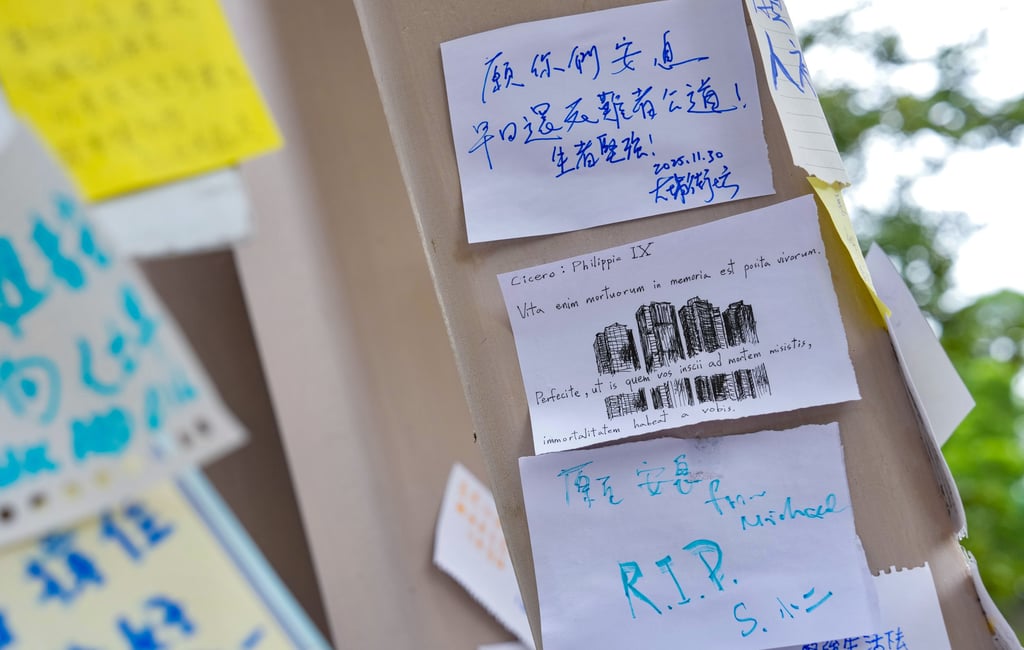
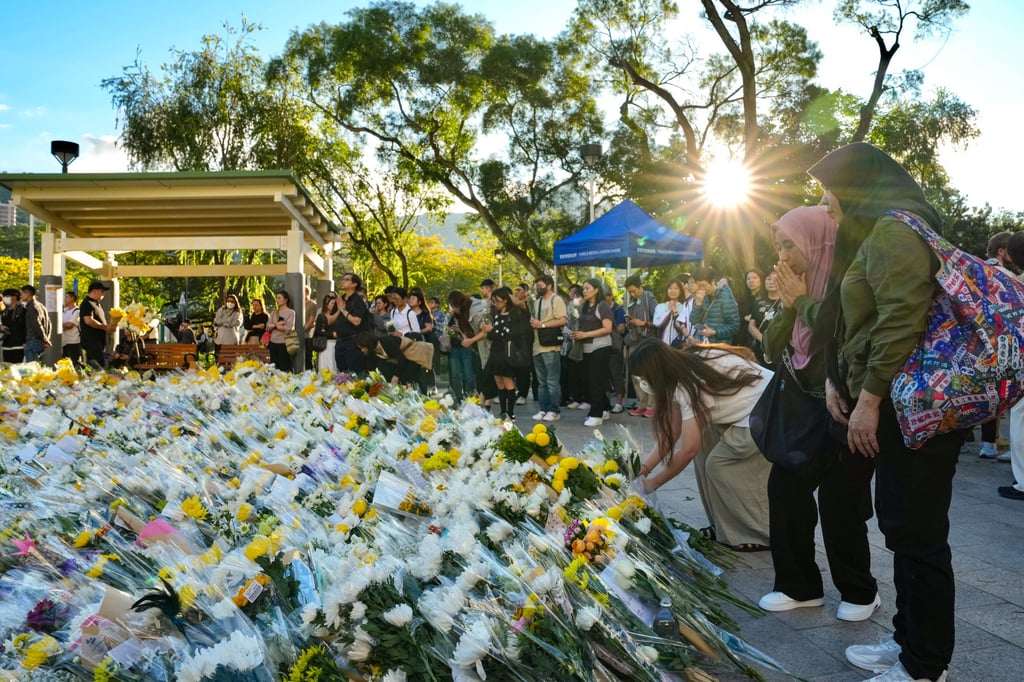
Alongside union and peer initiatives, ordinary Hongkongers have also reached out to the helpers with empathy and solidarity as they navigate the long road of recovery.
And despite the last-minute cancellation of the book launch, the stories Astina and Tiania shared – and the bonds formed during Sunday workshops – have started to ease their trauma.
“By taking part in both the play and the book, I feel so much better. Every time I tell my story to others, I feel more relaxed,” Astina said.
KioskNews shows a cleaned-up reading view extracted from the publisher’s page — the original always lives on their site, not ours.