Delhi HC dismisses PIL seeking probe into CJP protest lathi-charge claims
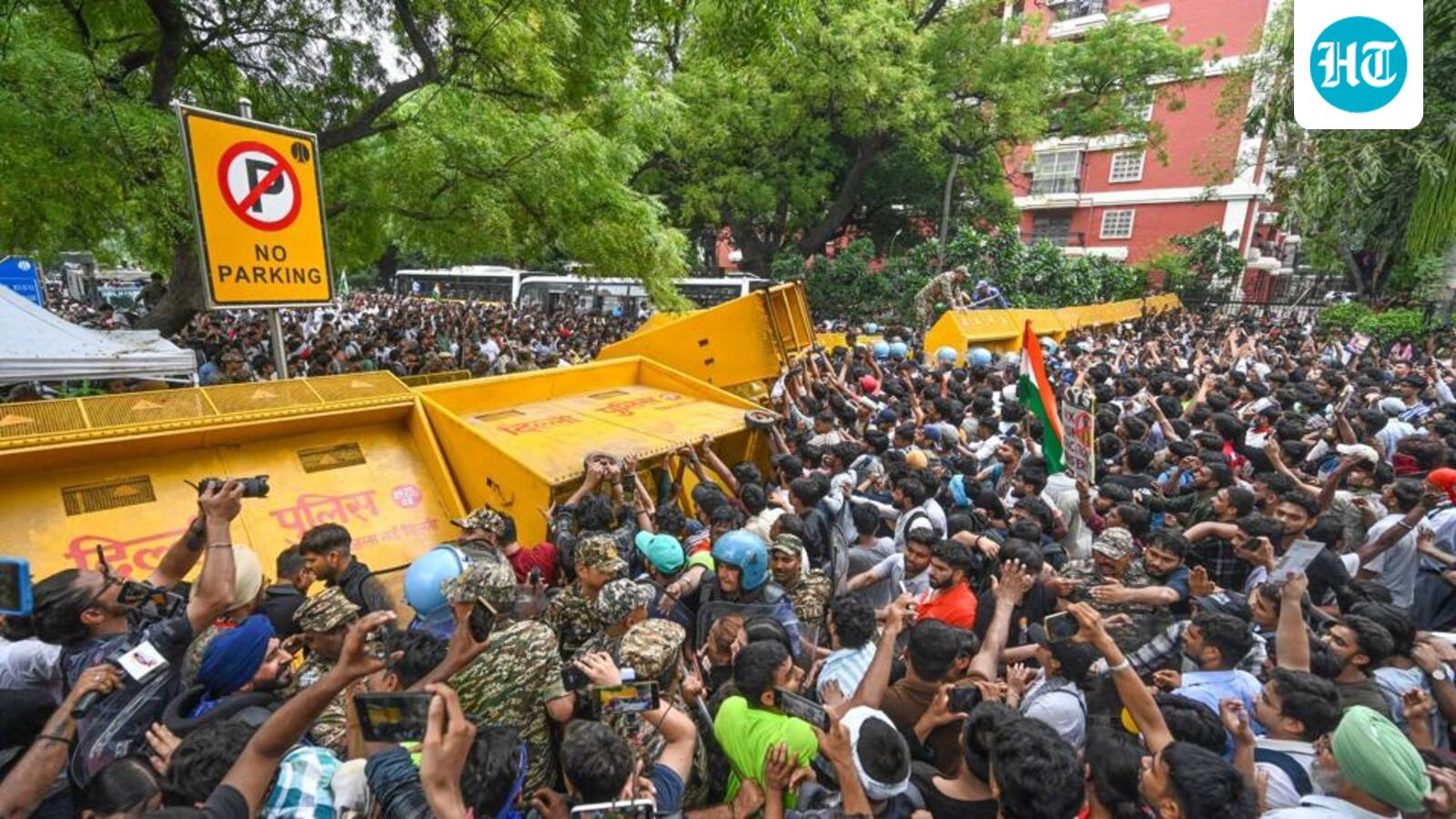
The Delhi high court on Wednesday dismissed a petition seeking a fact-finding inquiry into conflicting accounts over the alleged use of lathis by Delhi police against the Cockroach Janta Party (CJP) student protesters during their march towards Parliament by the Delhi police and social media.
A bench of chief justice DK Upadhyaya and justice Tejas Karia held that the jurisdiction of a public interest litigation (PIL) is not intended to adjudicate disputes arising from conflicting versions of events and the petition did not involve any public interest.
“All sorts of matters are filed. Everything that catches your imagination after reading the newspaper, you will file a petition? These high sounding words, accountability, transparency are not to be used in a vacuum like this. What is your petition? Delhi police issued a statement, that statement is being contradicted by the media, and you are asking us to get an inquiry conducted into it. Is there a duty on the Delhi police to decide your representation?” the bench said.
The court was hearing a petition filed by Naresh, who claimed to be associated with the media community. He alleged a discrepancy between a statement posted by Delhi police on social media denying the alleged lathi charge and media reports claiming that force had been used against the protesters.
Naresh submitted that he approached the police seeking clarification on the matter, but received no response. He therefore urged the court to direct Delhi police to respond to his representation.
Also Read:Lathi charge, internet cut: How CJP’s ‘Chalo Sansad’ March brought Delhi to a standstill
On July 20, the CJP organised “Sansad Chalo” march, after a hunger strike at Jantar Mantar that had continued for more than three weeks. The protest, held on the opening day of the Monsoon Session of Parliament, saw thousands of demonstrators march from Jantar Mantar towards Parliament, demanding Pradhan’s resignation over alleged examination paper leaks, accountability for student suicides linked to the issue and reforms in the examination system.
As protesters attempted to move through central Delhi, the Delhi police stopped the march using multiple layers of barricades. In the afternoon on Monday, a large group breached the barricades and advanced towards the Parliament complex, prompting security personnel to fire tear gas shells and carry out a lathi-charge to disperse the crowd.
Videos that surfaced on social media showed several protesters, many of them appearing unarmed, being beaten by police personnel in riot gear, with some sustaining head injuries. Police, however, maintained that the crowd had turned violent and alleged that protesters pelted stones at security personnel, necessitating the use of force.
On August 18, the Supreme Court constituted five member high powered enquiry committee (HPEC) headed by former Supreme Court judge R Subhash Reddy, to independently examine the competing allegations arising from the protest.
The Supreme Court on September 10, had directed HPEC committee to begin its probe into the July protests by examining the use of pellet guns, targetted violence and harassment of police presonnel while making clear that the broader constitutional questions arising from the protest would be decided by the court itself.
KioskNews shows a cleaned-up reading view extracted from the publisher’s page — the original always lives on their site, not ours.