Opinion: Opinion | Imran Khan, And The Perils Of Having An 'Opinion' In Bollywood
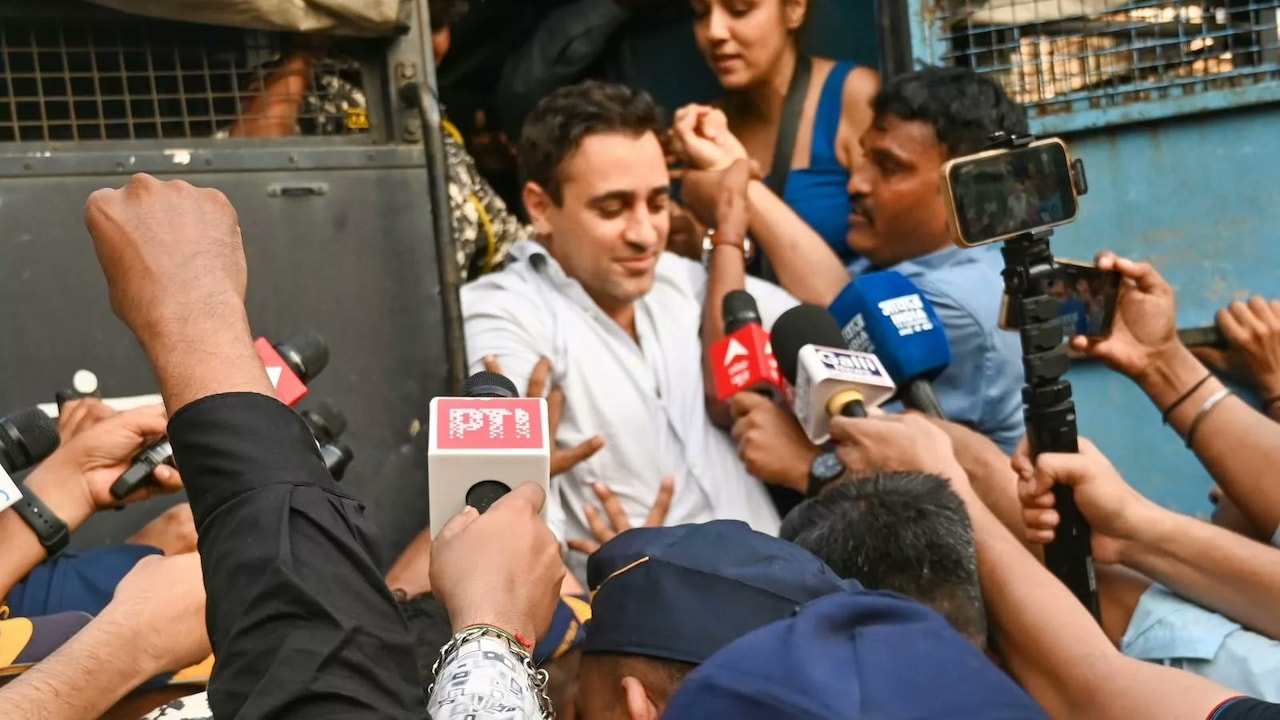
In July, when actor Imran Khan first joined the protests against the NEET paper leak, he said, "True art is going to have an individual artist point of you embedded within it, and as part of our human nature, we are going to have opinion and perspective. If you can't stand by your opinions and if you do not pour your own heart into your art, your art has no value".
By October, when he joined the protest demanding the resignation of Chief Election Commissioner Gyanesh Kumar, his mere presence was enough to get him a deportation order from the Mumbai Police. He is contesting it, but it has opened up the debate on the relationship between actors and politics. Those who are chastising Khan for airing his views while being an American citizen and Overseas Citizen of India are the same ones who demand that actors speak up on national issues, from the Union Budget to the Cockroach Janata Party (CJP)-led protests.
Advertisement - Scroll to continue
Three Different Assumptions
There are several assumptions here. One, that actors are making art. In a film industry that gravitates around commerce, films are judged by box office revenue, not artistic merit. And the fear of social and commercial boycott of films and advertisements is not conducive to freedom of aesthetic expression. One only has to look at the social media heckling of actor Aamir Khan (also Imran's uncle) after his then-wife Kiran Rao's remark at a media event in 2015 about rising religious intolerance in India. His subsequent silence on all controversial political issues gives credence to why the industry is called 'show business'. Because that is what it is, a business.
The second assumption is a deeper, philosophical issue: the inability of those in positions of authority to distinguish between the state and the nation. One can love one's nation but not necessarily agree with the actions of the state. This extends to another distinction, that between the karmabhoomi (land of work) and the janmabhoomi (land of birth). It's the same sentiment that motivates so many NRIs to be devoted and vocal supporters of the Bharatiya Janata Party (BJP), even though they are not citizens of India.
Advertisement - Scroll to continue
The third assumption is that filmmakers and actors in the film industry have informed opinions on important issues. One only has to look at the exaggerated importance attached to actor and now MP Kangana Ranaut's political views, despite her repeated own goals, among which is the memorable comment that India won true independence only in 2014. She is, as we all know, since 2024, the honourable MP from Mandi, Himachal Pradesh. She comes from a long line of actor MPs whose sole contribution has been to add themselves to the Gaffe Hall of Fame.
Remember Fawad Khan?
The reality of the industry is quite grimy. Its inhabitants are mostly fairweather friends, happy to sing the praises of whoever is in a position of authority. From Karan Johar, who issued an infamous mea culpa via video and virtually erased Fawad Khan's role in Ae Dil Hai Mushkil when the Uri attack happened, to Akshay Kumar quietly giving up his Canadian citizenship at the height of his cosiness with the current establishment, recent history is replete with very public displays of abnegation.
It's a far cry from when the industry was not afraid to be identified with a political party, of whatever persuasion it may be. Dev Anand, a staunch critic of Indira Gandhi, launched, albeit unsuccessfully, the National Party of India after his refusal to praise Sanjay Gandhi led to his films not being screened on television, and All India Radio (AIR) forbade any reference to his name. The mercurial singer and actor Kishore Kumar suffered a similar erasure for three months on AIR and Doordarshan when he refused to sing at Geeto Bhari Shaam, a state-sponsored charity event under the aegis of the Indian Youth Congress, in Delhi's Ambedkar Stadium in 1976.
The spectacle state, to borrow scholar Brahma Prakash's term, needs to sustain itself through emotion and sentiment. No one embodies this better than the magic-makers of cinema. A series of actors, such as Amitabh Bachchan and Rajesh Khanna, plunged into politics as Congress candidates, while their contemporary Vinod Khanna became a much-loved four-time BJP MP from Gurdaspur. Dharmendra contested and won from Bikaner in Rajasthan. His son, Sunny Deol, became an MP from Gurdaspur.
A North-South Distinction
But most actors in the North have treated politics as a side hustle. As Dharmendra said to the media upon being elected, "Films had made me what I am." And, therefore, he refused to quit films after having joined politics. It is not so in the southern film industries, which give the actors greater freedom to say what they want through their cinema, as was evident in the body of work of Tamil Nadu Chief Minister C Joseph Vijay, capped by his "final film", Jana Nayagan, which took on everyone from established politicians to AI-controlled drone warriors.
When Dev Anand launched his party, his reasoning was simple: "If MGR could spell magic in Tamil Nadu, why not me in the whole country?" But that is where he was mistaken. In Tamil Nadu and in the case of NTR Rama Rao in undivided Andhra Pradesh - who rode to power on back of playing mythological characters - their cinema was their own, designed to please audiences who formed formidable fan clubs that performed the function of vote banks. Unlike in Mumbai cinema, there is very little second-guessing. The star leads, and the audiences follow. In Mumbai, the star and filmmaker, usually products of the restrictive Juhu-Bandra spectrum, don't have the cultural capital to articulate the collective unconscious, which is usually a step ahead of the state's response.
In the West, too, speaking one's mind can cost actors and filmmakers their careers, and not only in the McCarthy era but even now with stars such as Susan Sarandon and Mark Ruffalo, who have made it a point to highlight the horrors of Gaza and come up against a powerful, permanent establishment. As actors, they believe humanity comes before borders, protest has no specific provenance, and conscience comes with global citizenship.
As a viral Instagram meme notes, in his most iconic role as Jai Singh Rathore, aka 'Rats', aka 'Ranjore ka Rathore' in the 2008 hit, Jaane Tu ...Ya Jaane Na, Imran Khan has to ride a horse, go to jail, and stand up for what - and who - they love before he can become a man. As far as he is concerned, two out of three in real life is not too bad.
KioskNews shows a cleaned-up reading view extracted from the publisher’s page — the original always lives on their site, not ours.