Diesel prices across Australia could surge beyond $3 a litre as Trump eyes cut to US fuel exports
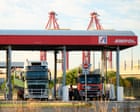
Australian diesel prices could surge above $3 a litre if Donald Trump cuts off US diesel exports amid floundering negotiations with Iran.
Fuel costs have risen to levels not seen since early April, adding to inflation risks and making another hike in interest rates all but certain.
Canberra is recording the highest prices out of the capital cities, with diesel at 298.7c per litre and unleaded at 250c on Thursday. Other cities’ prices were not far behind.
Prices have risen nearly 40c a litre since the start of the month, adding $22 to the cost of filling up a vehicle with a 55-litre tank.
Service stations have passed on steady increases from international refineries, which have struggled to secure cheap oil as ongoing hostilities in the Middle East prevent supply reaching global markets.
The Brent crude oil benchmark price has held above US$100 per barrel for most of the last fortnight, reaching its highest point since May.
Gulf countries’ exports of diesel have fallen to just a quarter of their pre-war levels with ongoing conflict preventing transit of fuel tankers through the strait of Hormuz and the smaller Bab al-Mandab chokepoint. Ukrainian attacks have cut off Russian supply, further restricting global oil flow.
Shortages would worsen if the Trump administration banned US exports of diesel, which it is actively considering as a measure to suppress local service station prices ahead of the November midterm elections.
ANZ Bank analysts said limits would be especially disruptive as the US had stepped up its global diesel supply since the war began, now exporting over 1.5m barrels a day.
Australia almost entirely relies on overseas imports of diesel, with government data showing it brought in over 18,400m litres from January to July 2026. Just 510.9m of the total came from the US, most of which arrived in April.
Saul Kavonic, analyst at MST Financial, predicted Australia would have to ration diesel and face prices of over $4 a litre within weeks of a US export ban, speaking to the ABC on Thursday.
But Dr Lurion De Mello, from Macquarie University’s Transforming Energy Markets centre, said Australia’s supply was still healthy.
Australia’s stockpiles of diesel have fallen to 31 days’ worth of supply, where they were in March, down from 39 days’ worth in July. The energy minister, Chris Bowen, has said government-backed fuel purchases had slowed as existing storage facilities were full.
De Mello said a US ban would push up prices as Europe, which relies on American diesel, would start competing with Australia for shipments from South Korea and other Asian refiners.
“If you take any supplier out, globally, it puts pressure on prices to go up,” De Mello said.
De Mello said Australia’s diesel prices could surpass $3.10 a litre but would be unlikely to reach $3.50 as long as Asian refiners continued to access oil.
The Albanese government temporarily lowered the fuel excise in March when diesel prices surpassed $3.10 a litre but has not offered a second excise cut.
High fuel costs would threaten industries that rely heavily on imported diesel, including farming and mining, and push up prices in food, manufacturing and transport industries.
The Reserve Bank is expected to raise interest rates on Tuesday to 4.6%, a 14-year-high, in part due to upward pressure from fuel costs.
KioskNews shows a cleaned-up reading view extracted from the publisher’s page — the original always lives on their site, not ours.