Deradicalizing Gaza is possible but will take decades, counterterrorism expert says
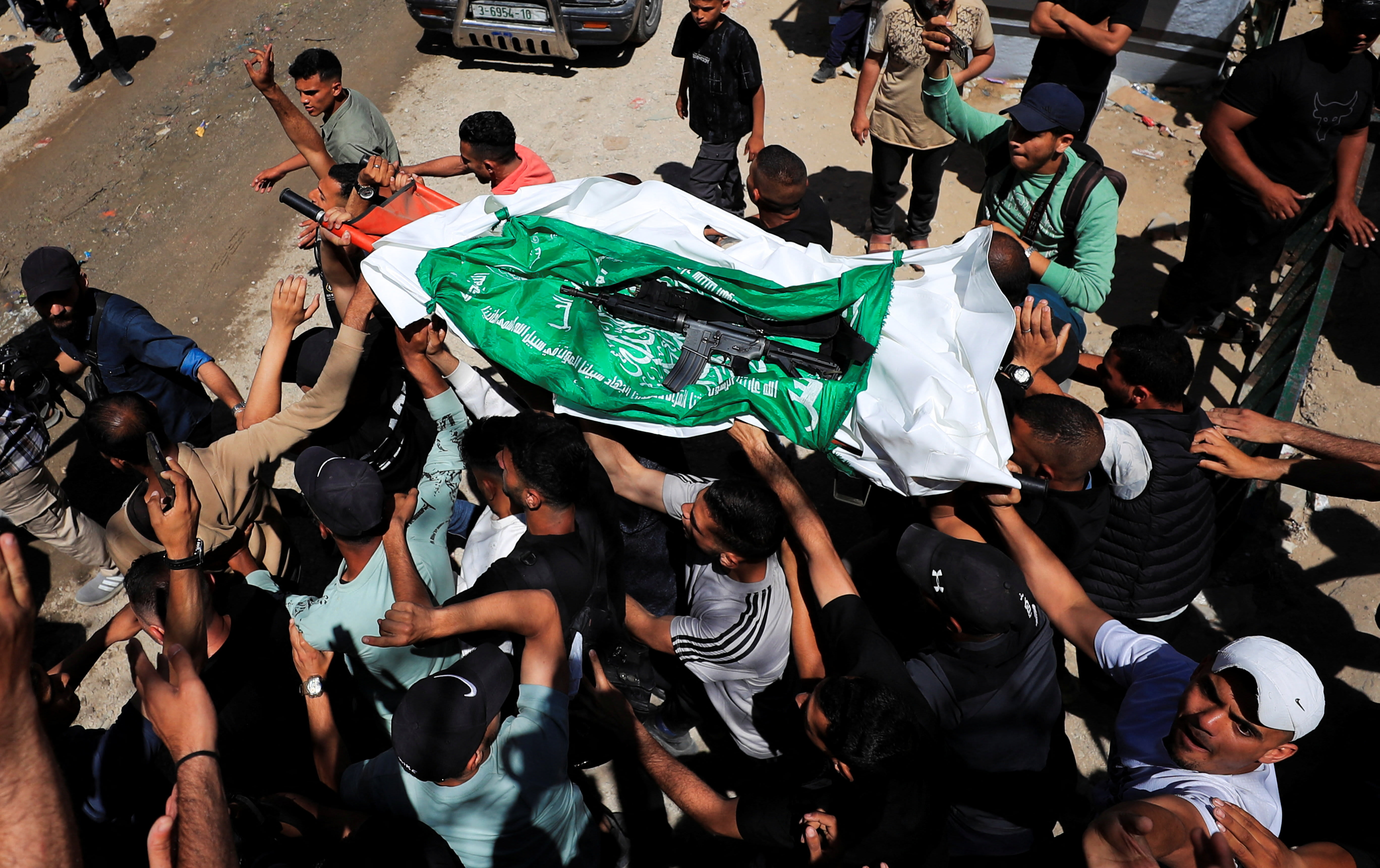
Deradicalizing Gaza could take decades following the October 7 war, new Reichman University International Institute for Counter Terrorism (ICT) Assaf Moghadam told The Jerusalem Post in a recent interview.
“We always have to entertain that some measure of hope is possible. Otherwise we can simply despair in light of the challenges. I tend to think human beings are inherently good, that the potential is there,” he said.
On the other hand, he said, “It is extremely difficult to do so [have hope] in a situation when so many social forces and environmental forces, and so many interests are working toward radicalizing, supporting and abetting the radicalizing of Gazans.
“Deradicalization has to remain an aspiration. I continue to think it is possible. I have to realize something is very difficult to undertake. It is a long-term project of 20 to 40 years and only if we are able to undermine those who have an active interest in radicalization,” he noted.
Why will Gaza deradicalization take a generation?
Further, Moghadam stated, “We cannot just deradicalize an individual. We need to undermine individuals, undermine states, and institutional ideologies relentlessly.

“People who are unborn who are growing up when Gaza is being rebuilt,” implying the current October 7 generation of Gazans is lost to the cause of deradicalization.
Next, he said, “Even if we were doing legitimate self-defense, regarding the raw and sad nature of war and the destruction inherent in war – for a child in Gaza, it doesn’t matter how justified we were, as they have a limited perspective.
“The suffering we experienced the last few years was the worst the Jewish people suffered since the Holocaust. This is why we [Israeli society, generally] have been unable to be inclusive and to sympathize with the Gazans’ suffering,” he added.
Moreover, he emphasized, “For a long-term chance of the reduction of violence,” and for there to be a chance of “some semblance of normal relations between us and whatever will be in Gaza, that will require that we be more sympathetic to the other side – and them to us.”
Deradicalization is one of the myriad terror trends that ICT studies.
ICT has 10 full-time faculty and a variety of interns. It has 55 students in its master’s program and between 40 and 50 in its undergraduate program.
“ICT is a hub for terror studies – one of the world’s leading hubs. There are only a handful of programs with a master’s in counterterrorism,” said Moghadam.
ICT’s three priorities under its new director
He said ICT would lean into three important issues as he starts his tenure as director.
First was to “broaden the scope of what we do; this ties into trends and boundaries which are eroding,” regarding terrorism, noting “we need to account for that in our work, to analyze terror in its broader context and how it relates to other kinds of extremism.”
Second was to build even more on international partnerships with think tanks and practitioners in Europe and the US.
“The boundaries between local and international are eroding, so we are doubling down on efforts to partner with international institutions,” he said.
Further, “This is particularly important when Israel is considered an international pariah in many parts of the world. These collaborations are more important than ever.
“Out of all of the disciplines where Israel has a big problem, in security studies and counterterror, people still realize maybe it is worth it to talk to you [to Israel]. Maybe we will learn something from you even if it is not politically correct,” said Moghadam.
Moghadam’s warning to Europe on its focus on Israel
Next, he referred to recent riots in France and other parts of Europe from groups who mostly also identify with an anti-Israel orientation.
“We in Israel are not surprised. We are not happy to see what is happening in Europe, but we are not surprised,” he said sadly.
He challenged European officials, saying, “If European countries are honest with themselves – the singular obsessive focus on Israel as the bad guy – for whatever reasons they decided to take that stance – it might be worth revisiting .”
Moghadam also talked about the uniqueness of ICT students, saying, “Our students served in the armed forces. They have had very practical direct personal encounters with terrorism.
“We can transform ICT into the academic home of students who have been involved in counterterror. Also, our students suffered.... a large number, around 500, were wounded seriously. I would like ICT to be their natural home. I want them to have a part in thinking about terror,” he added.
KioskNews shows a cleaned-up reading view extracted from the publisher’s page — the original always lives on their site, not ours.