10 Fantasy Movies With the Best Lore

Born with Autism (formerly classified as Asperger syndrome), Tyler B. Searle has been obsessed with storytelling since he was old enough to speak. He gravitated towards fairy tales, mythology, the fantasy genre, and animated movies and shows aimed at family audiences. When not writing, Tyler enjoys watching more cartoons and reading fantasy books in his home in Ontario, Canada.
Sign in to your Collider account
Fantasy films are some of the most fun and inventive in the history of cinema. They push the bounds of what can be portrayed on cinema by making the fantastical tangible, allowing for creative worlds full of magic, monsters, and heroes. As technology continues to improve, it allows for more and more imaginative worlds to be realized, so long as the directors and writers have the vivid imagination needed to think of them.
One aspect that makes exploring fantasy worlds so much fun is the rich lore that explains how they and their people operate. Though films are more limited when it comes to delving into lore compared to books, there are still a fair few cinematic triumphs that take the time to delve into the incredible and sprawling worlds they create.
'Willy Wonka and the Chocolate Factory' (1971)

Reclusive chocolate maker Willy Wonka (Gene Wilder) shocks the world by announcing that he has hidden five golden tickets inside his chocolate bars, promising whoever finds them a tour of his factory and a lifetime supply of chocolate. Among the kids who find them is Charlie Bucket (Peter Ostrum), a young, impoverished boy living with his mother (DIana Sowle) and elderly grandparents. Before entering the factory, however, Charlie is approached by one of Wonka's rivals, Arthur Slugworth (Günter Meisner), who offers him a considerable amount of money if Charlie steals one of Wonka's Everlasting Gobstoppers.
Willy Wonka and the Chocolate Factory might not be the most faithful adaptation of Roald Dahl's Charlie and the Chocolate Factory, but by God, is it pure, cinematic magic. The film delights in showing the little details that go into making Wonka's factory so magical, from the colorful workers called Oompa Loompas to elaborate candies that can transform their consumers. There are also plenty of gags and glimpses at the outside world to show how other people hunt for the golden tickets, which offers some fun looks at how the news is affecting the entire world.
'Time Bandits' (1981)

Kevin (David Rappaport) is a young history buff born to two materialistic parents, who discovers one night that his bedroom contains a tear in space and time. This brings him into contact with the Time Bandits—former employees of the Supreme Being (Tony Jay and Sir Ralph Richardson), who have decided to use their map of the universe not to repair holes, but to hop through time and rob history blind. However, their actions are noticed by the manifestation of Evil (David Warner), who plans to use the map to escape his prison and remake reality.
Time Bandits is the first of Telly Gilliam's Trilogy of Imagination, focusing on fantastical adventures through the perspective of a child. The film has a lot of fun playing around with time and the nature of the universe, such as Evil's idea for the perfect world being one based around machines and materialistic pursuits rather than nature and beauty. Things get even more fun at the end of the film, when the bandits go to the Time of Legends and eventually get to talk with the Supreme Being, who is one of the best versions of God put to film.
'Song of the Sea' (2014)
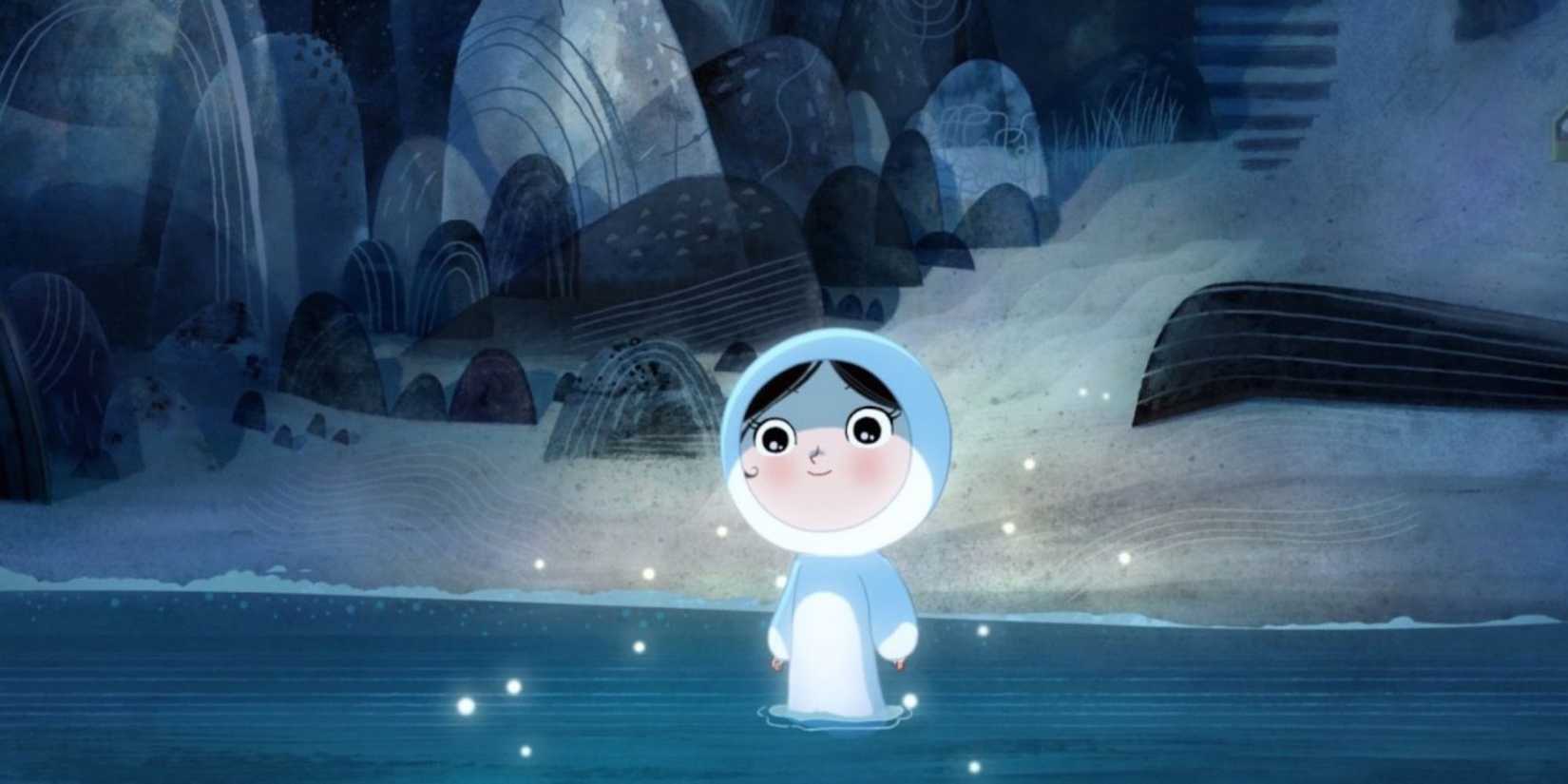
Ben (James Ó Floinn/David Rawle) is a young boy living in a lighthouse off the coast of Ireland with his father, Connor (Brendan Gleeson), and mute sister, Saoirse, whom Ben blames for the disappearance of their mother, Bronagh (Gráinne Bleasdale/Lisa Hannigan). They are eventually taken to the mainland by their grandmother (Fionnula Flanagan), who believes Connor's depression makes him ill-equipped to raise the children, but they escape and try to get back home. Along the way, they learn that Saoirse is actually a selkie—a shapeshifter who can transform into a seal—who is destined to open the door to Tír na nÓg and allow the fairy folk to go home.
Song of the Sea is Cartoon Saloon's second entry in their Irish Mythology Trilogy, and is easily the most magical in both visuals and storytelling. The art style resembles a tapestry come to life, which provides the perfect visual representation of the numerous creatures of Irish mythology and their unique magical powers. This is best represented in the tragic story of Mac Lir (Brendan Gleeson), a giant wracked with grief, and his witch mother Macha (Fionnula Flanagan).
'The NeverEnding Story' (1984)

While escaping some bullies, Bastian Balthazar Bux (Barret Oliver) enters a bookstore run by Carl Conrad Coreander (Thomas Hill), and leaves with a curious book called The Neverending Story. It tells the story of a fantasy land called Fantasia, which is being consumed by a force called the Nothing, and of the hero Atreyu (Noah Hathaway) who tries to stop it. However, the more Bastian reads the story, the more real it starts to feel.
The NeverEnding Story only covers half of Michael Ende's story of the same name, yet it managed to become one of the most iconic fantasy movies of the 1980s thanks to impressive special effects and strong performances. Fantasia is a world that draws from many real-life mythologies, such as the Nothing's servant, the wolf Grendel (Alan Oppenheimer), whose desire to aid in the world's destruction mirrors Fenrir, the great wolf of Norse mythology. Speaking of the Nothing, it represents the crippling emptiness of depression and how it destroys imagination and hope, which makes it all the more terrifying of an antagonist.
Collider Exclusive · 8 Questions · 2 Minutes What Fantasy World Do You Belong To? Middle-earth · Grand Line · The Continent · Camp Half-Blood
Pick your magic, your crew, where you want to wake up and who you would rather be fighting, and we will tell you which world you actually belong in. Four are open to you: an ancient kingdom living through its last good age, an endless sea full of pirates, a continent that pays people to kill monsters, and a summer camp where the Greek gods are extremely real and mostly a nuisance.
💍Middle-earth(Rings of Power)
👒Grand Line(One Piece)
🐺The Continent(The Witcher)
🔱Camp Half-Blood(Percy Jackson)
01
What kind of power do you want? Every one of these worlds runs on a completely different sort of magic.
02
Who is travelling with you? Nobody gets through any of these stories entirely on their own.
03
Where do you want to wake up tomorrow? The best fantasy is usually just somewhere you would genuinely like to live.
04
How are you making a living out there? Even in fantasy somebody has to pay for the horse.
05
There is something in the woods. What do you do about it? All four of these worlds keep something unpleasant out there in the dark.
06
Who is the villain of your story? The enemy tells you far more about a world than the hero ever does.
07
What do you actually believe in out there? Every world hands its heroes one rule and asks them to hold onto it.
08
A thousand years from now, how are you remembered? Eight questions in, this is the one that decides your world.
The Map Is Drawn Your World Is…
Four worlds and four completely different ideas of what a good life looks like. This is where you belong, what it would ask of you, and what you would get back in return.
Middle-earth
You belong somewhere old enough that the mountains have names and somebody can still tell you who gave them. Middle-earth is for people who think the right thing is worth doing even when it will not be finished in their lifetime.
- This is the only world on the list where doing good is understood as a very long defeat, fought anyway, by people who will never see how it ends.
- You are drawn to grandeur, to white cities and deep forges and the sense that almost everything you touch is older than your entire family line.
- The Rings of Power is set in the last good age before it all goes wrong, which gives every quiet scene in it a slightly unbearable weight.
- You would take the hard road, and you would take it on foot.
The Grand Line
You want the sea, a crew, and absolutely nobody telling you where you are allowed to go. The Grand Line is the world for people whose main ambition in life is finding out what is over there.
- One Piece has run for decades on one very simple engine, which is a group of people who each want something impossible and have decided to go and get it together.
- You collect people. Your ideal crew is a set of misfits who were each written off somewhere else before you turned up and offered them a better idea.
- The world is enormous and deliberately ridiculous, and the emotional gut punches land harder because of that rather than in spite of it.
- You would set sail knowing the map runs out, which is more or less the entire point of it.
The Continent
You would rather be feared and useful than liked and useless. The Continent is a world where the monsters are the straightforward part of the job and the people are where it all gets complicated.
- Witchers get paid to do what nobody else will and resented for existing at all, which is a trade most people would refuse and you would probably accept.
- You have no real illusions about which side is the good one, largely because on the Continent that question tends to have a disappointing answer.
- The best of these stories are not about the fighting. They are about somebody with a rigid code being repeatedly cornered into caring about people.
- You would take the coin, finish the job properly, and be out of town before the story got told wrong.
Camp Half-Blood
You want the myths to be real and loose in the actual world, and you want to find out at about thirteen that you were never anywhere near as ordinary as everybody kept telling you.
- Percy Jackson takes the oldest stories we have and drops them into car parks and diners, which makes the gods considerably funnier and a great deal worse.
- You would be the kid every school gave up on, who turns out to have been built for something nobody thought to test for.
- The series is genuinely about friendship rather than destiny, and it says so out loud every time a prophecy tries to get in the way.
- Camp Half-Blood is the real fantasy here: a place where the thing that made you difficult everywhere else is the thing that makes you belong.
'Guillermo del Toro's Pinocchio' (2022)

A grieving woodcarver named Geppetto (David Bradley) chops down the pine tree growing from his son's grave, and carves it into a wooden puppet in his likeness. A passing Wood Sprite (Tilda Swinton) takes pity on him and brings the puppet to life, naming it Pinocchio (Gregory Mann), and assigns a cricket named Sebastian J. Cricket (Ewan McGregor) to be his conscience in exchange for a wish. Pinocchio's lack of self-control causes some difficulties, especially when other individuals wish to use him for their own ends.
Guillermo del Toro's Pinocchio was a passion project for the director, and that passion shines through every scene. The film is firmly rooted in early 20th-century conflicts and politics, mixing Pinocchio's quest to become a real boy with the rise of Fascism and interesting discussions about life, death, and the gift of mortality. These are best explored through Pinocchio's meeting with Death (Tilda Swinton), the Wood Sprite's sister, who acts as a dour but studious custodian of those who pass on.
'Pan's Labyrinth' (2006)

Ofelia (Ivana Baquero) is a young girl living in Francoist Spain, who has just moved with her pregnant mother to live with her stepfather, devoted falangist Captain Vidal (Sergi López). She eventually discovers an underground labyrinth overseen by a faun (Doug Jones), who tells her that she is the reincarnation of the princess of the underworld. If she wishes to return to her kingdom, she must complete three difficult tasks, all while caring for her mother, as Vidal is committed to hunting down Maquis rebels.
Pan's Labyrinth is Guillermo del Toro's masterpiece, and one of the greatest fantasy films ever made. It presents a twisted yet fascinating world where the supernatural elements mirror and exaggerate the real horrors Ofelia is experiencing, such as the grotesque Pale Man (Doug Jones), who represents the cruel older generations who slaughter the younger. This approach makes the film fascinating to explore in regard to how much of it is truly magical, and how much of it is Ofelia trying to cope with a harsh reality.
'Castle in the Sky' (1986)

Pazu (Mayumi Tanaka/James Van Der Beek) is a young mechanic who meets a girl named Sheeta (Keiko Yokozawa/Debi Derryberry and Anna Paquin) when she falls out of the sky and is saved by a magic crystal around her neck. Pazu befriends her and tells Sheeta about Laputa, a mythical floating island which he hopes to find one day. Unfortunately, they are pursued by two groups interested in Sheeta's crystal: Muska (Minori Terada/Mark Hamill), a government agent who is also interested in Laputa, and a family of air pirates led by their matriarch, Dola (Kotoe Hatsui/Cloris Leachman).
Castle in the Sky is officially the first Studio Ghibli movie (since Nausicaä and the Valley of the Wind was animated by Ghibli's predecessor, Topcraft), and what a movie to start with. The world is a rich mix of fantasy and steampunk sci-fi driven by the mystery of Laputa and the ancient people who used to live there. It adds a great sense of mystery as the characters delve into the ancient past, and some of the best of director Hayao Miyazaki's environmentalist imagery when the secret is revealed.
'The Dark Crystal' (1982)

Gen (Stephen Garlick) is a Gelfling living on the planet Thra, which has long been ruled by the cruel Skeksis, and was raised by the wise urRu, known as Mystics. When the lead Mystic dies at the same time as the Skeksis Emperor, Gen is sent on a quest to recover a lost shard of the Crystal of Truth, which is the key to breaking Skeksis power. However, the Skeksis are aware of a prophecy that foretells a Gelfling that will topple their regime, and do what they can to kill Gen and any other Gelfling they can find.
The Dark Crystal is one of the best examples of a secondary world put to film. Everything about Thra feels truly alien, thanks in large part to the fact that there are no human performers on screen, only puppets. This novel approach allows everything to move in a slightly "off" manner that makes them feel alive yet entirely otherworldly, while even the landscape can animate at a moment's notice.
'The Lord of the Rings' Trilogy (2001-2003)
When Frodo Baggins (Elijah Wood) inherits a golden ring, he learns from the wizard Gandalf (Sir Ian McKellen) that it is the One Ring, crafted by the dark lord of Mordor, Sauron (Alan Howard). If he should get his hands on it again, he will have the power to subjugate all of Middle-earth to his will, and the ring is always trying to get back to its master by corrupting the people who carry it. Despite the risks, Frodo embarks on a perilous quest with a team of trusted companions to destroy the ring in the fires of Mount Doom.
Sir Peter Jackson's The Lord of the Rings trilogy brought J. R. R. Tolkien's world of Arda to life like never before, and is often heralded as one of the greatest film trilogies of all time. Though they can't go into as much detail as the books, they still do a great job delving into the various cultures of Middle-earth, their histories, and how they interact with one another. The prologue to The Fellowship of the Ring is the gold standard for delivering exposition, demonstrating key moments in the history of the One Ring that the audience needs to know before the story can begin.
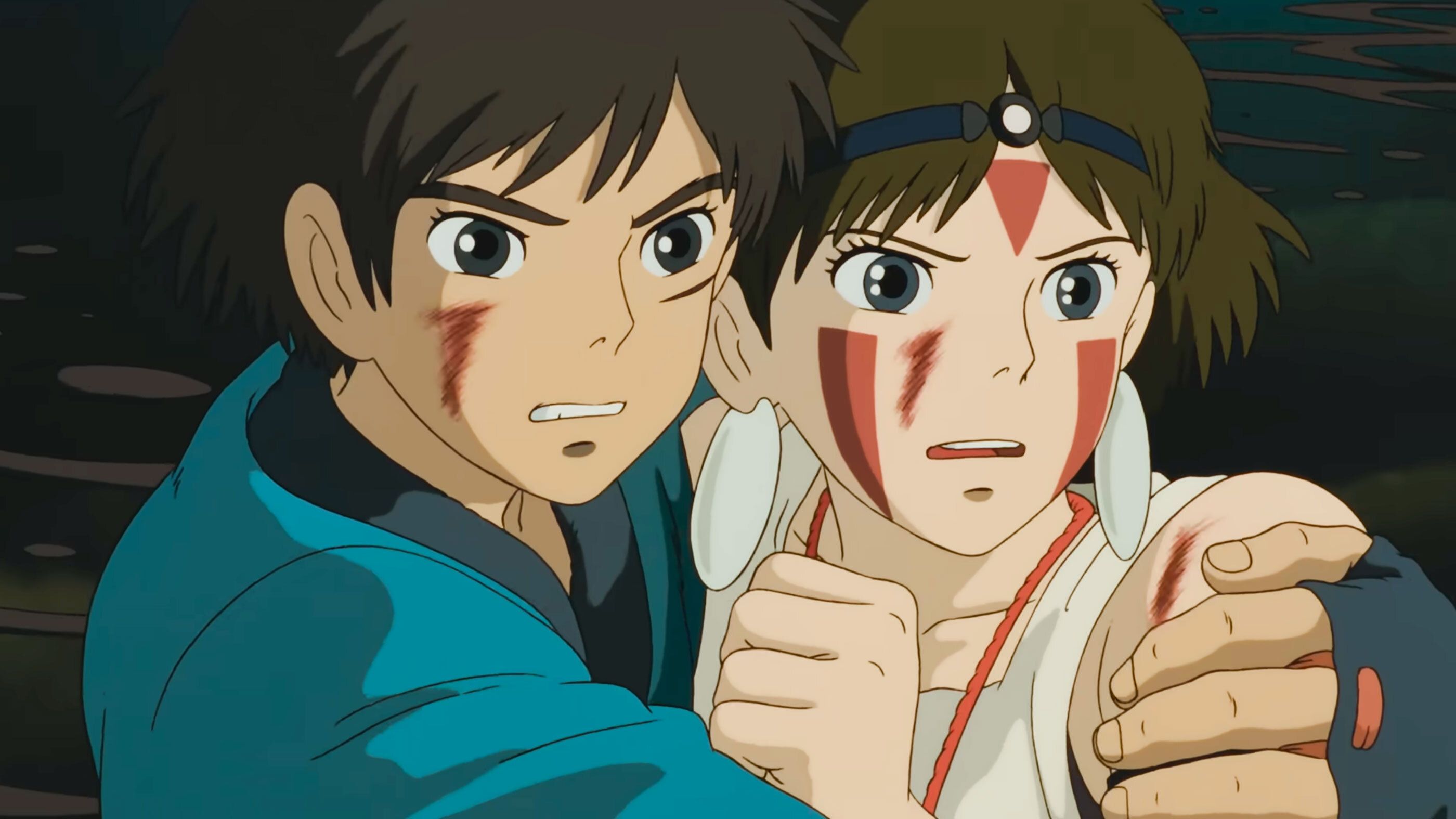
'Princess Mononoke' (1997)

Prince Ashitaka of the Emishi (Yōji Matsuda/Billy Crudup) slays a boar-god named Nago (Makoto Satō/John DiMaggio), who had transformed into a demon, but is cursed in the process. Learning that the curse will gradually kill him, he follows Nago's trail in the hopes of finding answers, and arrives at a forest inhabited by animal gods and watched over by a Forest Spirit with control over life and death. The forest is currently at war with the inhabitants of Iron Town, led by Lady Eboshi (Yūko Tanaka/Minnie Driver), who are trying to mine ore from the mountains and forge hand cannons.
Princess Mononoke is a masterpiece of hand-drawn animation, while also making great use of some early CGI to bring to life some of the more overt demonstrations of magic. The world is rich and ancient, with the animal gods all feeling like the remains of a bygone era that is slowly being eroded by the progress of man. The relationship between magic and technology is demonstrated in a similar manner: magic often represents the natural world and is affected by emotions, while technology offers a chance for humans to level the playing field at the cost of corrupting the natural world.

Princess Mononoke
- Release Date
- July 12, 1997
- Cast
- Yôji Matsuda, Yuriko Ishida, Yûko Tanaka, Kaoru Kobayashi, Masahiko Nishimura, Tsunehiko Kamijô, Akihiro Miwa, Mitsuko Mori, Hisaya Morishige
- Runtime
- 133 Minutes
- Director
- Hayao Miyazaki
- Writers
- Hayao Miyazaki
KioskNews shows a cleaned-up reading view extracted from the publisher’s page — the original always lives on their site, not ours.