Have any footballers ended their career with more own goals than goals? | The Knowledge
“How many professional players have ended their senior careers with more own goals than goals for their own team?” wonders Peter Clark.
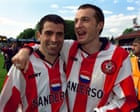
In the past we’ve looked at the players with the most own goals, but we haven’t looked at those who ended their professional career in debit. “Southampton cult hero Francis Benali scored only one ‘positive’ goal in his career and was legendary for banging in goal-of-the-month contenders at his own end, most notably a bullet header against Oldham in the 1993-94 season,” writes Daz Pearce. We could only find a couple of OGs for Benali, the other being against Manchester United in 1999-2000. But we were unable to find a comprehensive Southampton database, so there’s a chance we’ve missed some beauties.
Another unsentimental defender, Riccardo Ferri, the formidable stopper in Internazionale’s title-winning side of 1988-89, scored six goals and eight own goals in Serie A. He may be in credit overall – he scored three more goals in cup competitions, but we only have his OG data for Serie A. “Jamie Carragher finished his career with four goals and seven own goals,” writes Dean Whearty. “He even managed to score two in one match against Manchester United in 1999!”
And another in the FA Cup final of 2006, though that had a happier ending for Liverpool. Some sources credit Carragher with five goals at the right end, including an equaliser against Middlesbrough in August 2008. But the official Premier League site puts that down as an Emmanuel Pogatetz own goal.
“Sven van Beek is the all-time leading own-goal scorer for the Eredivisie, with eight in a career at Feyenoord, Willem II and Heerenveen, over the course of 12 seasons and 193 matches,” writes Rob de Hair. “He only managed to score five goals for his own team in those matches. ESPN provided a ‘highlight’ reel here.” Van Beek is still playing in Qatar, and appears to have netted five goals at the right end for Al-Shahania.
Another player on minus three is Luigi Zannier, a defender who played for several Italian clubs, including Milan, in the 1950s and 1960s. In Serie A matches, he scored three and put in six at the wrong end.
Zannier and co have nothing on Everton’s Billy Balmer, however. “At the turn of the 20th century he netted eight goals during open play; all, unfortunately, at the wrong end of the pitch,” writes Gavin Buckland. “In more than 300 appearances for the Toffees his only goal at the right end was a single penalty in 1899.”
Un-Brescia-dented
“What is the earliest point in a season a team in the top flight has been confirmed as having a trophyless season?” asks Matt Walker.
The concept of a trophy has changed in the last 15 years, particularly since Arsène Wenger referred to fourth place – and Champions League qualification – as a trophy. But this is The Knowledge, not La Vibe, so we are only referring to actual shiny things you can lift above your head in triumph.
In England, the flicker of a trophy is often extinguished at the start of January, when Premier League teams play in the third round of the FA Cup. Tom Reed cites the example of Bournemouth last season. “They were knocked out of both domestic cup competitions by 10 January. Despite having a good season, they had no realistic expectation of winning the Premier League, and weren’t in Europe either.”
But, as Tom points out, Bournemouth were not mathematically out of the title race at that time. Tom has calculated that Derby County, who finished the 2007-08 season with only 11 points, are the earliest case of an English top-flight team being mathematically unable to win a trophy. “They were knocked out of the League Cup on 28 August and the FA Cup in the fourth round on 26 January. Their inability to win the Premier League was officially confirmed in their 26th league match of the season, on 9 February, when a 3-0 defeat by Tottenham – coupled with a victory for the leaders Arsenal – made the gap between top and bottom insurmountable.”
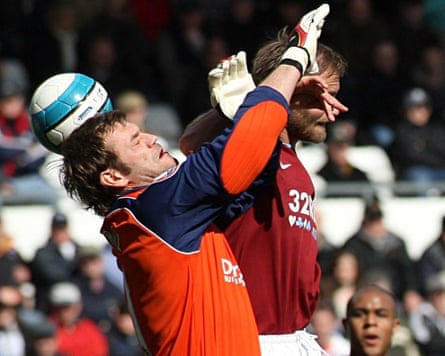
Other countries start their main cup competition earlier in the season, which means many clubs have been forced to embrace their trophyless-ness before Christmas (realistically, if not mathematically). “The early rounds of the Coppa Italia are played at the start of the season,” writes Daz Pearce, “and therefore the weaker Serie A teams could easily crash out of it in September. That’s what happened to Lecce in 1993-94 and Brescia in 1994-95. They were never in contention for the title – Lecce won one of their first 23 games, Brescia none of their first 14. They also tumbled out of the Coppa Italia in round two, the earliest possible stage for a Serie A club at the time. I’m sure at some point, they would have clocked that the Scudetto was probably beyond them.”
We’ve looked into it and think that Lecce and Brescia were both mathematically out of contention after 22 of the 34 Serie A games. In Lecce’s case, that was 6 February 1994; in Brescia’s, 5 March 1995.
Bum luck (part II)
In last week’s Knowledge, we looked at players who ended their scoring droughts with a goal off their backside. Tom Clarke has one more to add to the list.
“I think there is in fact a case of a usually prolific striker enduring a barren run with a goal off their bum, at least partially,” he writes. “Late in the 2023-24 Championship season, Leeds’ automatic promotion push was stumbling due in part to Patrick Bamford’s goals drying up. He needed one to go in off his derrière, which is pretty much what happened during a 4-3 win at Middlesbrough. You could say it’s partly hip, partly backside, but surely it’s sufficiently rear-end to count! I recall saying to a fellow Leeds-supporting friend during the match how funny it was that he’d literally got one to go in off his backside and fulfilled the cliche.”
Knowledge archive
“Where and when was the term ‘shithousery’ first used, and do other languages have a word for it?” asked Brian in 2022.
Before we consider the contemporary phenomenon, we should probably look at how the word from which it is derived became part of the English language. According to our own John Ashdown, who wrote about the S-word during the 2018 World Cup, it can be traced back to Scouse slang used in the 1960s. The Concise New Partridge Dictionary of Slang has an entry for “shithouse”, with definitions “an extremely unpleasant individual” and “a coward”.
It had certainly reached the east Midlands by the 1970s. In Duncan Hamilton’s wonderful book Provided You Don’t Kiss Me, he talks about Brian Clough’s penchant for using the word. “The phone rang. ‘Where are you, shithouse?’ asked Clough. (He used the word ‘shithouse’ as frequently as other people use ‘please’ and ‘thank you’. ‘It’s an affectionate term,’ he’d explain – though he didn’t always use it that way)”. It also appears in most of the Clough stories told by Mark Crossley in his hilarious Undr the Cosh interview.
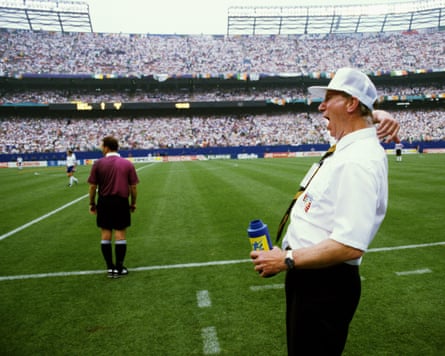
Jack Charlton was equally fond of the phrase. In 1990, during a prescient observation about how the media might ruin Paul Gascoigne, he said: “Journalists … they’re all shithouses, them”. A couple of years earlier, he said during an interview there was no room for “shithouses” in his Republic of Ireland squad.
John Hartson, then at Arsenal, was sent off against Middlesbrough in January 1997 after calling the referee, Mike Reed, “a shithouse”. But the neologism of shithousery only emerged in the 21st century. “The word does not (yet) feature in the Oxford English Dictionary,” writes the lexicographer John Williams, “but taking the ever-excellent Jonathon Green’s Dictionary of Slang as a baseline, we see that his earliest citation is from 2014, with Nicolás Otamendi as the alleged culprit.
“As this is a Twitter citation, I looked back further. The first football personality accused appears to be Arsène Wenger in 2011, the accusation coming from the Guardian’s own Daniel Harris.”
It started to become a wider part of the football lexicon in the 2010s, most notably when, according to one Arsenal fan, Crystal Palace “bantered us off for 90 minutes with shithousery”. Arsenal actually won 2-1, so goodness knows what he’d have said had they lost.
Can you help?
“AIK and Brommapojkarna contested an 11-goal thriller in the Allsvenskan league, with Brommapojkarna winning 6-5. Remarkably, all goals came in the second half. Is this the highest-scoring match where every goal was scored in the same half?” asks Kári Tulinius.
“As a Maidenhead United fan (National League South, the sixth tier of English football, since you ask), I was delighted when our marauding wing-back Jordon Ragguette recently received an international call-up for Saint Vincent and the Grenadines,” writes Adie Bradshaw. “Jordon was on the winning side in all four of their recent Concacaf Nations League games, which gives him a 100% win record in international football. This made me wonder: are there any players with 10 or more international caps who have a 100% win record?”
“In a Vietnamese league match against Nam Dinh in 2022, the home side Hai Phong had a goal ruled out for handball by video replay – even though VAR wouldn’t come to Vietnam until 2023. There was a giant TV screen in the stadium, and the referee happened to see an instant replay of the goal. Has there ever been another situation like this, where the referee didn’t have VAR, but another source of video replay helped them to reverse a decision?” asks Duc Tran Anh.
KioskNews shows a cleaned-up reading view extracted from the publisher’s page — the original always lives on their site, not ours.