Labour government urged to renationalise Royal Mail and fix privatisation 'mistake'
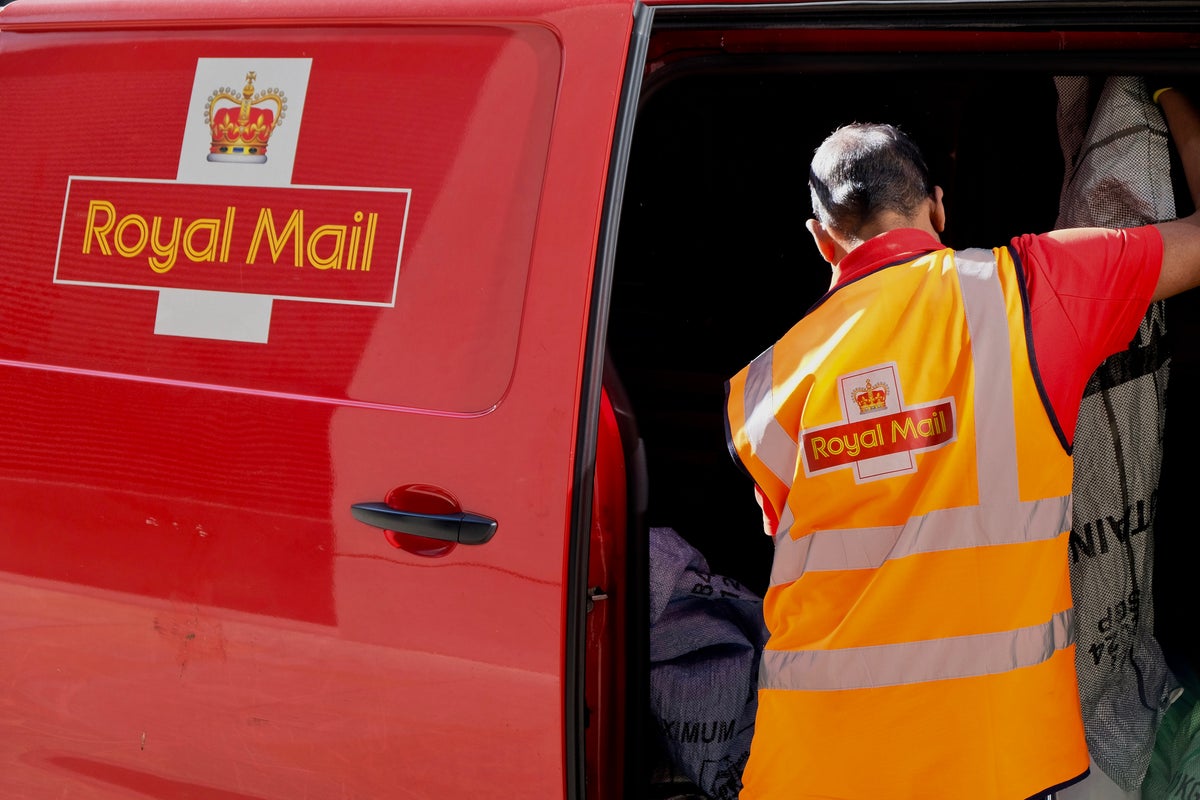
The Labour government has been urged to correct the "mistake" of privatising Royal Mail by bringing the service back into public hands, a former senior minister has argued.
Darren Jones, former chief secretary to prime minister Sir Keir Starmer, stated it is now "proven" that the company "cannot be run effectively by the private sector".
Royal Mail, whose parent firm International Distribution Services was purchased last year by Czech billionaire Daniel Kretinsky, faces growing scrutiny over delayed deliveries.
During a Commons debate on Monday, MPs highlighted constituents who missed medical appointments, court hearings and credit card bills.
Mr Jones, who left the Cabinet upon Andy Burnham’s rise to No 10, said: “The only conclusion I can come to is that the business model is not fit for purpose, and we should not be shy in coming forward and saying this: the privatisation of the Royal Mail and its separation from the Post Office was a mistake.
“The coalition government got this wrong, and so I hope it will now turn to this Labour government to put it right.”

Mr Jones argued there were only two options for the future of the company – “facilitate the end of the public service provided by the Royal Mail” or renationalise it.
“Think carefully about the end of this public service, because once it is gone, it will not come back,” the Bristol North West MP said.
“The only other real option is to renationalise it.
“The House may be surprised to hear me, of all people, say that – I am not a natural fan of the government borrowing yet more money to nationalise businesses that can be effectively run by the private sector.
“But this has been proven: the Royal Mail is an example of a business that cannot be run effectively by the private sector, and an example of a business which I believe the government can renationalise fairly easily within its fiscal rules.”
Mr Jones argued “with some confidence” there were underspends from other budgets that could be reprioritised, and believed there would be public interest in a “more mutual form of ownership” of the company.
“A public share offering and a special scheme for Royal Mail employees could be a nice way to do this, with the government merely underwriting the risk, whilst funds are raised by the public,” he said.
Labour’s Chris Bloore also argued Ofcom has failed to “compel improvement” in Royal Mail’s services.
The MP for Redditch said: “More fines will not fix this. Yet Ofcom have never come to this House seeking the powers it needs to hold Royal Mail to account.
“A regulator that can punish failure but cannot compel improvement must answer a fundamental question – what is it for?”
He later added: “If Ofcom can’t regulate effectively, we must question whether it remains fit for purpose.”
Intervening during his speech, Labour MP Simon Opher (Stroud) had suggested Royal Mail should be taken “back into public ownership”.
Dave Robertson, Labour MP for Lichfield, argued the government should look at the pay and bonuses of Royal Mail senior leadership, and “think about an ownership model for the future”.

Ian Lavery, the Labour MP for Blyth and Ashington, said: “A postal service isn’t a luxury, it’s an essential, critical public service.
“It should exist to serve the public interest, not simply the interests of the market.
“And if the private ownership cannot deliver the reliable universal service that people have every right to expect, then the government must be prepared to act…
“Renationalise the Royal Mail and see how that develops.”
Responding to the debate, business minister Kate Dearden said Royal Mail’s performance has been “unacceptable for far too long”.
She made no commitment to examine renationalisation, but said colleagues have given “careful consideration as to where government can continue to play our part going forwards”.
A Royal Mail spokesperson said: “We have now deployed our new delivery model in around 90 per cent of delivery offices and are starting to see the benefits for customers.
“First class quality of service has improved by 9 per cent, and offices operating under the new delivery model are delivering to around 95 per cent of addresses each day on average, compared with 88 per cent before rollout began.
“There is still more to do, but the progress we are seeing gives us confidence that the new delivery model will continue to ensure more reliable, efficient and sustainable deliveries for our customers.”
KioskNews shows a cleaned-up reading view extracted from the publisher’s page — the original always lives on their site, not ours.