Why North Korea’s Kim sees no need for another Trump ‘photo-op summit’
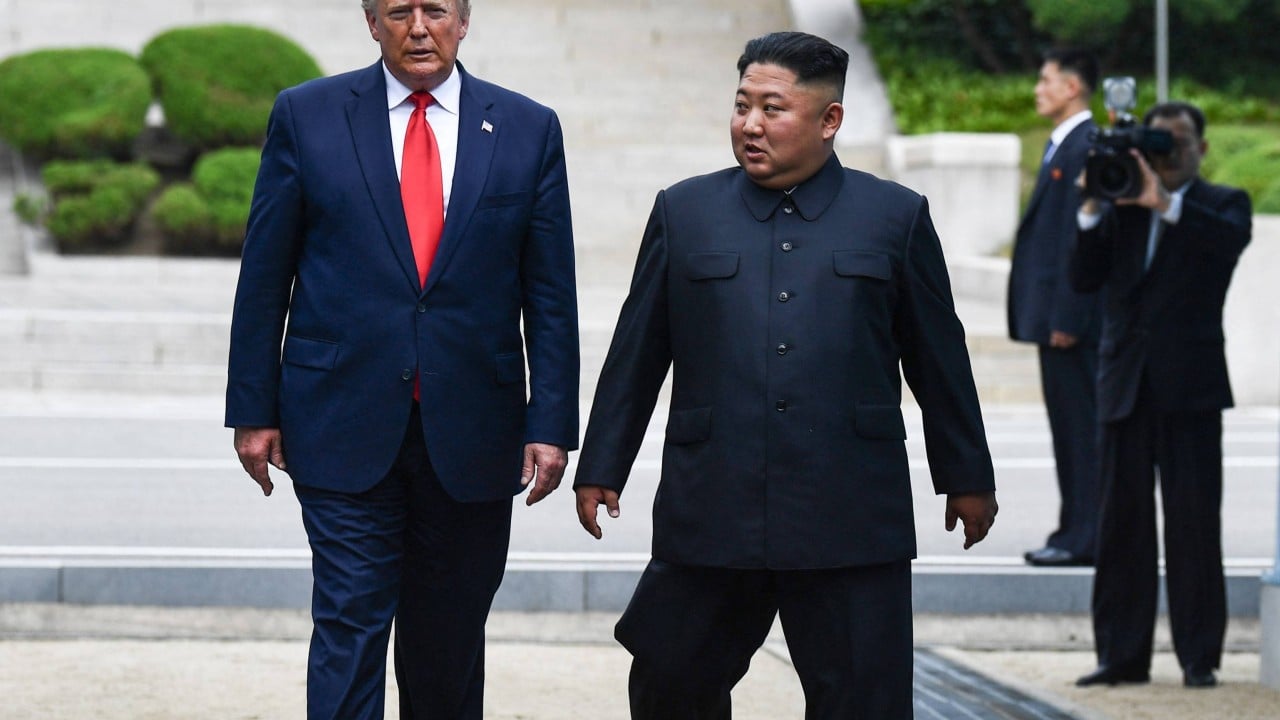
Kim Jong-un’s powerful sister on Wednesday rejected holding any further talks with the United States, days after the FBI accused North Korea of stealing more than US$6 billion from a cryptocurrency exchange and Washington launched a new round of sanctions aimed at Pyongyang.
Analysts say the latest developments have all but killed off the chances of another Trump-Kim summit, despite the US president’s continued warm words for North Korea’s supreme leader and apparent openness to meeting him again.
In a statement on Wednesday, Kim Yo-jong called the Federal Bureau of Investigation’s allegations regarding the Binance hack proof of Washington’s “hostile policy” towards Pyongyang and said there was “no need” for further talks.
“They talk about peace but prefer above all war drills and strengthening military alliances,” she said. “It is our clear position that there is no need to sit face to face with such untrustworthy and hostile people.”
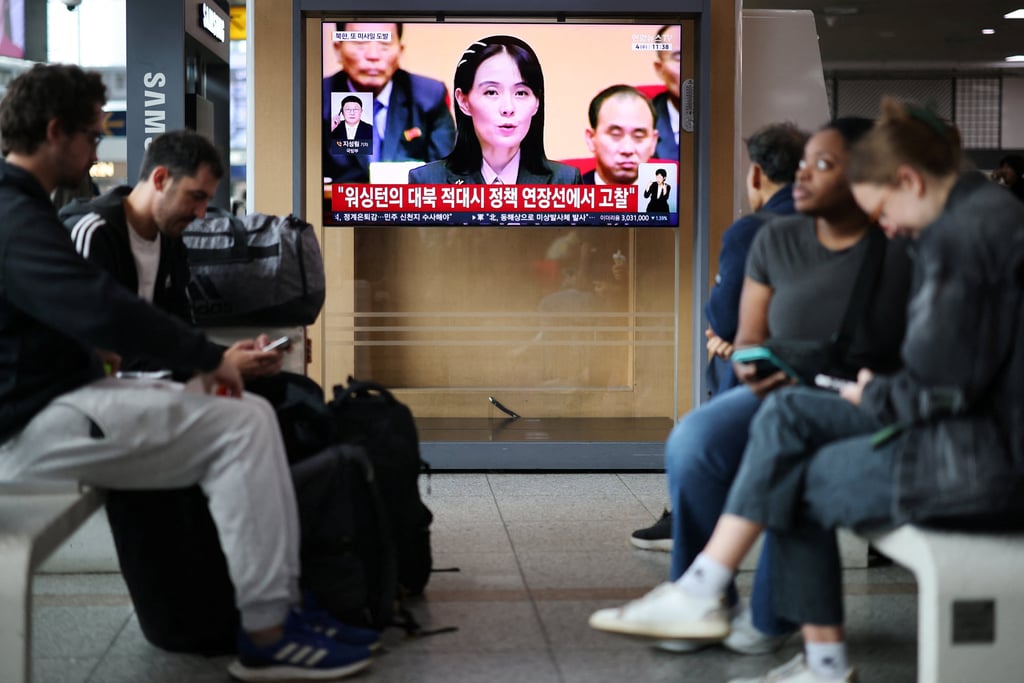
Her remarks also followed last week’s sanctioning by the US Treasury Department of eight North Korean operatives, two Russian financial facilitators and one North Korean-controlled entity over an overseas IT worker fraud scheme.
Hundreds of North Korean nationals, officials and front companies have been sanctioned under the US sanctions framework, which typically freezes assets subject to US jurisdiction and bars Americans from dealing with those named.
The Treasury’s Office of Foreign Assets Control, which administers the sanctions, on October 28 accused the sanctioned group of running a state-directed scheme in which North Korean IT workers, often posing as freelancers, had defrauded American companies to generate revenue for Pyongyang’s weapons programmes.
“The North Korean regime continues targeting and exploiting American companies through fraudulent activities conducted by its overseas IT operatives, who weaponise sensitive data and extort businesses for substantial payments,” Treasury Secretary Scott Bessent said in a statement.
Trump’s mixed signals
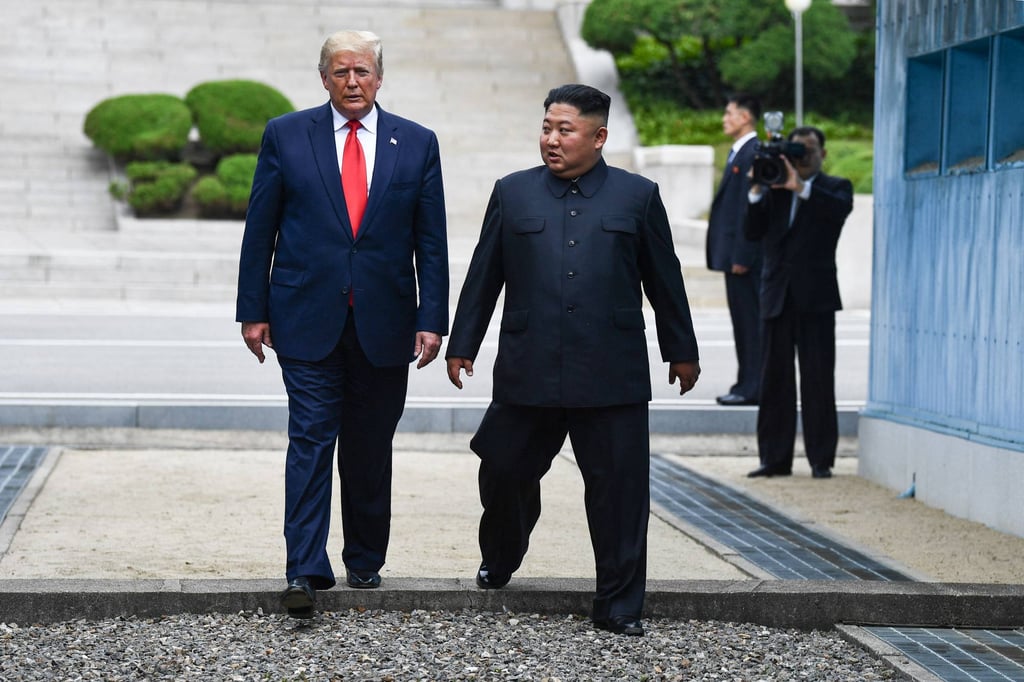
Trump and Kim Jong-un met three times during the US president’s first term in office, most recently at the demilitarised zone in June 2019.
Washington has said Trump would meet Kim again if Pyongyang was willing to discuss issues of concern to the US and its regional allies, including South Korea. Speculation has linked a potential meeting to the Asia-Pacific Economic Cooperation summit in Shenzhen later this month.
But analysts say Trump’s warmth towards Kim sits at odds with the US government’s continued pressure campaign.
That disconnect between presidential rhetoric and bureaucratic execution is what confuses many outside observers
Trump is virtually the only figure in his administration projecting “a warm, personal image” towards Kim, according to geopolitical analyst Lee Seong-hyon, an associate-in-research at Harvard University Asia Centre.
“His national security and Treasury teams remain clear-eyed and hawkish towards North Korea’s illicit threats, especially cyber-financial crime,” he said.
“That disconnect between presidential rhetoric and bureaucratic execution is what confuses many outside observers.”
Andrew Yeo of the Brookings Institution, a Washington-based think tank, said Trump’s comments playing down a meeting with Kim and the recent sanctions suggested the president and his administration “may be a bit more aligned” on engagement with Pyongyang.
He said Trump was “not bothered by inconsistency or holding contradictory positions” and would likely “make it happen” if the chance for a meeting arose, sanctions or not. Yeo is a senior fellow and the SK-Korea Foundation chair of Korea studies at the think tank.
Lee said Kim had long ago concluded that a “pure photo-op summit” carried diminishing returns without concrete concessions, but predicted that a Trump who was emerging politically weakened from the US midterm elections “may grow far more eager for a dramatic foreign-policy spectacle on the Korean peninsula”.
‘Isolation obsolete’
Analysts say Washington’s latest round of measures are unlikely to hurt Pyongyang too much.
Gabriela Bernal, non-resident fellow at the European Centre for North Korean Studies, said Kim “probably isn’t losing much sleep over them either, since he’s got the support of Moscow and Beijing”.
China is North Korea’s largest trading partner and Russia provides Pyongyang with security and military support. Both regard North Korea as a buffer state and a regional partner to counter US influence and maintain stability on their borders.
Cybercrime is central to the Kim regime’s finances. Intelligence agencies and blockchain analysts, who trace cryptocurrency transactions, say theft and online fraud generate between one-third and one-half of the regime’s total budget. The operations run to multiple billions of dollars and help North Korea evade international sanctions and fund its weapons programmes.

Yeo described the recent sanctions as punitive and “an important signal” that Washington “will not tolerate illicit activities targeting US businesses”. But he also called it “a cat-and-mouse game”, with new hackers constantly emerging and adapting to keep money flowing to the regime.
Bernal said Pyongyang excelled at cyber operations and the scale of its scams was probably “only now being discovered”.
“As one loose end is tied, more will pop up, it’s not something that will be disappearing any time soon,” she said, adding that most operatives worked from China and Russia, neither of which cooperated on sanctions enforcement.
China accounted for about 98 per cent of North Korea’s official external trade, Lee said, blunting the “strategic bite” of targeted sanctions.
01:12
North Korean leader Kim Jong-un pays unexpected visit to Chinese border city of Dandong
On October 15, China and North Korea officially opened the long-stalled New Yalu River Bridge to vehicle traffic. A little over a week later, Kim crossed the bridge to meet with Chinese officials in the border city of Dandong, visit war memorials and tour a historic vehicle factory.
Such links, Lee said, would expand cross-border commerce “on an expressway scale that renders traditional financial isolation obsolete”.
KioskNews shows a cleaned-up reading view extracted from the publisher’s page — the original always lives on their site, not ours.