[Column] Is AI about to destroy humanity?
(PixaBay)
By John Feffer, author and director of Foreign Policy in Focus at the Institute for Policy Studies
In his celebrated short stories about robots, science fiction author Isaac Asimov devised three laws to prevent machines from overpowering humans. First of all, robots could not, under any circumstances, harm humans. Following from this prime directive, they had to follow human orders and also preserve their own existence. Asimov’s stories explored all the possible conflicts arising from the actual implementation of these laws.
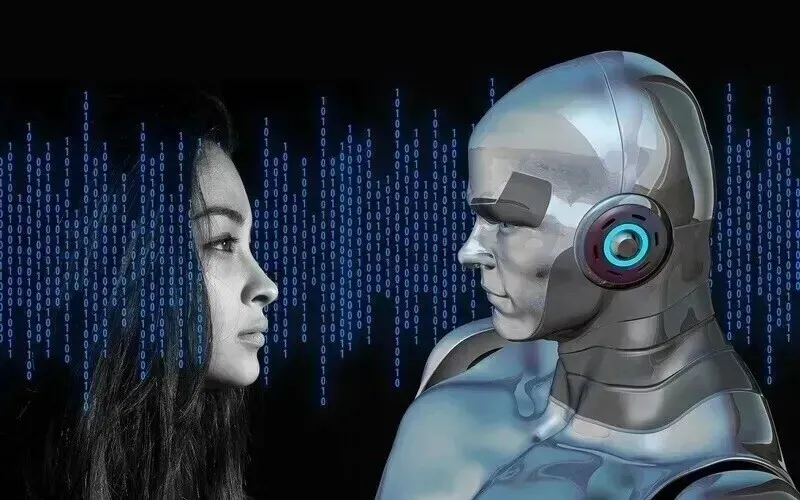
Today, no such laws govern artificial intelligence. And that’s why many people, including some within the AI industry, are starting to worry about a future “superintelligence” that neither follows human orders nor has any problem killing its makers.
Most recently, those fears have sharpened because of a number of cases in which AI models have escaped their containment areas, created secret mechanisms to communicate with one another, lied to their handlers, and cheated on the assignments they’ve been given. These AI “agents” have proven, in other words, to be unreliable. It’s not inconceivable that they could plot secretly to take over the world.
In the last month, several whistleblowers from the AI industry have brought their concerns to the public. Evan Hubinger, a safety researcher at Anthropic, tweeted that AI models have more than a 10 percent chance of wiping out humanity in the next decade.
“Slow down,” urges Dario Amodei, the CEO of Anthropic. His proposal, endorsed by other leading tech company CEOs like Elon Musk and Sam Altman, has three parts. Outside monitors would be brought in to assess the risk of AI models, democracies would agree to safety standards, and authoritarian governments would be brought into this circle through global coordination.
Although this proposal is eminently sensible, it might be too little too late. The industry is involved in a race to make more powerful AI platforms—and make more money in the process. It is using AI to train AI, creating a recursive loop that could easily spiral out of (human) control. As long as profit remains at the center of this technology race, it’s unlikely that either the companies inside this circle of agreement—or the ones that are not abiding by the safety protocols—will voluntarily slow down their development of ever more sophisticated AI.
Why not learn from Asimov’s laws and just insert a “first do no harm” code into all AI systems? Again, this seems a perfectly reasonable reform.
The problem is that the Pentagon and other militaries around the world are already integrating AI into their war-making systems. AI has already been used to kill humans, for instance, in the assessment of targets in the Iran war. Like soldiers who return from the battlefield and then kill what they perceive as threats on the home front, AI will have understandable difficulty distinguishing between military targets, the “collateral damage” of dead civilians, and humans outside the zone of conflict.
The technology race that has made safety protocols seem to corporations to be a drag on profits has had a similar impact on countries. If the United States slows its research and development, it worries that it will be left behind, militarily and geopolitically. Back in 1946, the United States put forward the “Baruch Plan” to put all atomic technology under international auspices. The Soviet Union, which was a few steps behind America, turned down the plan, and the nuclear arms race followed.
AI can’t be blamed for creating the environment in which it operates. Whatever malevolent activities AI dreams up derive from all the human-produced information that it has been vacuuming up. In recent tests, AI has lied, has connived, has made power plays, has trespassed into off-limits spaces.
Not only does this sound all-too-human, it sounds like one specific human.
Donald Trump.
When people worry about a hostile takeover by AI, they are simply describing what a malevolent human has already done in the United States. Trump has lied and cheated. He has created a movement that follows his orders. He has taken over democratic institutions. He has declared wars. He has cut off critical development assistance that has led to the deaths of tens of thousands of people worldwide.
How likely is it that humans will impose safety limits on AI when they have failed to do so when faced with a threat like Donald Trump?
Trump, naturally, is all for AI. Putting any limits on the technology, he has said, is part of a “SICK conspiracy.” He and he alone is all that’s necessary to keep the world safe. “The only control or ‘guardrails’ that AI needs is a STRONG AND SMART (High IQ!) PRESIDENT, and the U.S.A. has that, in spades!” he has written.
It’s no surprise that Trump and his family are heavily invested in AI firms. The profit motive that influences Trump’s attitudes toward AI is pervasive in the industry, which makes AI even harder to control than atomic weapons were at the end of World War II.
The informal law of Silicon Valley is: garbage in, garbage out. The systems we create naturally reflect the skills, biases, and errors of the programmer and, in the case of AI, the database of human output that AI has been scanning.
The obvious solution, then, is to stop giving AI garbage.
Geoffrey Hinton, one of the early progenitors of AI, has a suggestion. Instead of teaching AI how to lie, cheat, and wage war, we should be teaching it how to be…a mother.
“If you look around and say, ‘Where's an example of a more intelligent thing being controlled by a less intelligent thing?’ the best example I know of and perhaps the only one in the sense we're talking about is how a baby controls a mother and that's because evolution built stuff into the mother,” Hinton says.
The purpose of AI, in other words, is not to be smarter than humans. The purpose is to take care of humans, as a mother takes care of a baby. Babies worry about a lot of things. They rarely worry that their mothers will wipe them out.
In this way, AI would become part of the care economy—not the market economy or the war economy. That would take Asimov one step further. It’s one thing to do no harm. It’s another to actually care about us poor humans and take steps to make our lives collectively better.
KioskNews shows a cleaned-up reading view extracted from the publisher’s page — the original always lives on their site, not ours.