EXPLAINER: What happens when Rodrigo Duterte's ICC trial opens on Nov. 30?
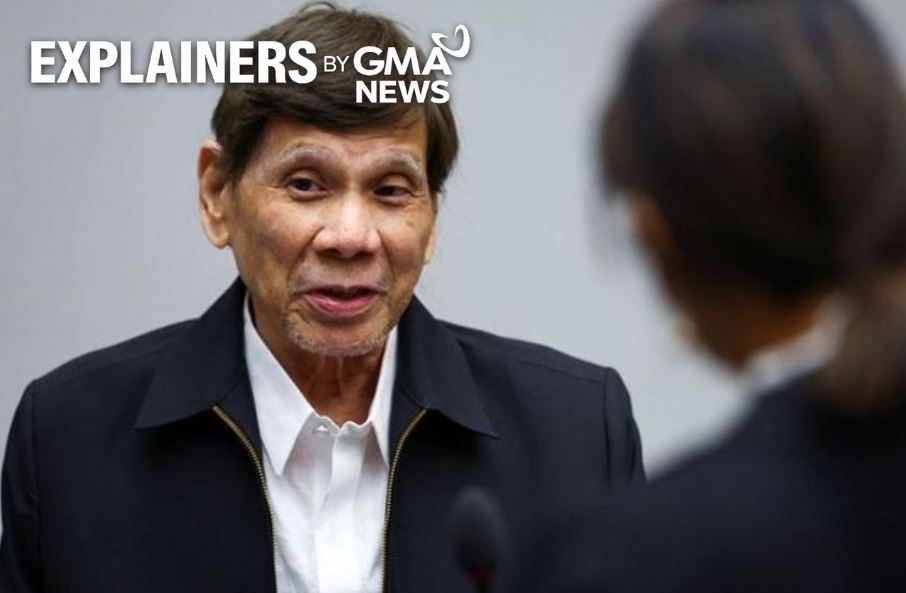
The International Criminal Court’s (ICC) trial of former President Rodrigo Duterte for crimes against humanity will open on November 30, with judges first asking him whether he admits guilt or pleads not guilty.
In a media advisory released by the ICC Public Affairs Unit Friday, the ICC has laid out how the opening of the trial will unfold.
Will former President Duterte appear in person?
Under Article 63 of the Rome Statute, an accused person “shall be present during the trial.”
The ICC’s own Duterte case page likewise says the accused is expected to be present during trial, while any questions about how Duterte participates will be decided by the judges.
So far, Duterte’s defense team has made no public filing about how he will appear before the court on November 30.
In October, the ICC Registry advised judges to publicly explain any arrangement allowing Duterte to leave and re-enter the courtroom during proceedings, warning that unexplained absences could fuel disinformation among audiences following the trial from the Philippines.
The Registry noted that Philippine media were expected to follow the proceedings “very intensively” and pay attention to the “smallest details” of Duterte’s appearance and conduct.
It also said victims and affected communities placed “paramount importance” on Duterte’s presence during the proceedings.
The Registry further said that, if Duterte does not attend in person, participation by video link from the ICC Detention Center could be considered, subject to the Chamber’s approval. It said such an arrangement would still allow Duterte to communicate privately with his lawyers.
How can the public watch the conference?
Yes. The ICC will stream the hearing on its website, Facebook account, and YouTube Channel with a 30-minute delay.
Members of the public may also attend in person, subject to limited gallery space and a first-come, first-served policy.
What’s the hearing schedule like?
The hearing will begin at 10 a.m. in The Hague (5 p.m. Philippine time). Each hearing day is divided into four one-hour sessions:
10 a.m. to 11 a.m. (5 - 6 p.m. Manila)
11:30 a.m. to 12:30 p.m. (6:30 - 7:30 p.m. Manila)
1:30 p.m. to 2:30 p.m. (8:30 - 9:30 p.m. Manila)
3 p.m. to 4 p.m. (10:00 - 11:00 p.m. Manila)
The advisory said that the courtroom schedule may be adjusted “on a case-by-case basis,” meaning the exact timing will depend on how quickly the opening phase progresses.
What happens first?
According to the ICC Public Affairs Unit media advisory, Trial Chamber III will first verify that Duterte understands the nature of the charges before asking him to enter a plea.
The judges will then ask whether the former president makes an admission of guilt or pleads not guilty.
Who gives the opening statements?
The Office of the Prosecution will speak first, followed by the Common Legal Representatives of the Victims (CLRV). The Defense may also give an opening statement if it chooses.
The prosecution has six hours total for its opening statement, while the CLRV has three hours. The statements will be delivered across the court’s four daily hearing sessions.
When will the first witness testify?
The first Prosecution witness is scheduled to start testifying following the conclusion of the opening statements, and the courtroom schedule will be adjusted on a case-by-case basis.
What charges does Duterte face?
Former President Duterte is charged with crimes against humanity of murder and attempted murder pursuant to Article 7(1)(a) of the Rome Statute.
He faces three counts of the crimes allegedly committed as part of a widespread and systematic attack against a civilian population in the Philippines between 1 November 2011 and 16 March 2019:
Count 1: Murder as a crime against humanity in Davao City during his mayoral period, between 2013 and around June 2016
Count 2: Murder as a crime against humanity of ‘High-Value Targets’ in locations across the Philippines during his presidency between around July 2016 and July 2017.
Count 3: Murder and attempted murder as crimes against humanity in barangay clearance operations in locations across the Philippines during his presidency between around July 2016 and September 2018.
Who are the judges?
The case is before Trial Chamber III, composed of Presiding Judge Joanna Korner and Judges Keebong Paek and Nicolas Guillou.
What happens after the prosecution case?
The hearings are scheduled to begin on 30 November 2026.
The Prosecution is currently expected to call a number of witnesses, after which the CLRVs may submit observations. The Defence will have the opportunity to present its case and call witnesses.
At the end of the trial hearings, the Trial Chamber judges will render their judgment within a reasonable period.
The judges will convict someone only if the Trial Chamber is satisfied that the charges have been proven beyond reasonable doubt.—LDF, GMA News
KioskNews shows a cleaned-up reading view extracted from the publisher’s page — the original always lives on their site, not ours.