‘My HbA1c is 7.5%. What does it mean?’
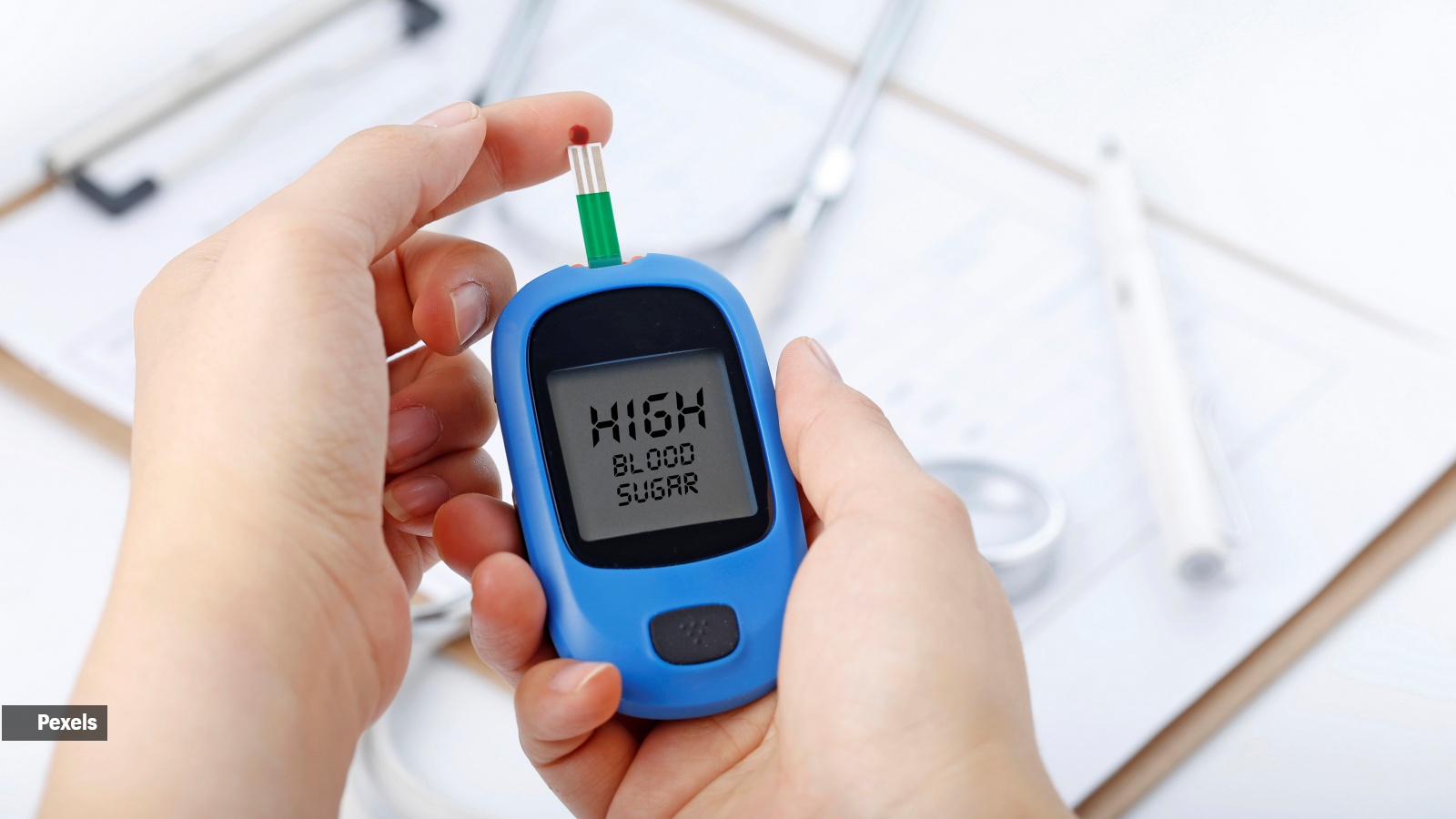
You get your blood test results back, and your HbA1c reads 7.5%. Is that high? Does it mean you have diabetes? And if you are already diabetic, should you be worried that your sugar levels aren’t under control?
An internet user, trying to get medically verified answers to these, enquired on Quora: “My A1C is 7.5. What does it mean?”
We reached out to Dr Rajiv Kovil, Diabetes and Obesity Specialist at Zandra Healthcare, to decode what this number tells you about your blood sugar and how to interpret it.
DISCLAIMER: This article is based on information from the public domain and/or the experts we spoke to. Always consult your health practitioner before starting any routine
What does an HbA1c of 7.5% indicate?
“HbA1c is like a three-month report card of your blood sugar,” says Dr Kovil. Unlike a fasting or post-meal glucose test, which captures blood sugar levels at a particular moment, HbA1c reflects your overall glucose exposure over approximately eight to 12 weeks.
As Dr Kovil explains, an HbA1c below 5.7% is generally considered normal, while a reading between 5.7% and 6.4% indicates prediabetes. A reading of 6.5% or above falls within the diabetes range.
“Therefore, an HbA1c of 7.5% is clearly in the diabetic range,” explains Dr Kovil. However, if someone has no symptoms and has not previously been diagnosed with diabetes, the result should generally be confirmed through a repeat HbA1c test or another diagnostic glucose test.
Is 7.5% considered good diabetes control?
If you already have diabetes, an HbA1c of 7.5% is above the usual target for most adults. However, it does not automatically mean that your diabetes is dangerously uncontrolled.
“For most nonpregnant adults with diabetes, the recommended HbA1c target is below 7%, although targets must be individualised,” says Dr Kovil.
The appropriate target depends on several factors, including a person’s age, overall health, life expectancy and risk of low blood sugar (hypoglycaemia).
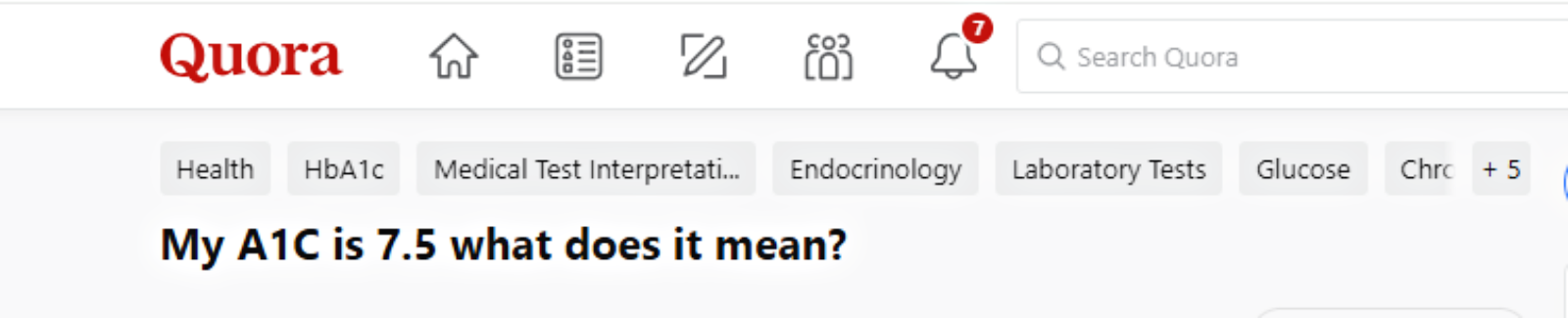 Screenshot of the query posted on Quora
For younger individuals, particularly those with a long life expectancy, tighter glucose control may help prevent future complications. On the other hand, for older adults dealing with frailty, multiple illnesses or a higher risk of hypoglycaemia, a target of 7.5–8% may sometimes be appropriate.
“The goal is not simply to achieve the lowest HbA1c, but to achieve the safest glucose control for that individual,” he explains.
What does an HbA1c of 7.5% tell you about your average blood sugar?
An HbA1c of 7.5% corresponds to an estimated average blood glucose of approximately 169 mg/dL over the preceding two to three months.
However, this does not mean your blood sugar remains at 169 mg/dL throughout the day. “This does not mean that blood sugar remains at 169 throughout the day. A person may have fasting readings of 110–130 mg/dL but experience significant glucose spikes after meals,” Dr Kovil clarifies.
This is why HbA1c should be interpreted alongside fasting and post-meal glucose readings and, where appropriate, continuous glucose monitoring. These can help doctors understand how blood sugar fluctuates throughout the day rather than relying on an average alone.
 For people who are overweight, losing even 5–7% of body weight can produce meaningful metabolic benefits.
Persistently elevated blood glucose increases the long-term risk of complications affecting the eyes, kidneys, nerves and cardiovascular system. However, as Dr Kovil explains, “a single HbA1c of 7.5% is not an emergency and should be viewed as an opportunity for timely intervention.”
What should you do after receiving an HbA1c of 7.5%?
“The first step is to understand whether this is a new diagnosis of diabetes or whether the person already has diabetes and needs better control,” Dr Kovil tells indianexpress.com.
The next steps will depend on your medical history, existing treatment and overall health.
Lifestyle modification remains fundamental. Dr Kovil recommends reducing refined carbohydrates and sugary beverages, improving portion sizes and increasing dietary fibre.
Physical activity is equally important. He recommends “undertaking at least 150 minutes of moderate physical activity weekly and incorporating resistance training”. For people who are overweight, losing even 5–7% of their body weight can produce meaningful metabolic benefits.
“However, lifestyle changes and medication should not be viewed as competing treatments.”
If diabetes is confirmed, medication may be appropriate from the outset, depending on glucose levels, symptoms, weight, kidney function and cardiovascular risk. For people already diagnosed with diabetes, treatment may need reassessment or adjustment if their HbA1c remains above their individual target.
“Modern therapies can do considerably more than lower blood sugar; selected medications also offer proven benefits for weight management, heart failure, kidney disease and cardiovascular risk,” Dr Kovil explains.
Once treatment is initiated or changed, HbA1c should generally be reassessed after approximately three months to evaluate how well the approach is working.
KioskNews shows a cleaned-up reading view extracted from the publisher’s page — the original always lives on their site, not ours.