'We're coming to get them': Rescuers pin hopes on underground spaces after deadly Nepal floods
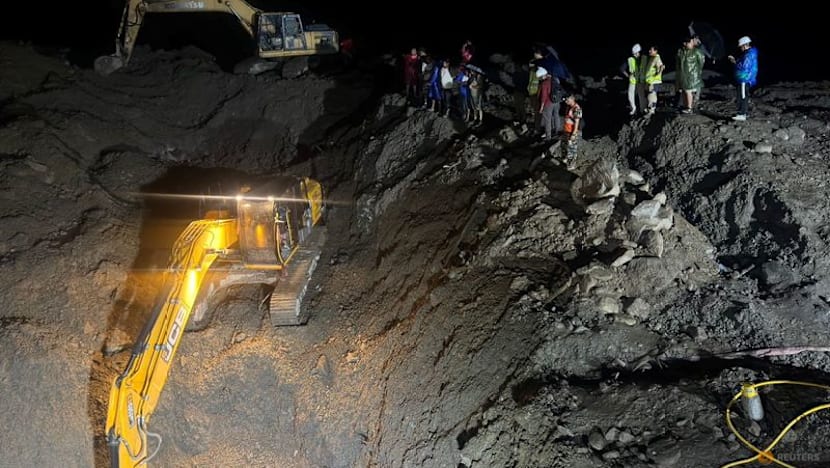
Rescuers searching for workers trapped in hydropower project tunnels after last week’s catastrophic Himalayan floods are holding out hope that survivors can still be found.
The confirmed death toll has surged above 900, with more than 4,247 people missing after tsunami-like glacial floods roared down from the China-Nepal border.
Nepali officials believe 933 workers are trapped at 11 hydropower projects in the hard-hit districts of Rasuwa and Nuwakot.
Search-and-rescue teams have been using controlled blasts, excavators and searchlights to clear water, mud and debris as they try to reach those trapped underground.
At the Trishuli 3A hydropower site, where more than 40 people were said to be trapped inside, rescuers have located one of the tunnels and blasted through its roof, according to Australian geologist and tunnel expert Arnold Dix, who is assisting Nepali authorities with rescue efforts.
“There's probably more water, rocks and things in it than we were hoping for. And we're now rethinking how we access that tunnel and also how we access the powerhouse,” Dix told CNA’s Asia First programme on Tuesday (Sep 1).
Rescuers have yet to locate anyone at the site.
“In the area of the tunnels that we're accessing at the moment, they're very close to where the tsunami or explosion or whatever you want to call it happened. So we weren't expecting to find anybody alive there.”
Dix is also president of Underground Works Chambers, which provides specialist advice on high-risk underground infrastructure.
He said the current plan is to climb into larger areas further inside the complex where the turbine and control rooms are - where workers may have taken shelter.
“That’s what we're pinning our hopes on at the moment,” he said, adding that the situation changes minute to minute as the data gets updated.
“We’re banking that we still have time,” he said.
Dix was also involved in the November 2023 rescue of 41 workers trapped in the Silkyara Tunnel in India’s Uttarakhand state.
But he said the situation in Nepal is vastly different.
“In the Silkyara rescue, we were dealing with a tunnel that had collapsed. Here we're dealing with tunnels that haven't collapsed, but a world (where) outside has basically collapsed. It's completely reversed.”
The rock was also soft in Uttarakhand, whereas in Nepal, “it’s either mud or it’s rocks the size of a house”, said Dix.
He said rescuers are drawing on technology such as satellite imagery and computer modelling, while helicopters are being used to move equipment into areas cut off by destroyed roads.
But sophisticated technology can only go so far.
“In the end, it will be men … crawling along with shovels, digging a hole,” he said. “In the end, it's about people helping other people.”
Dix said workers trapped underground should have access to water, while large spaces within the tunnel complex are likely to contain air.
His priority is to bore a hole into areas where the workers may be, allowing rescuers to establish contact and deliver water, food, medicine and give survivors some hope.
“They’ll be starting to lose hope, and hope’s the most important thing from their point of view.”
LESSONS FROM THE DISASTER
Beyond the immediate rescue efforts, the catastrophe has raised questions about how Nepal prepares for natural hazards and protects critical infrastructure in the Himalayas.
The disaster was triggered by a glacial collapse, according to the US Geological Survey.
While the exact cause of the collapse remains unclear, climate change is causing glaciers to melt worldwide, raising the risk of such disasters happening.
Jie Wang, an associate professor of disaster resilience and risk management at the University of Queensland, said the disaster showed the importance of risk preparation.
“If we can have a better risk reduction strategy in place earlier enough, we can reduce the cost, not only economic cost, but also the social, emotional and many other types of costs that occur after the natural disaster,” she told CNA.
Wang said responsibility for managing such risks should not fall on governments alone, but should also involve tourism operators and tourists.
Dix said the disaster could also provide insights on how critical infrastructure is built in the Himalayas.
Bridges have been more “susceptible” to such events, whereas tunnels themselves appeared to have performed relatively well.
“There might be a move to more tunnels and less bridges … countries in the region have realised how resilient the underground infrastructure is compared with the above.”
However, Dix said that such a move was likely to be costly.
For now, rescuers remain focused on reaching those who may still be alive underground.
“I just want them to know that we’re here and we’re coming to get them,” he said.
KioskNews shows a cleaned-up reading view extracted from the publisher’s page — the original always lives on their site, not ours.