Iran war revives Bahrain’s conflict with Shiite Muslim majority
Shaken by the accuracy of Iran’s attacks on Bahrain and support for them among some Bahrainis, authorities in the Gulf island nation have launched a crackdown on Shiite Muslim clerics they accuse of fostering allegiance to Tehran at home.
Bahraini officials have framed the move in existential terms, saying Iran seeks to undermine and ultimately topple the leadership of the only Gulf country that is ruled by a Sunni Muslim family but populated mostly by Shiites.
Critics, including rights groups, say the arrests and the stripping of citizenship from 69 citizens of Iranian heritage are a new blow to free speech and religious freedom in a country that crushed 2011 Arab spring pro-democracy protests.
“We are confronting an ideology that demands obedience to Iran’s leadership above Bahrain’s sovereign authority,” said Lieutenant General Tariq Al Hassan, head of Bahrain’s Public Security agency responsible for internal security.
Iran’s UN mission did not immediately respond to a request for comment.
The crackdown is a sign of how the Iran war has destabilised regional states allied with the United States that did not support the war but have borne the brunt of Iran’s attacks. In Bahrain’s case, it has reversed a trend of internal and regional detente.
The government had freed hundreds of prisoners in jail for political activity via royal pardons in 2024, rights groups said. The same year, Bahrain and Iran began talks to restore diplomatic relations, severed since 2016.
Now, divisions are deepening, particularly among some Shiite Muslims in the country who say they are being oppressed for their beliefs.
“They are directly targeting Shiites in the country and anyone who criticises the Americans or the Israelis for the war they have launched,” said a relative of one of the clerics on trial, who spoke on condition of anonymity to protect their safety.
Bahrain denies targeting Shiite citizens, “most of whom are law-abiding and loyal citizens”, Al Hassan said. A verdict is expected in the case on Sunday, and the kingdom is bracing for potential protests.
Iranian influence
The smallest Gulf nation, lying just across the water from Iran, Bahrain has long been anxious about Iranian influence.
The fortress with whitewashed walls that serves as Al Hassan’s headquarters in Manama was once the seat of the island’s ruler when it was a Persian vassal state.
That ruler was expelled nearly 250 years ago by the family now in charge of Bahrain, but the Persian empire and then modern-day Iran continued to claim it as a province until the 1970s, when a referendum showed support for independence.
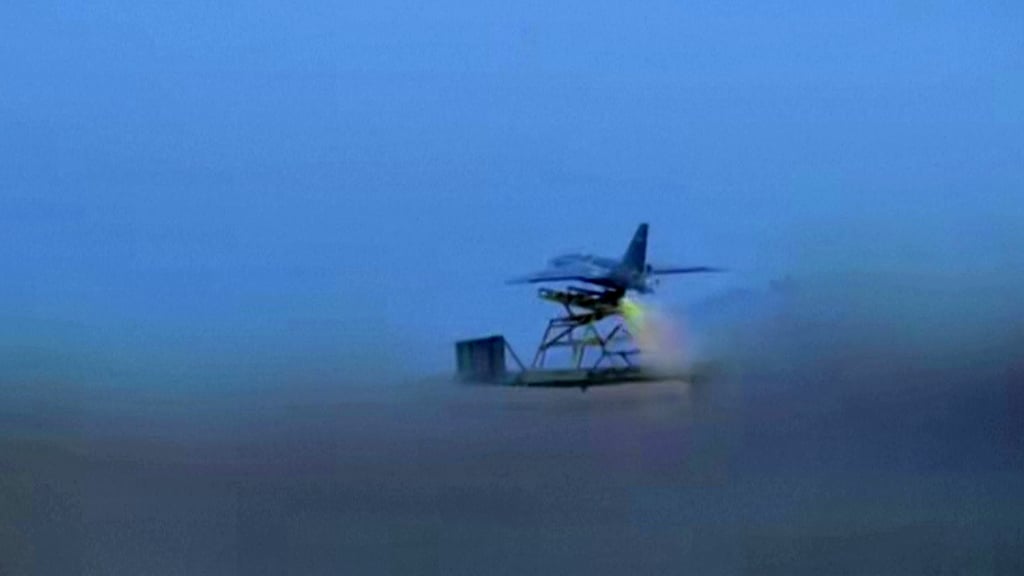
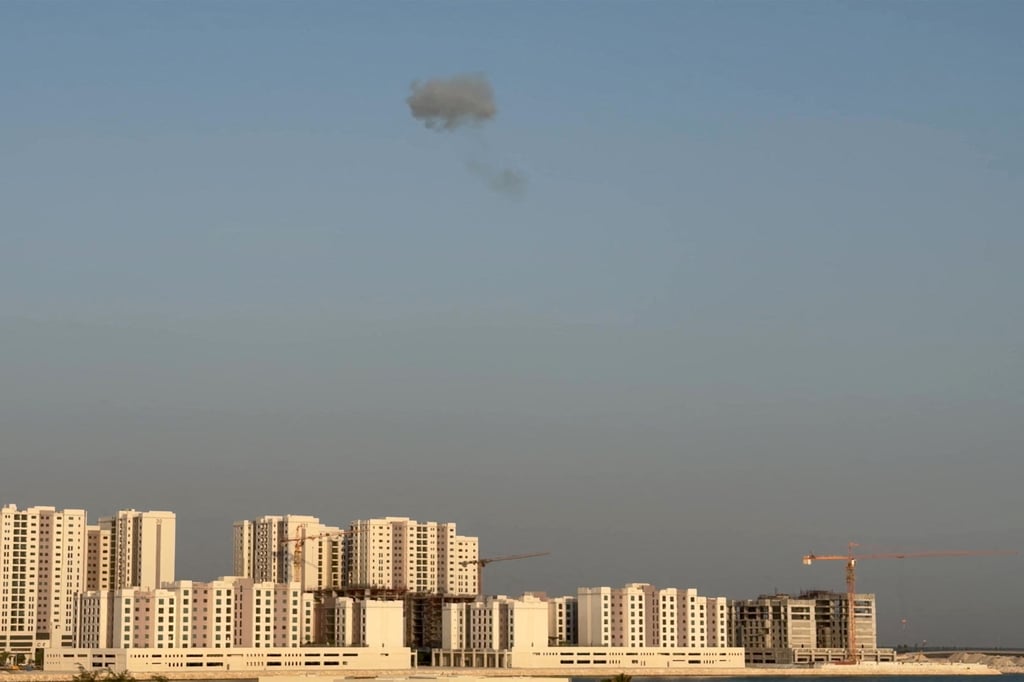
Since Iran’s Islamic Revolution of 1979, Bahrain’s Gulf neighbours have seen Bahrain as the frontline against Iranian expansion. When the US and Israel launched the Iran war on February 28, Tehran responded by raining drones and missiles on neighbouring Gulf states, including Bahrain.
For Bahraini authorities, the strikes were worryingly accurate, hitting a hotel shortly after US military personnel arrived there after fleeing their base, home to the US Navy’s Fifth Fleet, Western diplomats and Gulf officials said.
01:10
US launches more Iran strikes, hits oil tanker trying to break Hormuz blockade
They were further alarmed by social media posts from some Bahrainis praising attacks seen as targeting US interests after US strikes killed Iran’s supreme leader.
For many Shiites, Iran’s supreme leader is also a spiritual guide under the strand of the sect known as Wilayet al-Faqih, or the Guardianship of the Jurist, Iran’s official ideology.
Gulf governments have long preferred alternative strands of Shiism linked to clerics who do not explicitly combine the political with the religious, such as Iraq’s Grand Ayatollah Ali al-Sistani, who is based in Iraq’s holy city of Najaf.
Bahrain’s government suspected inside targeting help for attacks and saw the public backing for them as treasonous and embarrassing. Around a dozen people have been sentenced to between five and 10 years in prison for allegedly expressing support for attacks.
“Unfortunately, the war exposed the extent to which some individuals had been hijacked and indoctrinated by Iran-linked ideology,” said Al Hassan.
“Wilayet al-Faqih has fostered allegiance to a foreign state within parts of our society, and that is unacceptable. We determined at that point that this issue had to be addressed at its roots.”
Clerics arrested
Between May and June, authorities arrested more than 50 clerics and religious orators, accusing them of trying to run a terrorist group that sought to incite rebellion and overthrow the country’s ruling order with help from Iran’s Islamic Revolutionary Guard Corps.
Bahrain’s public prosecution said the clerics aimed to do this by promoting followers’ subordination to Iran’s supreme leader.
The clerics’ relatives and lawyers say Bahraini authorities were trying to criminalise belief, and denied charges they sought to overthrow the state or acted on behalf of Iran.
On Friday, 20 rights groups including Human Rights Watch and the Bahrain Institute for Rights and Democracy released a statement raising allegations of torture, coerced confessions and other due process violations in the case.
“This mass prosecution raises serious concerns about religious persecution targeting the religious life and leadership of Bahrain’s Shia community,” it said.
A Manama-based researcher on Islamist movements, speaking on condition of anonymity, cautioned that authorities must draw a distinction between Shiite identity and Wilayet al-Faqih.
“Bahrain’s strongest answer to Khamenei and the Revolutionary Guards is a sovereign state in which religious freedom is secure for all and no space is granted to Iran and its proxies to command some of its citizens.”
Bahrain has intermittently restricted or outright banned Friday prayers at key Shiite mosques for years and imposed limits on processions marking a key Shiite commemoration in June.
Signs of dissent can still be seen years after the government quelled anti-government protests with the help of Gulf ally Saudi Arabia, jailed hundreds of protesters and activists and banned opposition parties.
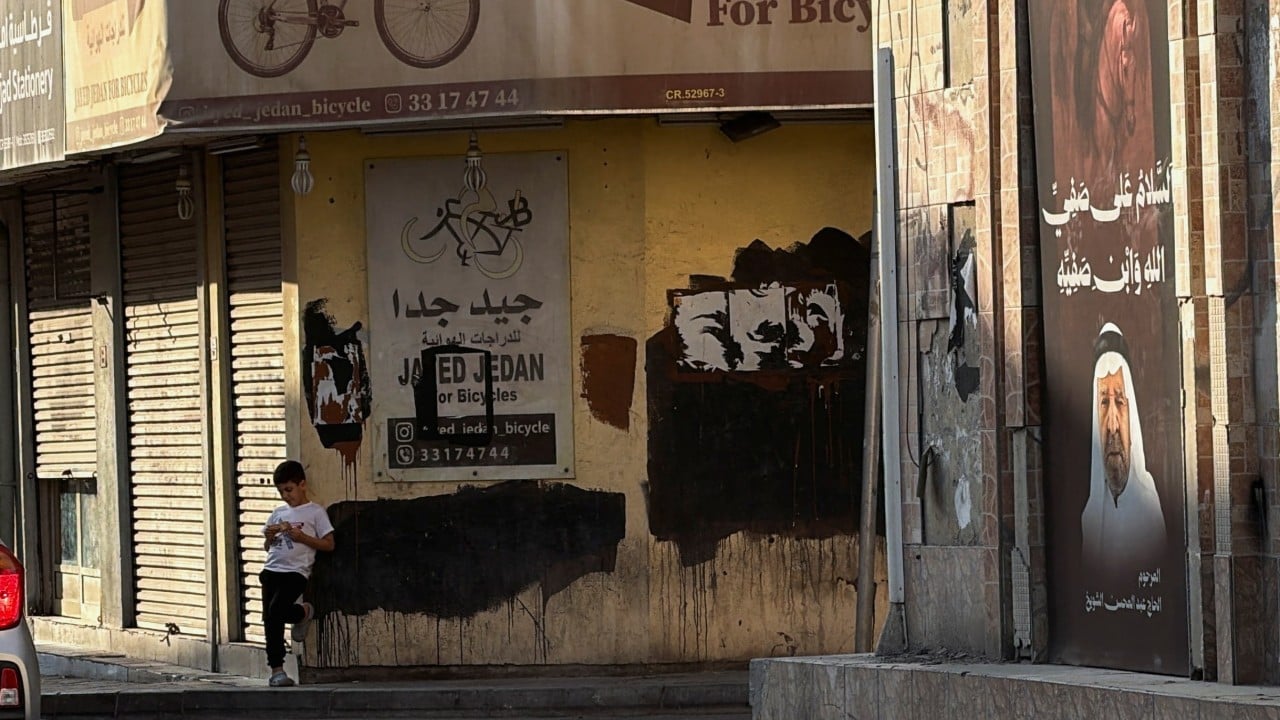
In a Shiite village a short drive from the well-manicured streets of Manama, anti-government graffiti can still be seen sprayed on walls, often next to older writings blacked out by authorities.
KioskNews shows a cleaned-up reading view extracted from the publisher’s page — the original always lives on their site, not ours.