Hong Kong homeowners prompt government rethink on proxy vote proposals
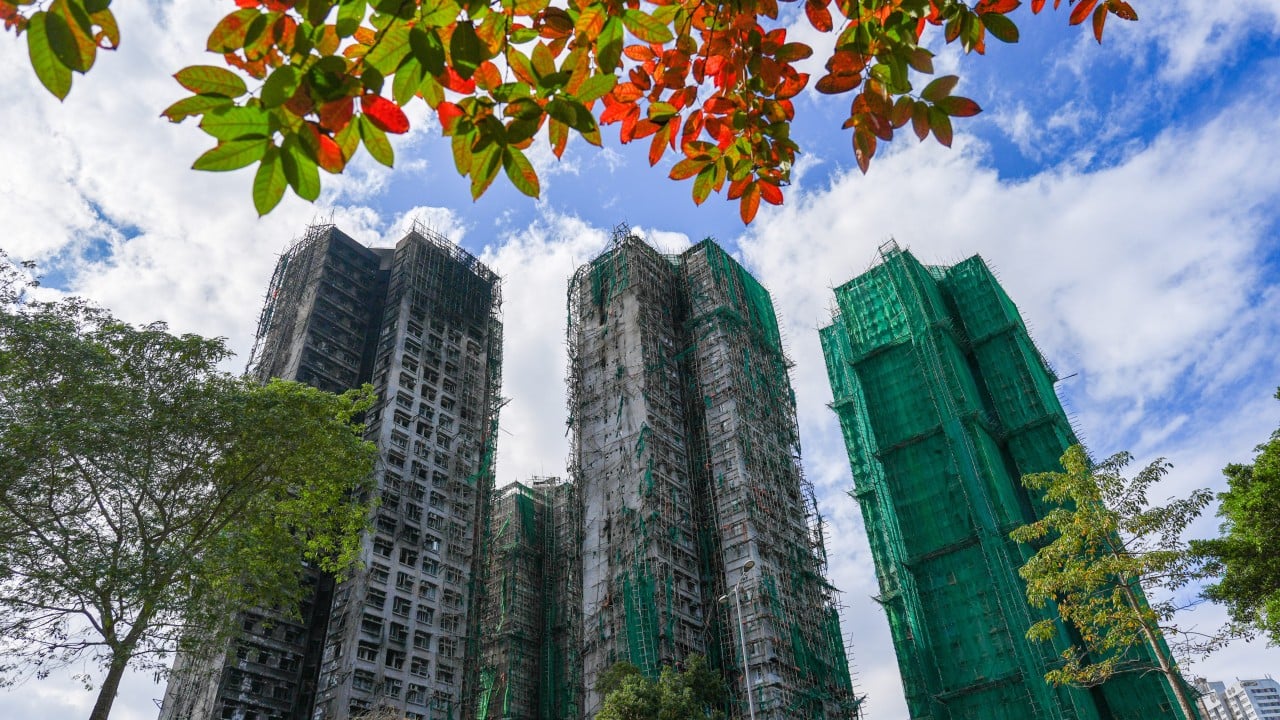
Hong Kong homeowners’ resistance to proposals to limit proxy votes and restrict meeting attendance to relatives has prompted authorities to study alternatives to resolve estate management issues behind the deadly Tai Po fire.
In a paper submitted to the Legislative Council on Tuesday, the Home and Youth Affairs Bureau revealed the findings of its month-long public consultation on amendments to the Buildings Management Ordinance, part of proposed reforms after the Wang Fuk Court fire that killed 168 people.
The department received 550 written submissions, including mixed views on proposed restrictions on proxy voting during homeowner committee meetings, prompting authorities to defer three measures for further study and consideration.
Nearly 70 per cent of respondents opposed allowing only specified people, such as relatives of owners or other owners in the same estate, to act as authorised representatives.
“The views considered that it was difficult to define ‘relatives’ and to verify the relationship between owners and authorised representatives in practice,” the report said.
“The proposal may also cause inconvenience to persons who have no relatives in Hong Kong and do not know other owners, or who live overseas or do not live in the estate on a regular basis, thereby affecting the exercise of their voting rights.”
The government initially proposed to limit the number of proxies held by a single person, a new measure backed by the independent committee investigating the fire.
But more than 50 per cent of respondents objected to the suggestion as “no consensus could be reached” on how to identify and invalidate proxies when multiple owners chose the same proxy.
“Quite a number of views also pointed out that strengthening spot checks and verification work should be the ultimate solution,” the report added.
The department said it would continue to discuss with stakeholders the feasibility of introducing a ceiling, including a study to introduce electronic proxy instruments to help address operational concerns.
A proposal to add a section for owners to voluntarily write binding voting instructions to their proxy was opposed by 70 per cent of respondents.
This was considered unreasonable because owners should hear the debate, discussions and counterproposals on the meeting floor before making an informed decision.
“Requiring owners to fill in specific voting instructions before the meeting is unreasonable and may disclose their voting intentions prematurely,” the report said.
“Even if a proxy does not vote in accordance with the instructions, it is difficult to detect and hold the proxy accountable.”
The independent committee’s report, released by the government last Thursday, examined the involvement of former Tai Po district Councillor Peggy Wong Pik-kiu.
At evidential hearings, residents said that Wong helped to collect a significant number of proxy votes during meetings that appointed engineering consultant Will Power Architects and ousted the owners’ board.
Respondents supported some of the authorities’ consultation proposals, including for proxy instruments to be delivered to the management committee secretary at least 96 hours before a meeting, up from 48 hours.
They also agreed that a list of flats that had submitted proxy forms would be displayed in a prominent area of a building for 48 hours before a meeting, and that meeting notice periods would be lengthened from 14 to 16 days to accommodate these timetables.
However, the submissions shot down the government’s proposed three-tier system for a quorum threshold at incorporated owners’ meetings.
For projects with a procurement value of HK$30,000 (US$3,800) per flat, the proposal required 10 per cent of owners to attend the meeting, with at least 5 per cent or 100 owners voting in person.
For projects valued at HK$80,000 per flat, 15 per cent of owners would need to attend the meeting, with at least 8 per cent or 150 owners voting in person.
For those valued at more than HK$120,000 per flat, 20 per cent of owners would need to attend the meeting, with at least 10 per cent or 200 voting in person.
Although the tiered voting-in-person thresholds were supported by more than 60 per cent of respondents, “quite a number of views” indicated that the tiered quorum requirement could hamper progress.
“If a tiered system is introduced for the quorum for convening meetings as well, it is feared that it may lead to adjournment of meetings and hinder owners from taking part in decisions on large-scale maintenance procurement,” the report said.
“Having considered the relevant views, we now propose that the tiered system applies to the voting-in-person thresholds, while the quorum for meetings remains at the existing requirement of 10 per cent of the number of owners.”
KioskNews shows a cleaned-up reading view extracted from the publisher’s page — the original always lives on their site, not ours.