How opencast mining risks reawakening dormant geological faults
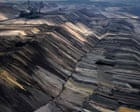
The impact of opencast mining goes far beyond the edge of the pit. Studies of an opencast coalmine in western Germany show that opencast mining triggered extensive subsidence in the surrounding area and re-activated dormant geological faults.
Underground mines are often associated with ground subsidence, but less is known about the risks associated with opencast mines. Researchers from the GFZ Helmholtz Centre for Geosciences in Potsdam, Germany, studied satellite data and geological field measurements from the area around the opencast Rhenish coalfields, between Aachen and Cologne.
Their findings, which are published in Engineering Geology, show that the large volumes of groundwater extraction required for safe mine operations lowered the water table, resulting in widespread subsidence up to 20km (12 miles) from the edge of the mine. And the locations that were most affected were not random; they clustered and intensified along existing geological faults, which were re-awakened by the mining-induced subsidence.
after newsletter promotion
Cracks in buildings and roads in the local area demonstrate the impact, including a school that has shifted by half a metre. Mining is still taking place in the area and subsidence will probably continue for decades to come. But the researchers show how satellite monitoring combined with geological data can be used to produce regional subsidence hazard maps, helping communities plan ahead and develop more resilient infrastructure.
KioskNews shows a cleaned-up reading view extracted from the publisher’s page — the original always lives on their site, not ours.