7 Biggest Book Changes in Prime Video's 'Carrie,' Ranked


Michael Block is a 14 time GLAM Award nominated writer, producer, and host of the podcast Block Talk. Throughout his time in the entertainment industry, he has worked on and off Broadway as a stage manager, written several produced plays, critiqued hundreds of theatrical performances, drag and cabaret shows, and has produced events randing from drag competitoons to variety concerts!
On Block Talk, he interviews nightlife personalities, covers the wide world of entertainment through features, ranking episodes, and recaps ALL of Drag Race, as well as Dragula and Survivor. He has interviewed hundreds of RuGirls that span the globe at DragCon NYC, DragCon LA, and DragCon UK.
In his free time, he makes one-of-a-kind jewelry and gift baskets with his mom. He is a proud member of the LGBTQ+ community.
Sign in to your Collider account
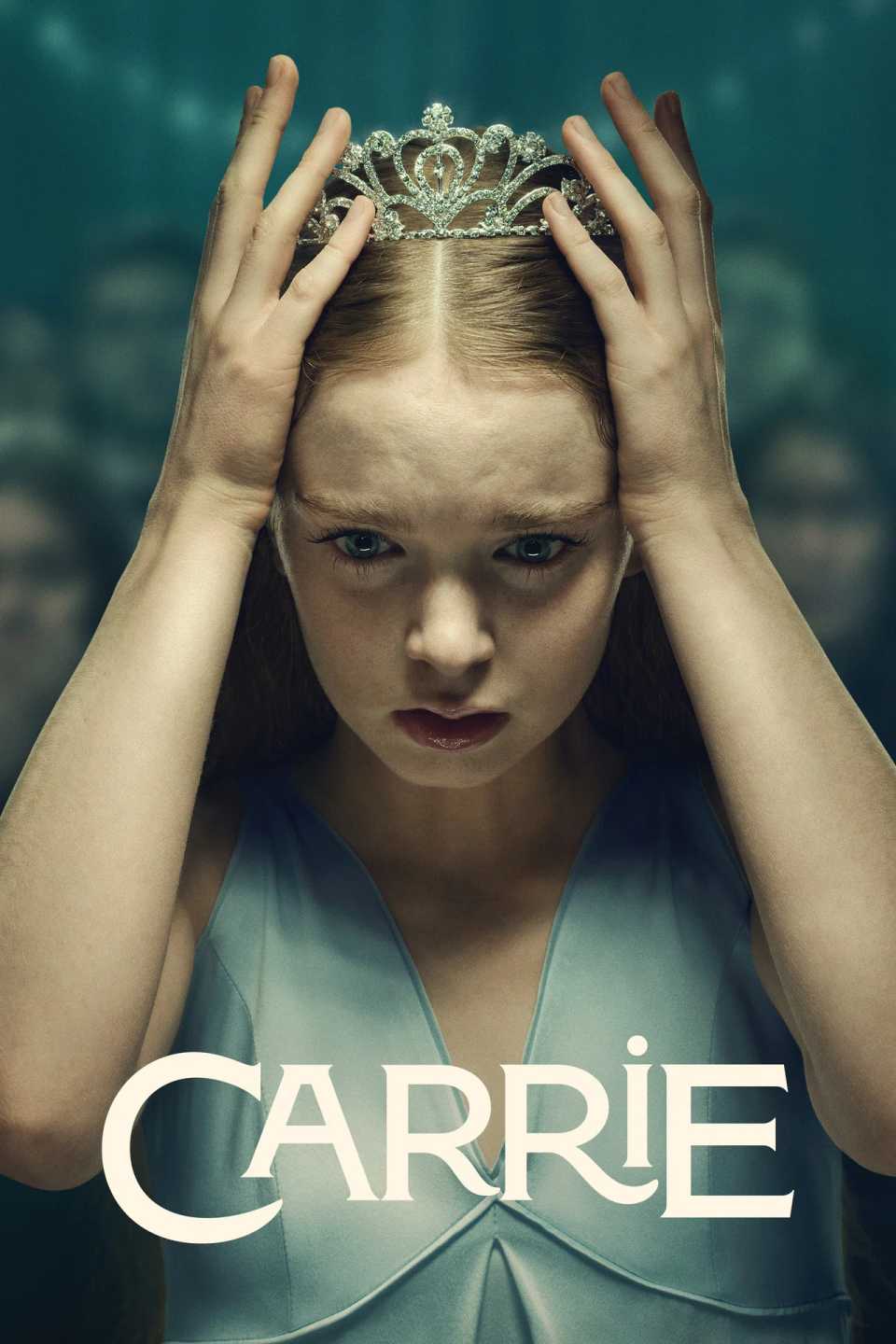
Spoiler Alert: This list contains spoilers for Carrie.We've reached a time in which every generation is experiencing a live-action iteration of Carrie. Based on the fan-favorite first novel from Stephen King, the supernatural horror story follows shy, bullied, and sheltered teenager Carrie White (Summer H. Howell) with hidden telekinetic powers who unleashes a bloody revenge on her high school. Horror visionary Mike Flanagan brought the story back to life in an eight-part Prime Video series that uses King's novel as a blueprint to build a new version of the classic.
Rather than rehash the same old story, Flanagan has made significant changes to expand the novel into a fully fledged series. A mixed bag of good and bad, the biggest differences have changed Carrie significantly. We’re here to examine seven of the biggest changes from stage to screen. Each entry will include many minor changes as they relate to the larger point. With hopes for a multi-season run, these key differences will shape where Carrie's story goes next.
7 The Modern Update

Easily the most significantly obvious change from novel to series is updating Carrie to modern times. Flanagan has used a 21th century mindset and technology to anchor his version of King's book. Carrie now focuses on social media and contemporary high school culture to drive the action. The biggest digital throughline centers on a dedicated Instagram account called "CarrieRed." What began as a localized locker-room panic is amplified into widespread humiliation as Carrie's period incident is captured for the larger community to see. Serving as the catalyst for Chris Hargensen (Alison Thornton) to create the account, it's further used to systematically harass and publicly humiliate Carrie across the entire school. But Carrie isn't the only target of the shame, causing the uproar against Chris. But we'll get to her more soon.
By exploring the digital pressure teenagers experience, the series examines how young adults are forced to build public online personas before they fully understand their own identities, using these digital identities to shape their actions. Through the lens of cyberbullying, Flanagan has room to showcase the harsh damage social media plays in today's society. Of course, Flanagan doesn't limit social media profiles only to the teens, as Margaret White (Summer Sloyan) creates a counter account, "RealMaggieRed," to publicly shame Chris and rally other parents to her side. Like the teenagers, she too is tempted by the insidious nature of it all. Rather than completely shutting herself off from modern society as she does in King's original novel, Margaret adapts her traditional and religious ideals to fit the modern online ecosystem.
6 The Expansion of the Teachers
One major exciting factor of having eight episodes to tell a story is the ability to flesh out characters beyond their presence on the page. Such was the case for the faculty and staff of Ewen High School. In the book, only a couple of school staff members—primarily gym teacher Ms. Rita Desjardin (Amber Midthunder) and Principal Henry Grayle (Matthew Lillard)—have any real presence. The series gives the entire faculty much larger, more detailed roles. It also introduces Seth Peist (Rahul Kohli) and Mr. Peter Morton (Tim Bagley). Gym teacher Ms. Desjardin is introduced as a new teacher, finding her footing in the new environment. She's no longer seen as a straightforward heroine but as a young woman struggling with her own personal and professional strife. Behind closed doors, she does poke fun at the cyber chaos, but she is one of the adults who defends Carrie, forcing the girls to run sprints in gym class. As for Principal Grayle, he is a man stuck between a rock and a hard place under parental pressure. He must maintain order and address escalating tension, harassment, and social media bullying, while standing up to John Hargensen (Michael Trucco), who threatens to sue over disciplinary actions, and Margaret White, who confronts the administration over the school's failure to hold bullies accountable. Of course, he’s ultimately overpowered, despite his efforts to maintain order.
When it comes to compassion, you'll find it in the kind-hearted guidance counselor. Mr. Morton relates to Carrie as he shares how being a closeted gay man is similar to Carrie's experience being hidden away for practically her entire life. He helps to show her the positive sides of her new environment, contrasting with the institutional failure surrounding her. The biggest and most crucial addition to the staff is via Mr. Peist. He not only helps elevate Miss Desjardins' narrative as the pair begin a relationship, but also becomes embroiled in the larger CarrieRed drama when an innocent allegation is deemed true. It is ultimately revealed that he had improper relationships with several students, including Brooklyn Kirby (Rowan Danielle), Chris' classmate and future stepsister. This scandal acts as a major catalyst that incites the town, leads to Chris's suspension or expulsion, and directly fuels the tensions that result in the prank at the prom. The expansion of the faculty fleshes out world-building significantly, showcasing the struggles educators face in today’s society.
5 Chris' Personal Life Motivates Her Actions

There is absolutely no doubt that Chris Hargensen remains one of the most evil individuals in the Carrie story. That said, Flanagan has shaped her so profoundly that he gives her a clear, tragic backstory that motivates her. By no means will we sign off on her vile actions, but giving her even an ounce of empathy realigns the entire story. At the center of her story is an all but perfect home life. In the book, Chris is a classic, privileged, and spoiled rich kid whose hatred for Carrie stems mostly from sheer cruelty and entitlement. Flanagan recontextualizes her as a young woman whose life is crumbling—her parents are divorcing, her father faces financial and legal trouble, and her chances of attending her dream university, Duke, are slipping away. Her actions against Carrie are not rooted in pure malice but in her spiraling anxiety and fear of losing her social standing. She weaponizes CarrieRed as a coping mechanism.
Like Carrie, Chris has some champions in her corner: her mother, Madison (Heather Graham), and her new boyfriend, Kent Kirby (Gil Belows). But because she is so distraught about the new arrangement, she focuses her attention on the negative influences, namely Tina Blake (Josie Totah) and her juvenile delinquent boyfriend Billy Nolan (Arthur Conti). There could easily have been a universe where Chris and Carrie had a Mean Girls-esque friendship, but Chris' authenticity as a genuine teenager with real struggles kept her from seeing the light. While still the villain of the story, the series gives Chris moments of vulnerability, family pressure, and inner conflict; she becomes a fully realized individual instead of a one-note villain. Give it up for Chris, though, for one final breach of kindness when she tried to stop Billy from hitting Carrie with his car, but the damage was already done. If there's one thing we learned, it's never neglect your daughter's breakfast traditions on her first day of school! If only he made her crêpes, we might have seen a much softer side of Chris.
4 The Relationship Between Carrie and Margaret White

It might be unfair to deem the actions of Margaret White in King's book to be a product of the time, as there are very religious individuals in today's world, but for the new series, Flanagan redesigned Margaret, which in turn changed the relationship between mother and daughter. At its core, their connection is fundamentally redesigned from a dynamic of pure religious abuse and hatred into a more complex, twisted bond rooted in genuine misguided and paranoid love and shared grief. The story starts off with the death of Ralph White (Tahmoh Penikett), prompting a welfare check where it’s revealed that not only was Carrie homeschooled, but she had never left the family home. Margaret is now forced to let Carrie attend high school, where she can no longer truly protect her from the world's evils. Only she gruesomely underestimates how the evils are not the teenagers surrounding her, but the other powered people she grossly neglects.
Margaret fears other individuals guiding Carrie, as seen with her period, because Carrie received guidance from a school teacher instead of her own mother. When Carrie faces severe online and in-person bullying, Margaret actively confronts Principal Grayle and starts her own social media movement, rather than blaming her daughter for attracting wickedness. On the flip side, their shared grief unites mother and daughter because, in the book, Ralph died in an accident before Carrie was born. Here, they all lived as a family, so there is an intimate bond that is unlike the source material. Margaret is no longer painted as a fervently religious woman who becomes a monster of the story. She is a mother struggling to let her only child grow up in a world she sees as dangerous.
Collider Exclusive · 8 Questions · 2 Minutes What Is Your Biggest Horror Nightmare? Elm Street · Chucky · Scream · The Conjuring
Four horror franchises. Four completely different ways of scaring you. One waits until you fall asleep. One makes sure nobody believes you. One is already in your group of friends. And one is in the house with your family. Answer eight quick questions about how you actually watch horror, and find out which nightmare was built for you.
😴Elm Street(Freddy Krueger)
🧸Chucky(Child's Play)
📞Scream(Ghostface)
🕯️The Conjuring(The Warren Files)
01
Which horror scene makes you cover your eyes? Four classic images. One of them is worse than the others for you.
02
You are home alone and you hear a noise. First thought? Everybody has one. It arrives before you have decided anything.
03
Which horror movie rule would you break first? Everybody thinks they would survive. Almost nobody actually does.
04
Something genuinely frightening happens. What do you do? Not in a film. In your actual living room, tonight.
05
How do you actually watch a horror film? Be honest about this one. Nobody is checking.
06
Somebody offers you serious money. Which do you still refuse? The amount does not matter. There is one on this list you are not doing.
07
Which feeling stays with you a week after the film? Good horror does not stop when the credits do.
08
Something wakes you at 3am. What is the worst possibility? Eight questions in, this is the one that decides your nightmare.
The Lights Just Went Out Your Nightmare Is…
Four franchises, four completely different ways of getting underneath your skin. This is the one built out of your particular fear, why it works so well on you, and what it would leave behind.
Elm Street
Your nightmare does not wait outside the door. It waits for you to close your eyes, which you are going to have to do eventually, because nobody has ever won that particular argument.
- Freddy is horror's cruellest idea: a threat that lives in the one place you cannot guard, cannot lock, and cannot avoid forever.
- You are the one who is fine during the film and wide awake at two in the morning. Your own head is where this does its damage.
- These films understood exhaustion as a horror engine. The kids on Elm Street do not lose because they are weak. They lose because they are tired.
- You can lock every door in the house. You still have to sleep.
Chucky
Your nightmare is not really the doll. It is the face of the person you tell, and the way they decide, very kindly, that you have imagined all of it.
- Chucky works precisely because he is absurd. That is the trap: the more accurately you describe him, the less anybody is going to believe you.
- You are the one shouting at the screen because the characters are not listening. You know that feeling from real life too.
- The franchise is at its best when the adults in the room are the real obstacle, and you have met those adults.
- By the time somebody finally believes you, you will have handled most of it on your own.
Scream
Your nightmare has your number, knows your name, and has almost certainly been inside your house before. The worst part is that you already know them.
- Scream is the only one of these where the killer takes the mask off and turns out to be somebody who was at the party.
- You are the person who calls the twist out loud before it lands. You watch people the same way you watch films.
- The franchise made the rules of horror part of the plot, which means the survivors are the ones paying attention. You would be paying attention.
- Everybody is a suspect, including the person who just offered to walk you home.
The Conjuring
Your nightmare is not really about you. It is about the people asleep down the hall, and the feeling that whatever is here is not interested in leaving.
- The Conjuring films are domestic horror. The house, the family, the perfectly ordinary room that quietly stops feeling ordinary.
- Your instinct is to get everybody into one room. Your fear is protective rather than personal, which is rarer than it sounds.
- This is the one franchise where belief is the weapon. The people who come through it are the ones who are not alone and refuse to be.
- Whatever is here did not come for you. It came for the household, and you are the one standing in the hallway.
3 The Introduction of Emaline West

And now we embark into the territory of the series' biggest change — other women with powers. The most prominent new character is Emaline West (Thalia Dudek). She is initially presented as a new friend of Carrie at school, but as the story carried on, there was much more to her. She wasn't an imaginary friend nor invincible; Emaline had the power to astral project. She may not have been physically by Carrie's side, but she was absolutely real. With her supernatural ability, Emaline had the power to send her consciousness to Carrie while her physical body remained elsewhere. That's why it looked like Carrie was talking to herself, but in truth, she was a trusted ally.
It's eventually revealed that a mysterious group of psychic women led by Adelaide (Kate Siegel) sent Emaline to watch over Carrie. Emaline acts as a voice of darkness and malice, encouraging Carrie's rage and pushing her toward violent retaliation against her bullies. Under the guise of friendship, Emaline appears as a positive presence, but she and the other women ultimately make Carrie a greater victim, as seen in the infamous prom massacre, when Emaline strips Carrie of autonomy by controlling her destructive actions. While Emaline will aid Carrie in her great escape by defying Adelaide's orders, whether she can be trusted remains to be seen.
2 The Connection to the Larger Stephen King Universe

As told to Collider, Flanagan used King's book to its full potential. "Stephen King talks about Carrie's place in this longer history of gifted women and the 'TK gene,' as he calls it." Using this concept originally as a framing device at the top of each episode, Flanagan reasoned to include it because, "The book points at it, but none of the other adaptations have had the real estate, I think, to dig in. That was an amazing opportunity for us. It was irresistible." Building on details no other adaptation explored, the series introduced other powered women, namely a secret telekinetic cult. Further, the series explicitly groups Carrie's TK gene with other psychic phenomena from King's works. With the mysterious investigative group's presence, it may mirror organizations found in works like The Institute, Doctor Sleep, and Firestarter, namely The Shop. The way things are going, expect an appearance from Charlie McGee!
Of course, one of the biggest revelations may have been a passing line, but when Adelaide used the word "The Shine," all ears immediately perked up. Unlike earlier film versions, Margaret White also shows telekinetic traits, mirroring the novel's hints of a hereditary supernatural background. The revelation of her latent telekinetic ability emphasizes a genetic line of gifted women, opening up the door for a larger-spanning future. The direct reference to The Shining is quite alluring. Further, subtle visual and corporate nods tie directly into the foundation of The Dark Tower universe, including construction projects linked to LeMark Industries and the Eye of Crimson King, a primary antagonist symbol from The Dark Tower, tattooed on Billy. Will Carrie become Flanagan's own Castle Rock? It seems very likely if all goes according to plan.
1 The Ending

Perhaps the most infamous scene in Carrie is the prom massacre. In King's book, Carrie deliberately and single-handedly destroys the gym and much of the town in an apocalyptic fit of vengeance. The series significantly alters it. Unlike the book, the series shows Carrie losing agency right after the pig's blood prank as Emaline intervenes and effectively takes control. That means Emaline ultimately kills Ms. Desjardins as she tries to help Carrie. But the chaos inside is also triggered when Adelaide sends her followers—Cara (Ruth Codd), Caitlin (Delainey Hayles), Sable (Cassandra Naud), and Emaline's mother, Amanda (Katee Sackhoff)—to subdue and take out Carrie.
Once the prom scene concludes, the story continues to veer in a new direction. Survival versus death is quite different, as Carrie does not die after using her powers to stop her mother's heart. Instead, both Carrie and Margaret survive the collapse of the house. However, Margaret's life is cut short as Adelaide uses her gifts to kill Margaret after her faux documentary interview. As for Carrie, she does not die like in the book. Instead of facing the tragic, fatal fallout of her actions, she drives off into the night with Emaline as the secret group seemingly gives chase. The series is left open-ended, leaving room for the expansion of the series. While purists may seem dismayed by the major changes, when King calls the series "brilliant," that's all the validation anyone needs!
Carrie
7 10
- Release Date
- 2026 - 2026-00-00
- Network
- Prime Video
- Showrunner
- Mike Flanagan
- Directors
- Mike Flanagan, Axelle Carolyn, Hiromi Kamata, Kate Siegel, Kyra Sedgwick
-

Summer H. Howell
Carrie White
-

Samantha Sloyan
Margaret White
- Writers
- Mike Flanagan, Alexandra Magistro, Justina Ireland, Jamie Flanagan, Elan Gale, Rebecca Klingel, Elizabeth Padden, Dani Parker
- Main Genre
- Horror
- Seasons
- 1
- Producers
- Justin Wagman, Rebecca Klingel, Dani Parker
- Creator(s)
- Mike Flanagan
- Release Window
- 2026
- Executive Producer(s)
- Mike Flanagan, Stephen King, Trevor Macy
KioskNews shows a cleaned-up reading view extracted from the publisher’s page — the original always lives on their site, not ours.