Dogs that helped hunt Osama bin Laden in Pakistan to bolster Mumbai Police
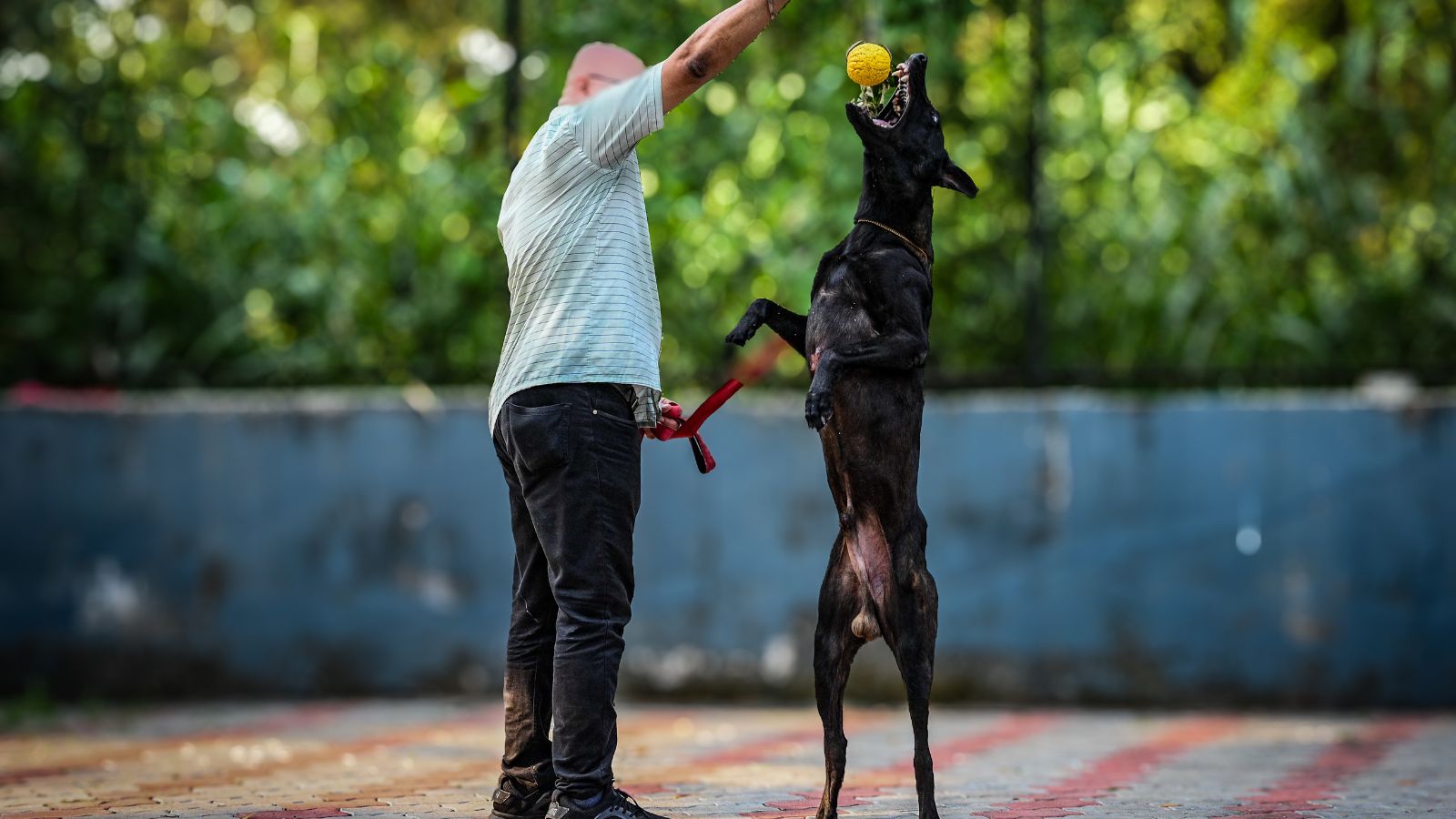
In 2019, Mumbai Police introduced five Belgian Malinois puppies into its dog squad, then dominated by Labradors and Dobermanns. Seven years later, the force is looking to expand the presence of the breed, adding six more dogs to strengthen explosive detection and security checks ahead of VIP movements and major public events.
The police are also contemplating retiring all the other breeds of dogs in the squad and retaining only the Belgian Malinois.
Belgian Malinois, which shot to global fame after the US Navy SEAL team raid in Pakistan that killed al Qaeda chief Osama bin Laden, are known for their agility, stamina, quick response to commands and ability to sustain prolonged searches. These qualities make them suited to duties that require police personnel to screen large venues, bags and open grounds before the arrival of dignitaries.
“The Belgian Malinois is highly intelligent, learns commands quickly and has excellent stamina. It can work for extended periods in the field and is well suited to demanding operational duties,” a senior IPS officer said.
The breed is generally leaner and more agile than Labradors, which are also valued for their intelligence and keen sense of smell. While Labradors continue to be used for explosive detection, police officials see the Malinois as particularly useful for intensive field operations and VIP security checks.
The six dogs were procured a few months ago, when they were between 45 and 60 days old. One has completed training and joined the Mumbai Police squad, while the remaining five, along with two Labradors, are undergoing specialised training at the Dog Training Centre in Shivajinagar, Pune.
“We intend to increase the number of Belgian Malinois in the coming years, particularly for explosive detection and VIP security,” an officer said.
Story continues below this ad
 A trainer plays with Labrador Retriever dogs which are part of the police dog squad, at a police dog kennel in Mumbai.
(Express Photo by Sankhadeep Banerjee)
Mumbai Police introduced its first five Belgian Malinois in January 2019. The puppies, then around 45 days old, were brought from a breeder in Murbad and assigned women constables as handlers. At the time, the force said the dogs would assist in crime detection and investigation, alongside its existing canine units.
Three units, different roles
With the six new inductions, Mumbai Police has a total of 30 dogs comprising Belgian Malinois, Labrador Retrievers, German Shepherds and Dobermanns. They are distributed across three units.
The Bomb Detection and Disposal Squad at Kalachowki has 12 dogs, including seven Labradors and five Belgian Malinois. The Protection Branch at Goregaon also has 12 dogs, comprising five Belgian Malinois and seven Labradors, deployed for VIP security. The Crime Branch has six dogs, including German Shepherds and Dobermanns, which are used in crime scene investigations.
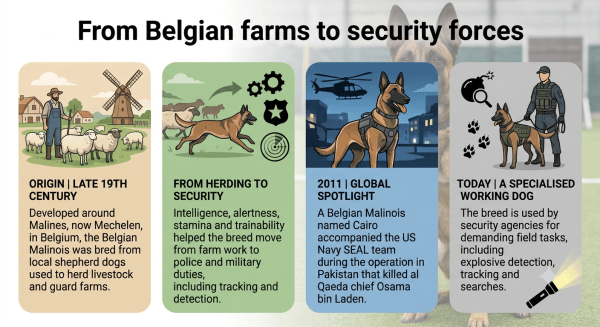 Image created using Gemini
The dogs are deployed during VIP movements, major public events and festivals. During the Ganesh festival, they were stationed at prominent locations and crowded areas as part of security arrangements.
Story continues below this ad
The Belgian Malinois are being trained to search bags, rooms and open grounds for explosives and to assist police personnel in checking venues and surrounding areas before the arrival of dignitaries. The aim is to identify potential threats before an event begins, rather than respond only after a suspicious object or threat is reported.
Six months of training
The puppies initially remain with the squad and their handlers until they are around six months old. During this period, they receive vaccinations and regular health checks, while handlers work closely with them to build familiarity and ensure that they respond to commands.
They are then sent for specialised training at the Dog Training Centre in Shivajinagar, which operates under the Maharashtra Police Criminal Investigation Department. The training programme lasts about six months and includes about seven hours of work a day, split into morning and evening sessions.
The initial phase focuses on obedience, discipline and directional commands. The dogs then progress to explosive detection exercises, including searches of bags, rooms, and open spaces. Once deployed, they continue to undergo regular drills to maintain their readiness.
Story continues below this ad
Each dog is assigned two handlers, who look after it around the clock. Their diet and health are monitored, with meals provided three times a day according to prescribed charts. Weekly exercises simulate searches of sensitive locations, VIP security checks and explosive detection.
During bomb threat calls, the dogs are deployed to search premises even when a threat is suspected to be a hoax, police sources said. Their role is to help ensure that no potential danger is overlooked.
KioskNews shows a cleaned-up reading view extracted from the publisher’s page — the original always lives on their site, not ours.