India's ethanol capacity can boost SAF production, but policy gaps a hurdle: AIDA's Bharati Balaji | HT interview
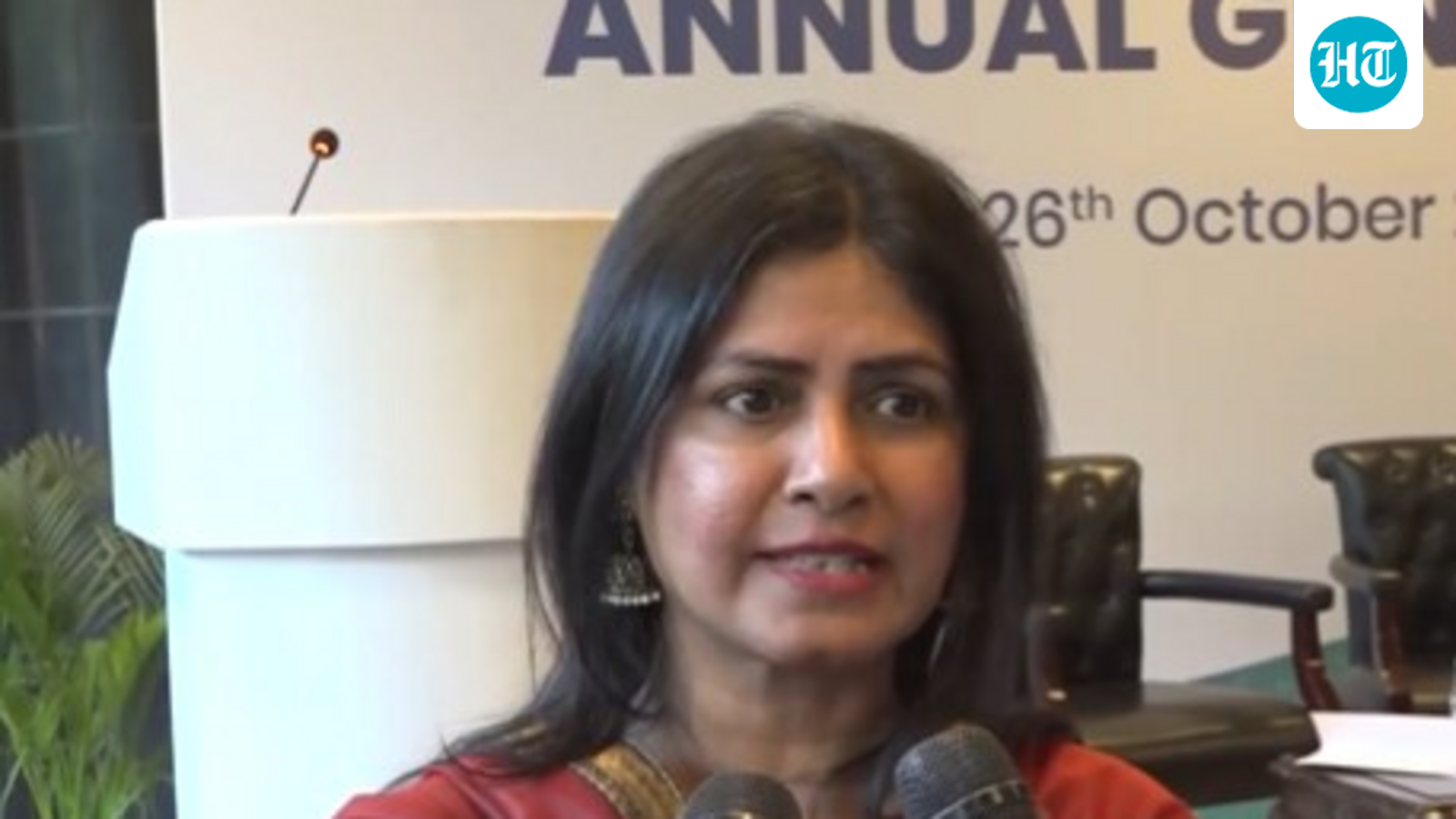
All India Distillers' Association (AIDA) deputy director general Bharati Balaji says that India's existing ethanol capacity could give it a head start in producing sustainable aviation fuel (SAF), but warns of a holdback in investment due to unpredictable feedstock policies and the absence of long-term purchase guarantees.
In an interview with Hindustan Times, Balaji discusses the changes needed in the proposed SAF policy, why producers need 10-15-year offtake agreements, and how the country's ethanol industry can help meet its aviation fuel targets.
Here is the full interview:
What should India's sustainable aviation fuel (SAF) policy include to encourage domestic production and investment?
India's proposed blending trajectory, from 1% in 2027 to 5% by 2030, and the decision to count only domestically produced SAF are positive steps. But targets alone will not bring investment. The industry needs four things: a long-term blending mandate, incentives for early investors, assured procurement and internationally recognised certification.
An alcohol-to-jet (ATJ) plant is a 15-20-year investment. Investors cannot make such commitments based on a five-year mandate. The blending trajectory beyond 2030 must be notified, rather than remain indicative. Domestic flights should also be brought under the mandate through a clearly published timeline.
The policy should be feedstock-neutral, with eligibility determined by lifecycle emissions. Ethanol made from molasses, sugarcane juice and syrup, maize, surplus Food Corporation of India rice, damaged grains and agricultural residues should qualify if they meet the required carbon-intensity threshold.
What kind of financial support will the industry need?
The incentives proposed in the draft policy, including GST relief, import duty waivers, income-tax holidays, accelerated depreciation, viability gap funding and green finance, are a good starting point.
We would also like an interest subvention scheme, similar to the one that helped expand India's ethanol capacity, and capital support for distilleries that integrate or co-locate ATJ units.
Equally important is assured procurement. The Ethanol Blending Programme succeeded because oil marketing companies (OMCs) offered assured procurement at administered prices linked to feedstock. SAF needs a similar model, with 10-15-year offtake contracts, a published pricing formula for SAF and the ethanol supplied to ATJ plants, and a mechanism to bridge the difference between SAF production costs and conventional aviation turbine fuel (ATF) prices.
How serious are the challenges around feedstock availability, technology and production costs?
Feedstock availability is not the biggest challenge. Policy certainty is.
India has around 2,200 crore litres of installed ethanol capacity a year, of which roughly 1,300 crore litres is grain-based. Against this, the requirement for the E20 programme is about 1,000-1,100 crore litres.
Even if a 5% SAF blend were applied to all of India's projected 14.2 million tonnes of ATF consumption in 2030, the ethanol requirement would be around 160-200 crore litres, less than a tenth of the country's installed capacity.
The problem is access to feedstock. For the 2026-27 ethanol supply year, sugarcane juice and B-heavy molasses cannot be used for ethanol production. FCI rice allocations are capped quarter by quarter, while maize prices have risen to around ₹27 per kg from ₹17-18 a year ago.
A SAF plant designed to operate for two decades cannot be financed based on feedstock rules that change with the seasons.
Is the technology ready for commercial-scale SAF production in India?
Alcohol-to-jet is an established and internationally certified pathway. Indian companies have moved beyond pilot projects towards commercial investments.
Praj has demonstrated an integrated ethanol-to-jet process, IndianOil is developing an ATJ unit at Panipat, and GPS Renewables has begun building an ethanol-to-jet plant in Andhra Pradesh.
However, commercial-scale SAF production in India is realistically a 2029-30 prospect.
SAF currently costs two to five times more than conventional aviation fuel. How can India bridge this gap?
Ethanol is the largest cost component in the ATJ pathway, with nearly two litres of ethanol required to produce one litre of SAF.
Cheaper feedstock alone will not close the cost gap. We need economies of scale, lower-cost financing, recognition of verified emissions reductions and a transparent mechanism to share the SAF premium across the value chain.
The pricing mechanism must provide certainty to producers while ensuring that the additional cost does not become an unpredictable burden for airlines.
How can India's existing ethanol industry support the transition to SAF?
India's ethanol programme gives the country a significant head start. Alcohol-to-jet technology uses ethanol as its primary feedstock, and India already has the distilleries, supply chains and farmer linkages needed to produce it at scale.
Around 380 sugar- and grain-based distilleries, with roughly 2,000 crore litres of annual capacity, can potentially supply ATJ plants.
With the E20 target achieved, some ethanol capacity is under-utilised. SAF can create a long-term, higher-value market for this capacity, helping protect investments already made and supporting incomes of sugarcane and maise farmers.
The ethanol programme has also established procurement, quality testing, logistics and record-keeping systems through two decades of OMC operations. These can provide a template for traceability and the chain of custody required for SAF certification.
There are further opportunities. Sugar-linked distilleries use bagasse-based cogeneration, while the concentrated biogenic carbon dioxide released during fermentation could be used in future e-SAF production. Second-generation ethanol made from crop residues can also help address stubble burning.
What coordination is needed between the government, OMCs, airlines and producers?
SAF policy falls under the ministry of civil aviation (MoCA). Still, decisions on feedstock availability involve the Department of Food and Public Distribution and the ministry of petroleum and natural gas. Decisions on sugar diversion and FCI rice allocations will directly influence the availability of feedstock for SAF.
The proposed National Council on SAF should bring these ministries together with the agriculture and finance ministries, the ministry of new and renewable energy, the Directorate General of Civil Aviation (DGCA), and the Bureau of Indian Standards (BIS). Industry associations and producer bodies should also be standing members.
OMCs should conduct multi-year tenders for SAF and ethanol earmarked for ATJ plants, following the ethanol procurement model, with prices and allocation rules published in advance.
Airlines, meanwhile, need clarity on how the SAF premium will be passed on and how they can claim emissions reductions under the Carbon Offsetting and Reduction Scheme for International Aviation (CORSIA).
The industry is ready to commit capacity, provide lifecycle assessment data and invest in certification. AIDA is prepared to coordinate this effort among its members.
What can India learn from countries that have already introduced SAF mandates?
The common lesson is that a blending mandate must be accompanied by a mechanism that makes investment commercially viable.
Brazil is a relevant example for India because its policy measures emissions rather than restricting eligibility based on the crop used. Its ProBioQAV programme requires domestic airlines to reduce emissions by 1% in 2027, rising to 10% by 2037. This allows sugarcane ethanol to compete based on its lifecycle carbon performance.
The United Kingdom has paired its mandate, which rises to 10% by 2030, with a revenue certainty mechanism that guarantees producers a price, funded through a levy on fuel suppliers. India could explore a similar approach through viability gap funding.
The United States offers another lesson. Changes to its SAF incentives have created uncertainty for project financing. India should ensure that incentives remain stable for the life of the investment.
Singapore, which funds its 1% SAF target through a levy on departing passengers, shows how the additional cost can be distributed transparently among travellers.
Japan, meanwhile, announced its 10% SAF target for 2030 well in advance, giving producers and airlines time to prepare.
What are the immediate priorities for the government?
The final policy notification, pricing rules, penalties, incentives and certification framework need to be announced, ideally before the first obligation period begins in January 2027.
Investment decisions taken in 2027 will determine whether India can meet its 2030 SAF target through domestic production.
India does not have to choose between energy security, farm incomes and climate goals. A feedstock-neutral mandate based on carbon emissions, backed by assured procurement and a predictable pricing mechanism, can advance all three objectives and position India as a SAF supplier to the wider region.
KioskNews shows a cleaned-up reading view extracted from the publisher’s page — the original always lives on their site, not ours.