Parashat Vayetzei: When we truly want something, we find the strength
The long journey of our forefather Jacob, at the end of which he would establish the House of Israel and become the father of the Twelve Tribes, began under difficult circumstances. He was forced to leave his father’s home and flee from the wrath of his brother, Esau. He set out for the land of Haran, to the home of Bethuel, his maternal grandfather, to marry a woman from his mother’s family.
Jacob’s first encounter with Rachel, who would eventually become his beloved wife, is described in the Torah through an event containing a surprising detail that invites us to reflect on the powers that lie within a human being.
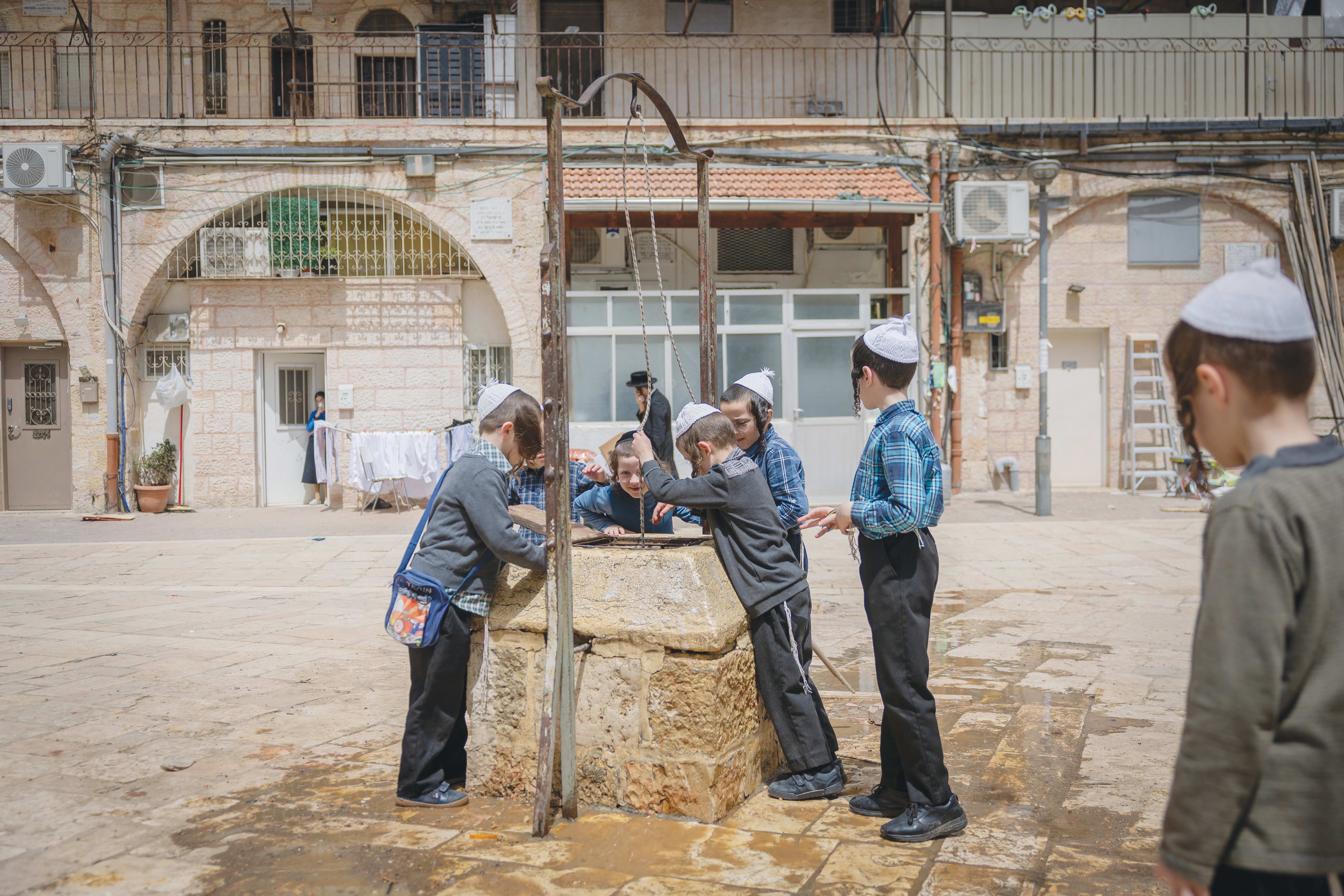
As Jacob approaches the city, he encounters a group of shepherds sitting with their flocks around a well. He asks where they live and whether they know Laban, his uncle. The shepherds reply that they are indeed from Haran, and add that Rachel, Laban’s daughter, is approaching with her flock. Jacob is surprised to see the shepherds sitting idle and asks why they are not watering their flocks and continuing on their way. They explain that a very heavy stone rests over the mouth of the well, and that only when all the shepherds gather together can they remove it and open the well.
Then something extraordinary takes place, as described in the Torah:
“And it came to pass, when Jacob saw Rachel, the daughter of Laban, his mother’s brother, and the sheep of Laban, his mother’s brother, that Jacob approached and rolled the stone away from the mouth of the well, and watered the flock of Laban” (Genesis 29:10).
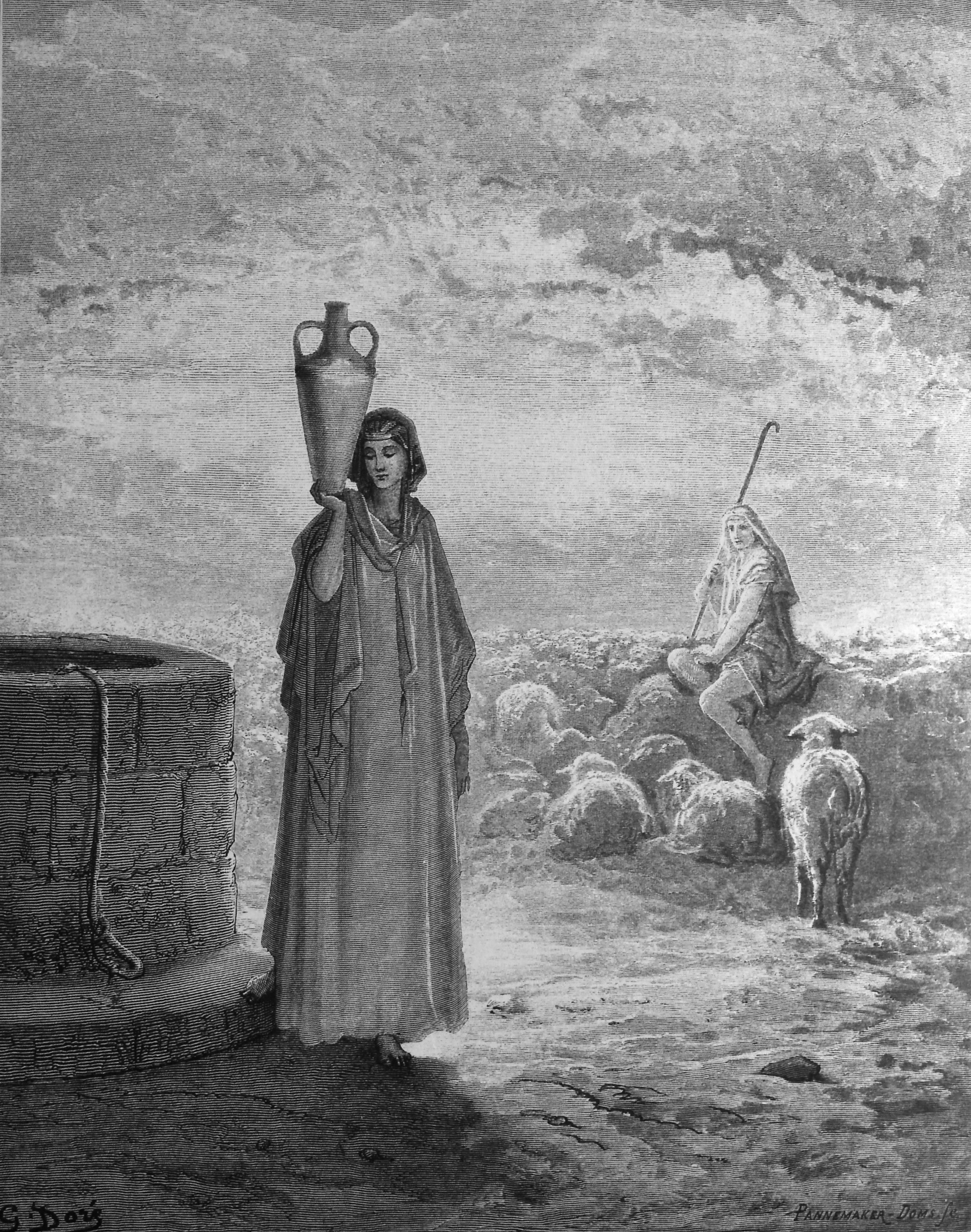
The description is astonishing. A stone so heavy that a group of shepherds must gather together to lift it is removed by Jacob alone, without assistance or any shared effort. Rashi emphasizes the extraordinary nature of this feat with a particularly vivid description:
“And Jacob approached and rolled [the stone away] – like someone who removes the stopper from the mouth of a flask, to teach you that his strength was great.”
Reading Rashi’s words at face value, we understand that Jacob removed the stone with such ease that it was like someone taking a bung out of a bottle. The Torah is teaching us just how great his physical strength was.
Why does Jacob's physical strength matter?
Yet, upon further reflection, several questions arise. First, why does the Torah go out of its way to emphasize the physical strength of our forefather Jacob? Is this a spiritual virtue worthy of special mention? After all, Jacob is described as an “ish tam yoshev ohalim,” a wholesome man who dwelled in tents, whose entire world revolved around Torah study and spiritual pursuits. Our sages even tell us that before arriving in Haran, he spent 14 years studying diligently in the academies of Shem and Eber, to the point that he did not allow himself to sleep. He was certainly not someone who devoted his time to physical training or developing his muscles.
Moreover, our sages teach that Torah weakens a person’s physical strength, since the constant engagement in the spiritual realm comes at the expense of attention to the physical. How, then, was Jacob, whose entire life was devoted to Torah, able to demonstrate such extraordinary physical strength?
There is another question: Why didn’t Jacob immediately step forward to lift the stone when he heard about the shepherds’ difficulty? Why did he wait until he saw Rachel? Did his kindness awaken only when a member of his own family arrived, rather than in response to the hardship of the others?
We find an answer to these questions in the words of Rabbi Yaakov Neiman, of blessed memory, founder of Yeshivat Or Yisrael, who offers a profound insight into the power of human will:
“In the Prayer for Rain [recited on Shmini Atzeret], we say: ‘Together with his heart, he rolled away the stone.’ Our forefather Jacob resolved in his heart to perform an act of kindness. The attribute of kindness burned within him, and he had a powerful desire and tremendous enthusiasm to do good. This gave him the strength and courage to act. For when a person truly wants something and has a great desire for it, his strength increases. But when a person has no taste for something and no desire to do it, he lacks the necessary strength” (Darchei Mussar, Parashat Vayetzei).
According to Rabbi Neiman, the secret lay not in Jacob’s muscles, but in the extraordinary strength of the desire that burned within him. When a person truly wants to do something, that desire gives him strengths he may never have known he possessed. Enthusiasm and passion do not merely accompany an action; they are themselves a source of strength, enabling a person to overcome difficulties and obstacles.
The difference between Jacob and the shepherds lay precisely in this. The shepherds were accustomed to waiting until all their companions gathered before removing the stone. They regarded this as simply part of their daily routine. Jacob, by contrast, saw the young Rachel approaching alone with her flock, and immediately felt an overwhelming desire to help her. His innate attribute of kindness, together with his feelings toward the woman who would one day become his wife, infused him with extraordinary strength he had not known he possessed. He succeeded in lifting alone a stone that had required a group of shepherds to make a joint effort to move.
This is the deeper meaning of Rashi’s words, “to teach you that his strength was great”: genuine desire can reveal within a person strengths he never knew existed.
The police officer and the bus driver
To illustrate the power of human will, there is a humorous folk tale:
A police officer stops a bus driver who, in violation of the law, had transported 100 passengers. The matter goes to court, where the driver claims that it is impossible to fit 100 people onto a bus. To prove his point, he asks the judge to conduct an experiment. The judge agrees, and the driver brings the bus to the front of the courthouse and invites passersby to get on and fill it up.
After 80 people have boarded, the bus is completely packed. There isn’t even room for a pin, and no one else can squeeze in. The judge rules in the driver’s favor.
The police officer then turns to the driver and says, “Listen, I counted 100 people on this very bus. You know perfectly well that it’s true. How did you manage to fit them all in?”
The driver replies, “They were different from the passersby in our experiment. The passengers who rode with me genuinely wanted to get home. And when people really want something, they find a way!”
Behind the humor lies a simple truth: Sometimes what seems impossible to us is simply something we do not want badly enough. As the familiar saying goes, “Where there’s a will, there’s a way.” When our desire is genuine and strong, we find solutions and overcome every obstacle along the way.
Alongside the immense power of will, however, we also bear the responsibility of examining the goals toward which we direct it. Not every aspiration deserves to be fulfilled, and not every desire leads us somewhere good. But when a person directs their will toward a worthy and meaningful goal, and is prepared to put their full strength into achieving it, they may discover abilities within themselves that they never knew they had and accomplish things that once seemed impossible. ■
KioskNews shows a cleaned-up reading view extracted from the publisher’s page — the original always lives on their site, not ours.