UK to open new refugee resettlement routes for Afghan women and Palestinians

Shabana Mahmood will announce a new legal route for refugees that prioritises Afghan women and girls and Palestinians, unfreezing a scheme that will put the most vulnerable refugees on a faster path to permanent status.
The change marks a shift in Mahmood’s approach to asylum seekers after the abrupt closure of the Afghan resettlement scheme last year and changes that will keep refugee status under constant review for two decades.
The home secretary is to say the changes will show there is fairness in the immigration system to support the most vulnerable refugees and that a balanced system will “unlock the inherent generosity of this country”.
However, immigration experts and refugee charities have said the numbers who will be eligible are too small to deter asylum seekers crossing the Channel in small boats.
The reopening of the scheme is likely to attract criticism from the right, especially as women and girls and people with disabilities are the most likely to be dependent on the welfare state.
Reform UK and the Conservatives are also likely to raise questions about security checks – which the Home Office says will be carried out – after the Sunday Times revealed that a former Hamas bodyguard had been granted asylum in the UK and was recently arrested on suspicion of being part of a terrorist plot.
Mahmood will tell the Labour conference on Sunday that she will reopen the UK resettlement scheme, which was in effect suspended for two years, though never formally closed.
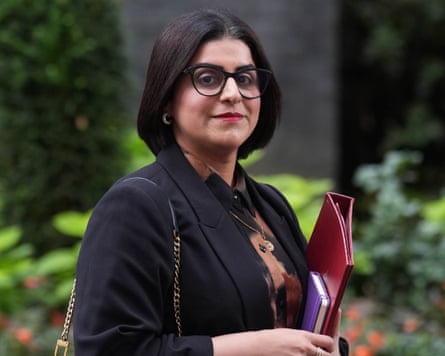
The home secretary will say that a tougher migration system, combined with a new scheme for the most vulnerable, will be the best way to ensure there is still broad consensus for helping refugees.
“Fairness is what unites us in this country. A fair society is what unlocks the very best of us. Because when people think this country is fair, they are more open and generous to others. When this country feels unfair, people turn inwards. They grow less willing to tolerate difference,” she will say.
“I know the British people have not given up on their belief that we should be compassionate, live up to our international obligations, and save the lives of those fleeing war and persecution. But I also know this process must be capped and controlled, and communities must be ready and able to welcome those who come here.
“This is what we can do and who we can be as we restore control to our borders, bear down on the small boat crossings, and unlock the inherent generosity of this country.”
The Home Office expects about one in four arrivals to be Afghan women and girls and Palestinian refugees, though numbers will initially be very small and capped each year. Under the scheme, potential refugees will undergo security and criminality checks.
Those who arrive via the scheme will have a far more generous route to permanent settlement – granted indefinite leave to remain, which will give them a five-year path, in contrast to the constant review of status for those who arrive via irregular routes such as small boat crossings.
The home secretary will also formally open another scheme announced earlier this year allowing community sponsors from next month to apply to bring refugees to build a new life in the UK. A sponsored work route for refugees is expected to follow in the spring.
Home Office sources said the plan would be to begin with numbers in the hundreds and grow to the low thousands as levels of illegal migration fall. A cap would be set each year, sources said.
Refugees will be identified by the United Nations refugee agency (UNHCR) and the International Refugee Assistance Project (Irap).
The scheme had stopped taking any new referrals in December 2024. By that point, it was being used by only a tiny number. It will be reopened immediately, Mahmood will announce, with priority given to people with disabilities and for women and girls deemed to be vulnerable.
Family units will be able to come together under the scheme, though not extended families because of a crackdown on family reunification introduced earlier by the government.
after newsletter promotion
Government statistics show that almost 300 “legacy cases” arrived under the existing UK resettlement scheme over the first half of this year. Officials said they were people who had been referred under the scheme before it was suspended and who had taken time to arrive in the UK.
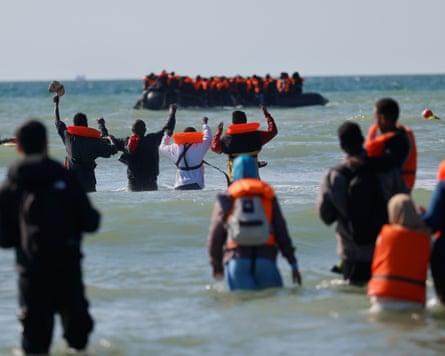
Mahmood will also confirm two of three other settlement schemes that have previously been announced. Starting in October, charities and nonprofits will be able to apply to become sponsors, allowing communities and universities to host refugees. The first batch of arrivals on that scheme are expected to arrive by autumn next year.
Applications for sponsors for a work sponsorship route, under which companies will host refugees, will open in spring 2027. Sponsors must provide accommodation, integration support and help finding work, with the aim of reducing pressure on local authorities.
Numbers across all of the schemes are likely to be tightly limited, meaning the vast majority of refugees in the UK who arrive via irregular routes will still be subject to new and harsh restrictions on their status.
Mahmood has previously announced that refugees will have their status reviewed every 30 months for up to 20 years, with the possibility of returning them to their home countries should those be deemed safe.
Madeleine Sumption, the director of the Migration Observatory at the University of Oxford, said the reopened route bore similarities to a scheme that was closed by Labour last year, and that its impact would depend on the numbers allowed to enter the UK.
“It has been framed primarily as a matter of principle – in other words, the UK should be doing its bit, and not as a strategy to reduce unauthorised arrivals.
“That is just as well, because there is no reason to believe that resettlement would have a large impact on unauthorised arrivals,” she said. Allowing in the “most vulnerable” in the resettlement part of the scheme would be a “trade-off” because of rising costs to the state, Sumption said.
“On one hand, there is widespread political support for the idea of prioritising more vulnerable refugees who would not have been able to make it over on a small boat.
“On the other hand, previous data suggests that these more vulnerable refugees, for understandable reasons, struggle more to support themselves in the UK, and fare considerably worse in the labour market, for example, than people who arrive through the asylum system,” she said.
Responding to the announcement, Jon Featonby, the chief policy analyst at the Refugee Council, said: “The government deserves credit for creating new safe and legal routes that will help refugees reach the UK without risking their lives. Safe and legal routes are essential to undermining people-smugglers’ business model, but they only work if they operate at scale. That means thousands of places, not hundreds.”
KioskNews shows a cleaned-up reading view extracted from the publisher’s page — the original always lives on their site, not ours.