India showcases robotics ambitions at Bengaluru Tech Summit as startups eye global market
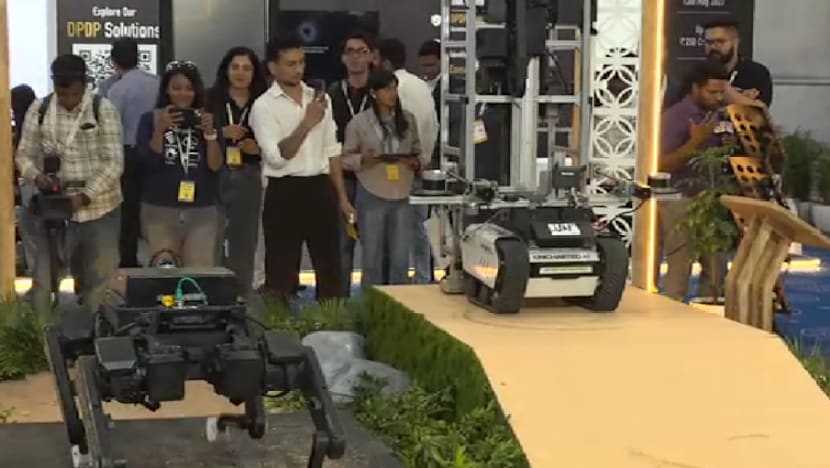
Indian startups are developing humanoids for the industrial sector, but funding constraints and reliance on imported components pose challenges.
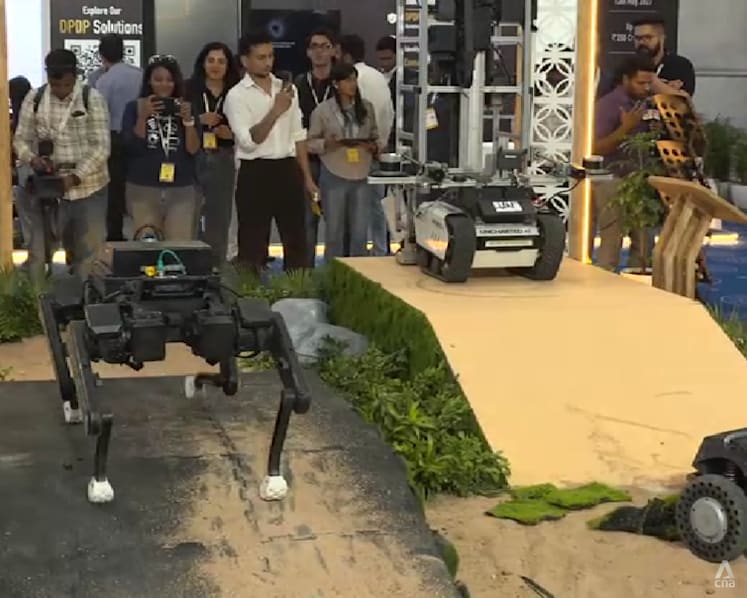
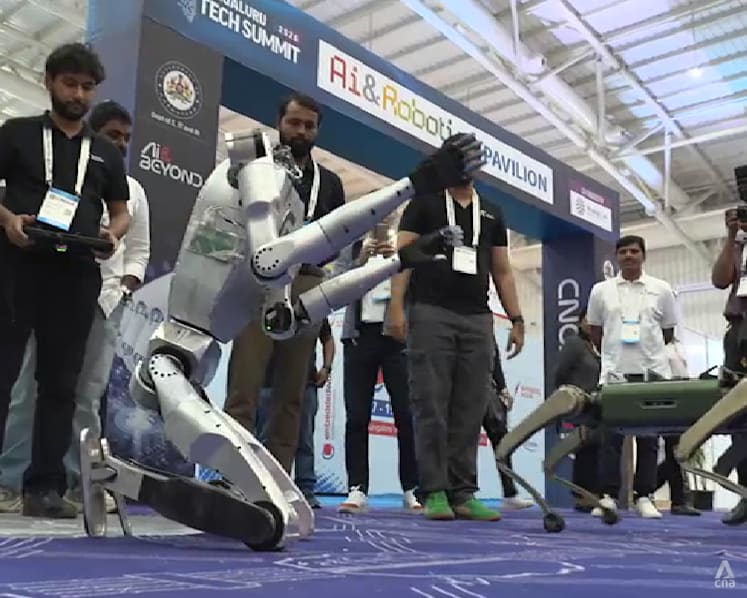
Robots showcased at the Bengaluru Tech Summit in India, which runs from Nov 17 to 19, 2026. (Image: CNA)
New: You can now listen to articles.

This audio is generated by an AI tool.
19 Nov 2026 10:20AM
BENGALURU: Indian startups are showcasing their latest robotics innovations as the country seeks to establish itself as a player in the global robotics industry.
At the three-day Bengaluru Tech Summit, which concludes on Thursday (Nov 19), companies are demonstrating cutting edge technologies ranging from humanoids to quadruped robots.
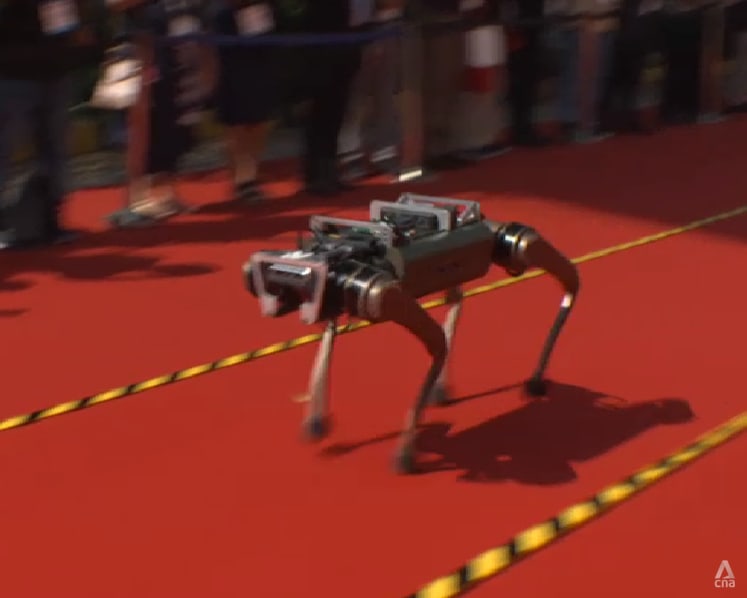
The four-legged robots also went head-to-head in a race during the event, with PARAM, developed by Bengaluru-based startup General Autonomy emerging as the winner.
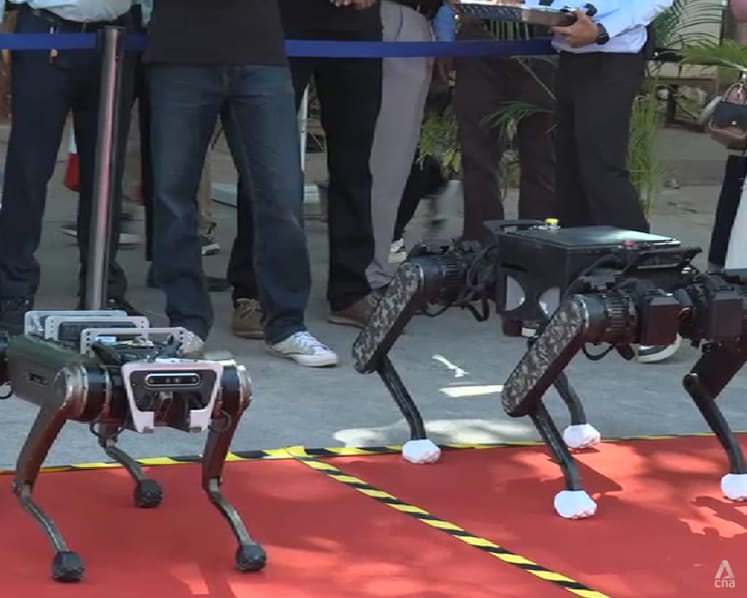
The winning robodog is designed to traverse rough terrain and can be used for inspections and carrying equipment.
General Autonomy also developed TAARA, a humanoid robot designed to perform general tasks in human environments and can handle tools and climb stairs.
But bringing these advanced machines from the laboratory to full-scale production is not easy.
The startup said securing funding remains a challenge, even as it sees opportunities for humanoids in India’s manufacturing sector.
“We can see that India will become a manufacturing powerhouse very soon, but we might face skilled labour issues because (training skilled workers) takes a lot of time,” said General Autonomy’s co-founder and CEO Farid Ahsan, adding that robots could eventually help bridge the gap.
“Humanoids can really act as a force multiplier in skilled labour,” he added.
CARVING OUT A NICHE IN THE GLOBAL MARKET
Homegrown robotics and physical AI, where intelligence is no longer confined to computer screens but embedded directly into robots and autonomous machines, are a major focus at this year’s summit.
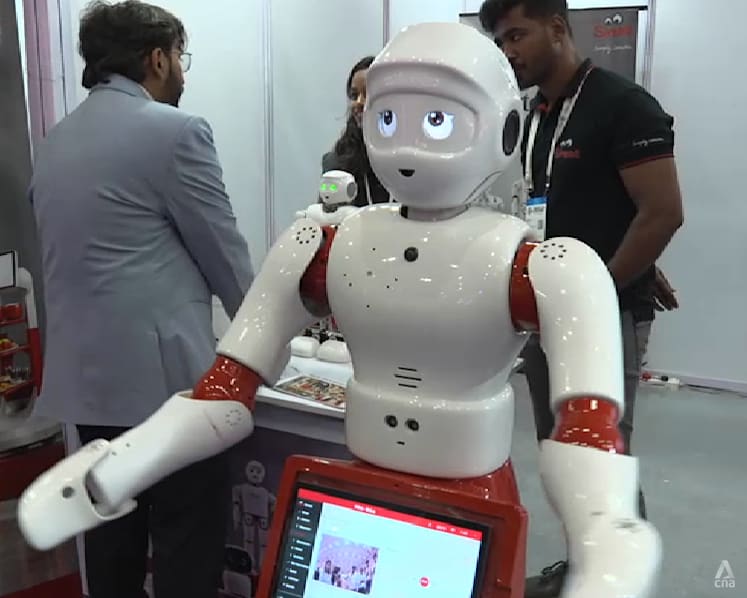
Organisers said the AI and robotics pavilion features around 100 showcases, ranging from humanoids to robotic hands.
With established players in countries such as the United States and China already commanding a strong presence in the global robotics market, some Indian entrepreneurs see opportunities in developing machines for specialised industries.
“Where India will really do well is niche robotics which is very targeted (and) specific,” said Vishrant Dave, founder and CEO of robotics company Armatrix.
India could gain a competitive edge by developing specialised robots for industries such as nuclear energy, where the volumes of robots needed are low but quality is crucial, he said.
“This is where India has a great chance of becoming a monopoly. And historically, we have had good quality products, and here is where we can capture the market."
GROWING INTERNATIONAL INTEREST
Still, India has ground to cover before it can compete with global robotics powerhouses.
According to the International Federation of Robotics, China accounted for nearly 60 per cent of new industrial robot installations worldwide last year.
India ranked sixth globally, although its rapidly expanding robotics market signals significant growth potential.
The country’s growing robotics sector has been attracting interest from overseas companies and investors from countries such as Japan, South Korea and Germany seeking new technology and business partnerships.
"We are very enthusiastic to explore technologies or supply chains of AI technologies,” said Natsuho Toyama, associate director of the Japan External Trade Organistaion.
“India would be one of the most interesting countries to look at.”
South Korea-based investors are also looking for opportunities beyond China.
“With a lot of innovation in AI happening in India, it is very much a great alternative for partnerships and investments,” said Lee Minwoo, a manager at Pen Ventures Korea, a Seoul-based venture capital and startup accelerator firm.
Even as India's robotics industry looks to scale up production, it remains heavily reliant on imported components, leaving manufacturers vulnerable to supply chain disruptions.
Indian startups also face stiff competition from established global players as they seek to expand their international footprint.
As the sector continues to develop, the challenge will be turning homegrown innovations into commercially viable products that can compete on the global stage.
KioskNews shows a cleaned-up reading view extracted from the publisher’s page — the original always lives on their site, not ours.