Afternoon front page: Parti Québécois’ referendum hopes; Eby pledges higher taxes in B.C.; and more
It’s Tuesday, Oct. 6. Here are the top stories we’re following today.
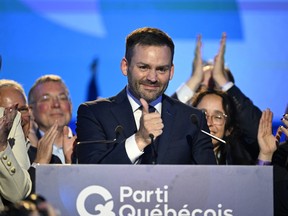
PQ referendum hopes rest on support from hard left Québec Solidaire
Physicists have long struggled to predict the movement of three objects exerting gravitational force on one another. It is known as the three-body problem. Monday night, Quebec created its own. While the Parti Québécois was able to form government, it fell five seats short of a majority. The Quebec Liberal Party won 40 seats, up from 21 in 2022. But Québec Solidaire and the Conservatives are the story of the night. Being in a minority, the leader of the PQ, Paul St-Pierre Plamondon, will have to work with one of the two. Quebec Solidaire will push it left. The Conservatives will push it right. And if that dynamic endures, the real winner of Monday night’s election may be the Conservative movement in Quebec.
Sign In or Create an Account
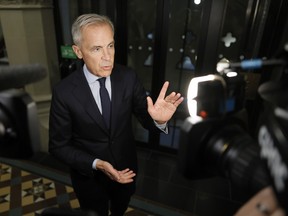
Carney touts Canadian sovereignty in comments on Parti Québécois win
Hours after the Parti Québécois was elected to a minority government, Prime Minister Mark Carney said he spoke with premier-designate Paul St-Pierre Plamondon (PSPP) and promised to work with him towards increasing sovereignty for Canadians. But the PQ’s election could set major roadblocks in Carney’s “cooperative federalism” strategy to build major infrastructure and Canadian unity. For example, PSPP promised to kibosh the Alto high speed rail system between Quebec City and Toronto.
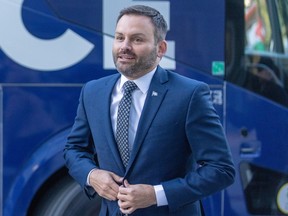
“To the sovereigntists, I say this: your obsession with holding and winning a referendum harms the progressive cause and feels like psychological harassment to a majority of the population. Many voters share my view.” These words may seem like they would come out of the mouth of a federalist politician in Quebec, but they were written by Parti Québécois Leader Paul St-Pierre Plamondon in his book Les Orphelins politiques (The Political Orphans) published in 2014. Twelve years later, St-Pierre Plamondon has been elected premier of a PQ government, promising to hold the referendum that he once deplored, despite his party’s minority status. Asked by National Post if he was once a federalist, the PQ leader replied: “Yes, I guess you can say that.”
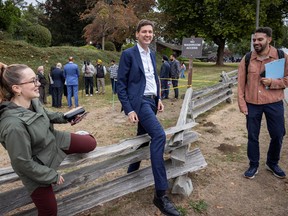
In a Sunday election pledge, B.C. NDP Leader David Eby proposed a new tax policy that would give his province one of the highest marginal tax rates on earth. If implemented, the top marginal tax rate in B.C. would hit 57.5 per cent, meaning that 57.5 cents out of every dollar earned above a certain threshold in B.C. would be collected as tax. It wouldn’t just make B.C. the highest tax jurisdiction in Canada; it would place British Columbians in a higher tax bracket than even some of the most notoriously high tax corners of Europe. According to the most recent figures from the OECD, top-earning British Columbians would be paying a higher tax on income than their well-paid peers in France (55.4 per cent), Japan (55.9 per cent), Sweden (52.4 per cent) and the U.K. (45 per cent).

Jamie Sarkonak: Steven Galloway’s mental health shattered by rape allegation
When Steven Galloway’s wife tried to tell the courtroom how the children of the household have been affected by their father’s (and stepfather’s) decade of living under unproven sexual assault allegations, her words turned into sobs. Katie Wagner testified that, since they and the rest of the public learned of the allegations, Galloway hasn’t been able to attend events at the kids’ schools knowing that other parents had read all the stories about him. And of course, the kids know, too. “There are newspaper reports that say something bad happened, and he was fired, and then that’s being qualitatively rewritten on platforms kids can see,” like their phones, she said. Wagner was the first witness to take the stand Monday in the defamation trial that Galloway embarked upon to clear his name.
Join the Conversation
This website uses cookies to personalize your content (including ads), and allows us to analyze our traffic. Read more about cookies here. By continuing to use our site, you agree to our Terms of Use and Privacy Policy.
KioskNews shows a cleaned-up reading view extracted from the publisher’s page — the original always lives on their site, not ours.