Royal commission hints at original sin of Big Build
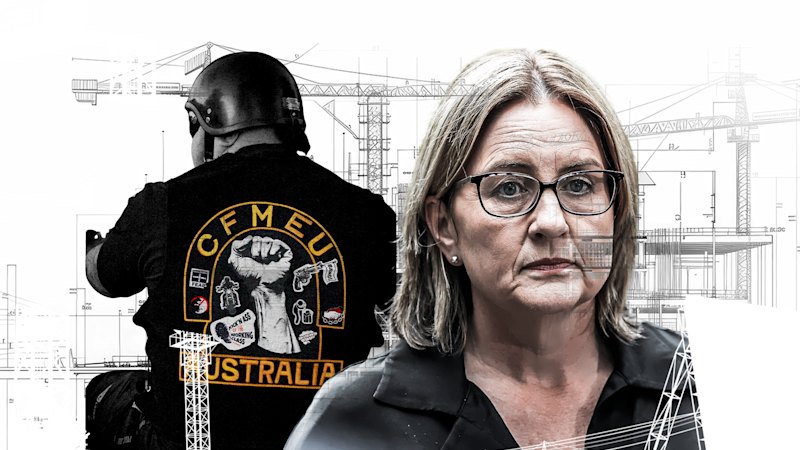
The Kourakis royal commission has started at the top. At its first public hearing, convened just one month after receiving its letters patent, it published in full cabinet-in-confidence documents that show Jacinta Allan knew more than three years ago there was big trouble on the Big Build.
This was a ballsy opening from an inquiry intent on sending a message that it is not mucking about. Government ministers, senior bureaucrats, contractors, union bosses and the crooks who grew fat off publicly funded major projects have been put on notice that the royal commission is determined to clean up Victoria’s answer to the Augean stables.
Just as importantly, Commissioner Chris Kourakis has signalled his willingness to stand back and interrogate some bigger, long-overdue questions about how we got here.
In laying down ethical markers early in his inquiry, Kourakis reminded us of some basic principles of how major projects paid for with public money should be commissioned, designed, managed and safeguarded.
The first of these is that governments, before committing billions of taxpayer dollars to build anything, must with due diligence and care choose the right projects for the right reasons.
“Governments must select and design infrastructure projects around the socioeconomic needs of the Victorian public, and not party political interests,” the commissioner said.
Is this how the government conceived of the Suburban Rail Loop, supersized its wildly popular level crossing removal program, or settled on the route for the future airport rail link? If the royal commission is not satisfied, the original sin of Labor’s $150 billion infrastructure program will be laid bare – pork barrelling on a previously unimagined scale.
Another principle articulated by Kourakis is that once a project is committed to, responsibility lies with the elected government and its public agencies to competently manage contracts and minimise risks.
When things go wrong – such as bikies and recently paroled criminals worming their way onto building sites – it is up to senior bureaucrats to promptly raise the alarm with responsible ministers, who in turn need to show the leadership required to stop the rot.
It is here that the documents obtained by the royal commission relating to Allan’s knowledge of and response to evidence of criminal activity on Big Build sites in June 2023 inform a fascinating case study.
The cabinet-in-confidence documents detail concerns held by the Major Transport Infrastructure Authority, a government agency responsible for big rail and road projects, about organised crime figures turning up at Big Build sites and potentially standing over contractors.
Putting aside the question of whether the former premier was truthful to The Age two months ago when we questioned her about one of these briefing notes, an issue for the royal commission is what she did at the time.
She wrote the next day to then-police chief Shane Patton to pass on the intel. Was this enough? What other steps did Allan, MTIA boss Kevin Devlin and other government officials take to protect the integrity of the Big Build and contractors already confronting a skewed industrial landscape?
As counsel assisting the commission Chris Young, KC, noted, this was a time when the North East Link, the West Gate Tunnel, the Metro Tunnel and level crossing removal projects were all under construction. The CFMEU, a union that had previously shown itself to be unconstrained by the law, was in a position of immense leverage. And thanks to the newly elected Albanese government, the Australian Building and Construction Commission – the federal watchdog – was about to be put down.
Commissioner Kourakis also provided some opening observations about the responsibility of union officials, noting the special privileges and powers they have under our industrial relations system.
“It is an especially egregious breach of trust to abuse those privileges and powers for personal gain, and there can be no tolerance at all for the carpetbaggers who corrupt an industry through extortion and bribery, whatever euphemisms they may employ to hide what they really do,” he said.
According to information already provided to the commission, the CFMEU in Victoria long ago ceased behaving like a union. “It has been alleged that the bosses of the CFMEU used their own power to line their own pockets and to enrich organised crime figures who infiltrated the union, rather than for the benefit of their members,” said counsel assisting, Chris Carr, SC.
This allegedly involved a CFMEU-backed shakedown in which subcontractors paid hundreds of thousands of dollars to Mick Gatto and other organised crime figures to secure union-endorsed enterprise bargaining agreements – the Big Build’s version of a golden ticket.
“These are grave allegations,” Carr said. “Their accuracy will need to be carefully assessed. If they are true, it suggests that the CFMEU operated as a facilitator for organised crime, and that the Big Build involved an enormous transfer of wealth from taxpayers to organised crime.”
Thanks to the dogged reporting of Nick McKenzie and other journalists, these allegations are not new to readers of The Age. And they might not be the worst of it.
KioskNews shows a cleaned-up reading view extracted from the publisher’s page — the original always lives on their site, not ours.