You’ve seen the headlines. But is Usman Khawaja’s book any good?
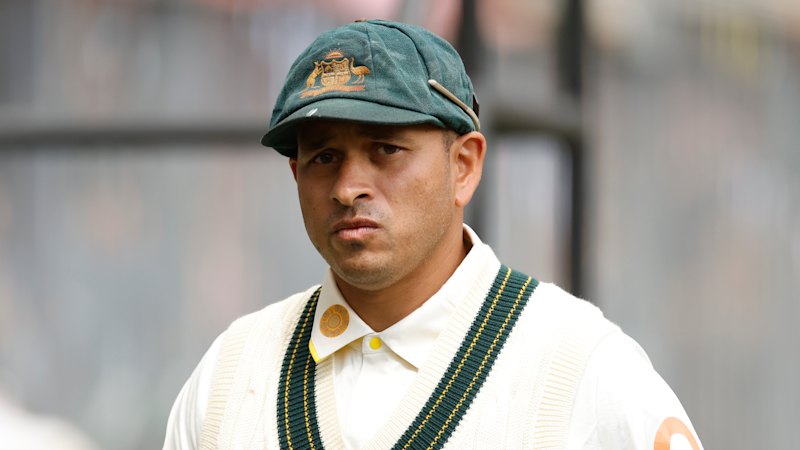
Even before its publication, Usman Khawaja’s Sabr was already making headlines, thanks to its juicy revelations about the 2018 ball-tampering scandal known as sandpapergate. “Of course I bloody knew what was happening with the sandpaper,” Khawaja writes, with startling candour.
Until now, a sort of polite official fiction about the sandpaper has prevailed. Nobody knew about it except the three players who publicly took the fall: Steven Smith, the team’s captain; David Warner, his vice-captain; and Cameron Bancroft, the player who was caught on camera doing the deed.
Those players served out their suspensions long ago. In the years since, our national team, under the genial and thoroughly decent leadership of Pat Cummins, has put sandpapergate well behind it. Or rather, it had until last week. Now Khawaja has poked the dormant coals, and they’re glowing red-hot. “We did it as a team,” he writes. If that’s true, it means that several members of our current national line-up were implicated, including Cummins.
Why has Khawaja chosen to reopen this old wound now? Sabr is an excellent guide to what makes the man tick. At 430 pages long, it’s an unusually detailed sporting memoir, and an unusually honest one.
Khawaja was four years old when his parents brought him and his two brothers to Australia. The family also had the option of migrating to America – but Khawaja’s father loved cricket, and Americans didn’t play the game. So Australia it had to be.
Usman grew up determined to play for our national team. At the age of 21, he was selected to play for New South Wales. In 2011 he was called up to the Australia’s Test team, becoming the first Muslim to wear the baggy green.
Sabr (pronounced subber) is an Arabic and Urdu word meaning “patience”. Sabr has been the key to Khawaja’s success. “It was why I was able to do what I did,” he writes.
During his career, Khawaja was dropped from the national team eight times. Often he felt his career was stymied by racist stereotypes about the “laziness” of subcontinental players. “I couldn’t prove it, but it looked like discrimination,” he says of an early selection snub.
Sometimes, when Khawaja tells a story in this book, you sense the other parties involved would, if consulted, tell the same story in a very different way. For example, the Australian selectors might say the fact that they dropped Khawaja eight times also means they picked him eight times.
When a teammate called him “stubborn” once, Khawaja viewed it as “the greatest of compliments”. The author of these pages is a man of unyielding moral convictions. He always stands up for what he believes in. He values “integrity over all else”.
Khawaja, on the other hand, is what philosophers would call a deontologist. He believes that telling the truth is an absolute good, and an absolute moral duty.
This brings us back to sandpapergate. When Khawaja claims that the whole team knew about the sandpaper, it’s extremely hard to doubt that he’s telling the truth. One thing this book makes crystal clear is that its author is not a liar.
So why didn’t he tell the truth eight years ago? According to Khawaja, he wanted to, but was talked out of it by two men he respected. One was Steven Smith. “I don’t want to drag anyone else into this,” Smith told him.
The other was the Australian team’s head coach Darren Lehmann. Telling the truth would only “make things worse,” Lehmann said, according to Khawaja. “You can come out and say all this stuff, but will it really help anything?”
This question has taken on fresh resonance now, following Khawaja’s revelations. “Uzzy,” Lehmann also said, in Khawaja’s account, “unfortunately this affects everyone, mate, not just you”.
That too was a prophetic remark. On the evidence of this book, Khawaja does have a slight tendency to believe that the demands of his conscience trump everything else, including the interests of those around him. He’s also a bit quick to forget that other people have moral convictions too, which happen to differ from his own.
Lehmann, for example, sounds like what philosophers would call a consequentialist. For consequentialists, telling the truth is an ethical act only if telling it will do more good than harm.
Khawaja, on the other hand, is what philosophers would call a deontologist. He believes that telling the truth is an absolute good, and an absolute moral duty.
In this week’s raging debate about Khawaja’s book, these two philosophical approaches have been going head-to-head. Neither approach is provably right or wrong. They’re just different ways of dealing with an eternal human conundrum.
I’ll tell you one thing, though. If I’m reading someone’s autobiography, give me the work of an uncompromising truth-teller any day. Khawaja hasn’t phoned his book in, as many sportspeople do. He hasn’t shied away from telling awkward truths. Sometimes Sabr is more revealing than its author probably wanted it to be. But that too is a sign that Khawaja has written a very good book.
Sabr by Usman Khawaja is published by Penguin ($50).
The Booklist is a weekly newsletter for book lovers from Jason Steger. Get it delivered every Friday.
KioskNews shows a cleaned-up reading view extracted from the publisher’s page — the original always lives on their site, not ours.