Meet the Siddis: Tribal Gujaratis from Kathiawad, natural athletes of African stock
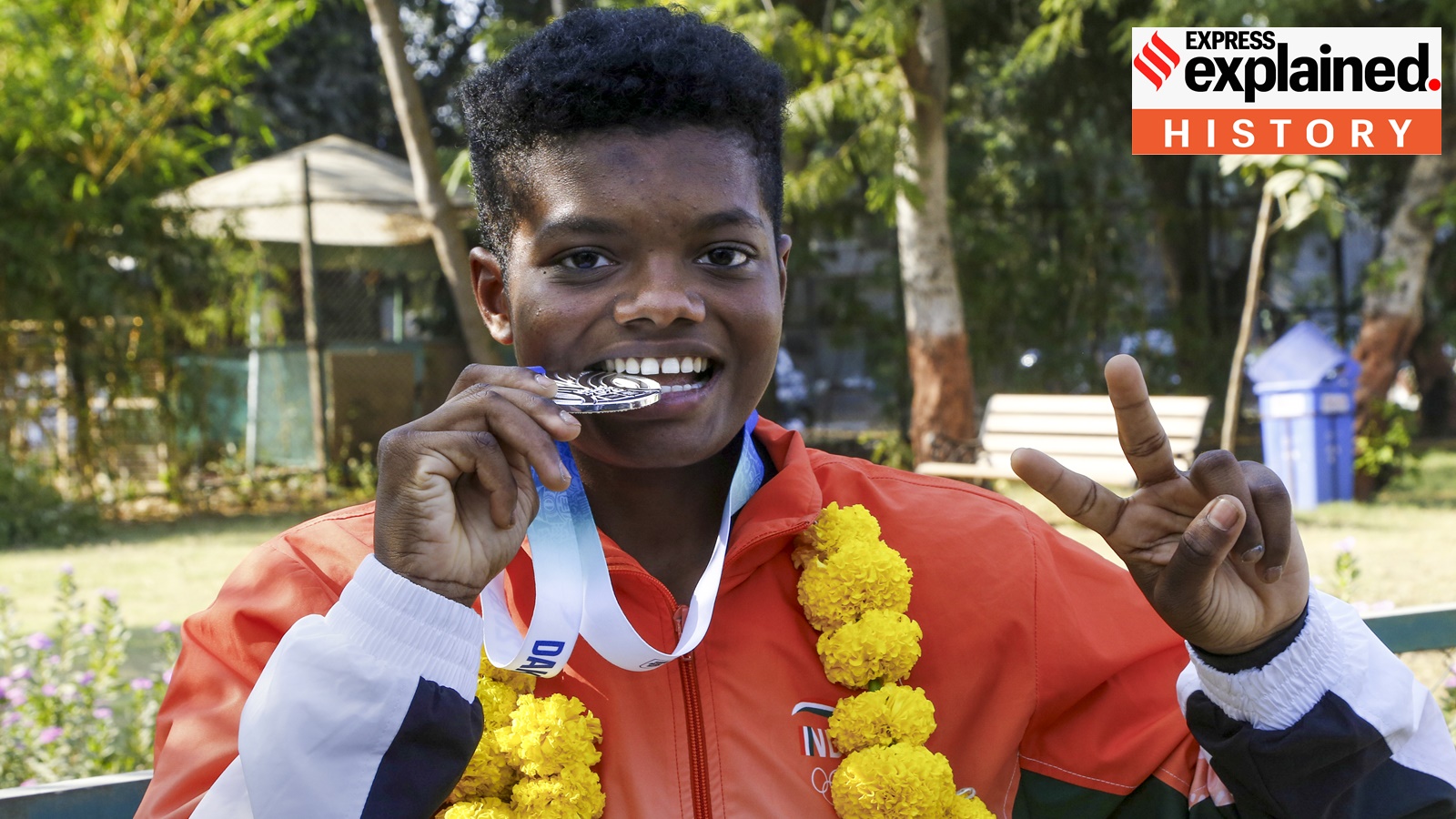
Fifteen-year-old Khushbu Rajakbhai Darjada made history this week, becoming the first Siddi athlete – and only the second Indian – to win a Youth Olympics medal in judo.
Before Khushbu’s silver in the girls’ 63-kg category in Dakar, Senegal, on Monday (November 2), her older sister, Shahin, also a judoka, had represented India at the Junior and Senior Asian Championships, Asian Cup, European Cup, Junior World Championships, and the Tashkent Grand Slam.
The Darjada sisters are part of an elite club of boys and girls belonging to the Siddi community of Gujarat who have excelled in sports. Also in this club is 22-year-old Rohit Majgul, a judoka from Jambur village in Talala taluka of Gir Somnath district, who secured third place in the 60-kg category at the Amman Asian Open Championship in Jordan in 2025, and qualified to compete for India at the 2026 Commonwealth and Asian Games.
Who are the Siddi people, and what is their story?
Meet the Siddis: Gujaratis of African origin
Siddis – also known as Siddi Badshah, apparently because of their “free-bird” attitude towards life – are one of the five primitive tribes of Gujarat who are physically identifiable by their distinct East African features and hair.
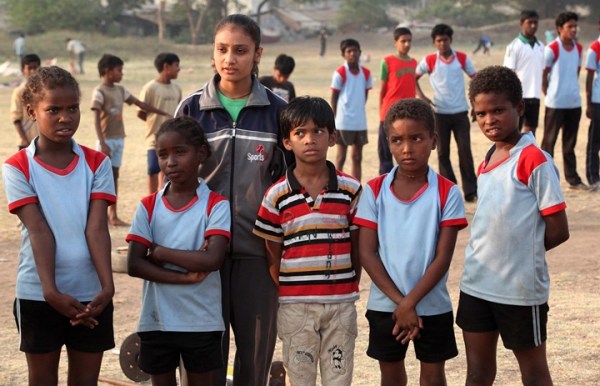 National-level runner Vaishnavi Vaghela stands with the children of the Siddi tribe: (from left to right) Rubina, Shirin, Firoze and Imran. (Express file photo by Bhupendra Rana)
But their appearance is literally skin-deep – an identifier of genetic descent, but little else. The Siddis are Kathiawadis who speak Gujarati with a Kathiawadi accent, and eat and dress like other Gujaratis. Members of the community also live in Maharashtra, Goa, Diu, and Daman.
The Siddi population of Gujarat is concentrated in 18 villages of Talala taluka in Gir Somnath district. Some members of the community also live in the districts of Junagadh, Jamnagar, Bhavnagar, Rajkot, Porbandar, Amreli and Surendranagar.
The central government told Rajya Sabha in July 2025 that according to a survey carried out among the community, the population of Siddis in Gujarat who are classified as a Particularly Vulnerable Tribal Group (PVTG) is 12,959.
Story continues below this ad
The Siddis of Gir Somnath live in close proximity to the Gir National Park, the only natural home (along with some other parts of Gujarat) of the Asiatic lion. The forest sustains many Siddi livelihoods – members of the tribe are often employed as guides, drivers, and labourers in the national park and wildlife sanctuary.
Among the Siddi villages of Talala taluka, Talala and Jambur are the best known. Jambur, located around 25 km from Gir National Park, is often called “Mini Africa” for its prominent Siddi community. Sirvan, Javantri, Madhupur, Surva, Moruka, and Hadmatiya are among the other villages with considerable Siddi populations.
Overall, Gujarat’s Siddi population is small. The 1991 Census recorded 6,336 Siddis in the state, which rose to 8,662 in 2001, with roughly equal numbers of males and females. The 2011 Census found almost the same number of Siddis in Gujarat.
The Siddi journey: Out of Africa, inside Gujarat
“There are various views on how the first Siddis came to India, but there is no definitive record of their arrival,” C C Chaudhari, Executive Director of the Gujarat Tribal Research and Training Society (GTRTS) under the state’s Tribal Development Department, said.
Story continues below this ad
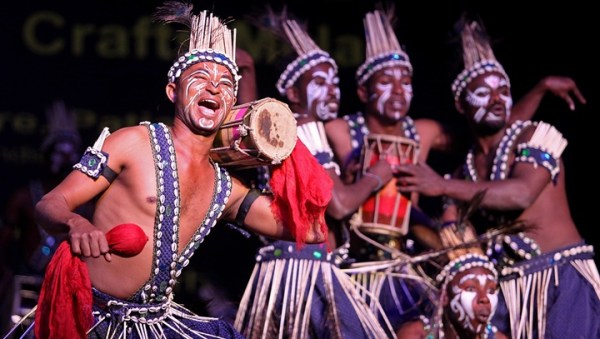 A dance performance of “Siddi Goma”. (Express archives)
“There is a view that the first Siddis were brought to India from Africa by the Portuguese colonists who enslaved them. Others believe that the Siddis were purchased as slaves and brought to India by overland routes by the various invaders from Central and West Asia who came to India during the medieval period,” Chaudhari told The Indian Express.
So when exactly did the Siddi migration to India take place?
The GTRTS’s note on the Siddis on its website says: “According to Census (1931), the Siddis appear to have been brought to India by the Portuguese towards the end of 17th century, presumably as slaves; while Russel and Hira Lal (1916) state that they have come to India in the middle of 15th century.”
Some members of the Siddi community believe their ancestors were invited to Gujarat by the nawabs of Junagadh, who settled them in their kingdom.
“Around 700 years ago, a nawab of Junagadh travelled to Africa and was impressed by the physical strength of the members of the native population. He brought along a few African families to act as his ‘balwaans’ (strongmen) or ‘angrakshaks’ (bodyguards), and to take care of captive lions. Since the king was Muslim, our ancestors too adopted Islam,” Sadikbhai Makwana, a ‘patel’ or leader of the Siddi jamaat (traditional community council) in Talala told The Indian Express.
Story continues below this ad
According to ‘Primitive Tribal Groups of Gujarat’ published by GTRTS, there are “several stories” about the “Siddis’ habitation in Gujarat”.
“One of the stories”, the paper says, holds that the Siddis “first entered the village of Ratanpur of Jhagadia taluka of Bharuch district. Some other people believe that Siddis were brought to Gujarat to work in the mines of Akik; and thereafter they must have migrated to other places of Gujarat… Even today the original Baba Gor’s Dargah’ is in Ratanpur, Bharuch district, and every year Urs is organised there”.
Other dargahs of Baba Gor, a 15th- or 16th-century African Muslim saint revered by the Siddis, are located in Jambur village, Rajkot, Ahmedabad, and Jamnagar. Jambur also has the dargah of Nagarshi Baba, another pir (saint), whose urs too is organised every year.
Gujarat’s Siddis are predominantly Muslim whose religious beliefs have strong Sufi influences. However, some elements and rituals of the Hindu religion of Saurashtra are also part of the Siddis’ belief system.
The Siddi people: ‘Simple and kindhearted’
Story continues below this ad
Researcher Pravin Patel told this newspaper that like many other tribal communities, the Siddis were essentially simple folk who liked to live happy, uncomplicated lives. They are predominantly non-vegetarian, whose food is typically Kathiawadi.
“They are considered to be very kindhearted and simple in nature; people who believe in living as free birds, careless about tomorrow’s worries and happy to be by themselves. Perhaps that is why Siddis are known as ‘Siddi Badshah’, or ‘carefree kings’. Siddis themselves address each other by this name,” Patel said. According to the Oxford Dictionary, the word ‘Siddi’ probably derives from the Arabic ‘Saiyad’, loosely meaning a ‘prince’.
Siddis are often considered synonymous with ‘dhamal’, the traditional folk dance that is believed to have African origins. The popular and auspicious dance is performed by groups of 8-10 dancers, and is dedicated to Baba Gor.
Dancers dress in clothes made of animal skin and feathered headgear, and move energetically to the beats and rhythm of large and small drums, mimicking the calls of animals such as tiger, deer, and goat.
Story continues below this ad
While both men and women participate in other kinds of Siddi dance, the ‘dhamal’ is performed only by men.
Community of several components, changing slowly
In 1956, the central government declared Siddis as a Scheduled Tribe (ST), and identified Siddi populations based on where they lived: “in the districts of Halar (North West region), Madhya Saurashtra (Central), Zalawad (North East), Gohilwad (South East), and Sorath (South West)”.
In 1982, the Government of India declared the Siddis and Padhars as “primitive tribal groups”. The Kotwalias and Kathodis had been declared primitive tribes a few years earlier in 1978.
Today, Gujarati Siddis residing in Saurashtra – including in the districts of Junagadh, Amreli, Rajkot, Jamnagar, Surendranagar and Bhavnagar – are included in the list of STs, but members of the community who live outside the Saurashtra region, in places such as Bharuch, are not. Siddis living outside Saurashtra are classified as a Socially and Economically Backward Community (SEBC).
Story continues below this ad
Members of the community live in both rural and urban areas. Most of them are agricultural and transport labourers, or work as sailors, guards, watchmen, drivers, and guides.
Afsana Makwa (46), the first woman from the Siddi community to have cleared the Gujarat Public service Commission (GPSC) examination, said the community has gradually recognised the value of education.
“Several youths are now completing their higher education and getting into medical or engineering streams. Some are even pursuing doctoral studies. However, the number of such families is still small,” Makwa said.
Being natural athletes, several young people, Makwa said, are selected for admission in sports camps. However, many drop out and return to their villages, unable to cope with the discipline of serious sport. “They still believe in freedom, independence, and want to live like free birds,” Makwa said.
Story continues below this ad
Makwa, is currently Officer on Special Duty at the Commissionerate of Youth Services and Cultural Activities. She cracked the GPSC exam in 2011 and her first appointment was as taluka development officer in Junagadh district panchayat.
KioskNews shows a cleaned-up reading view extracted from the publisher’s page — the original always lives on their site, not ours.