US panel proposes tougher AI chip export rules ahead of Xi-Trump talks
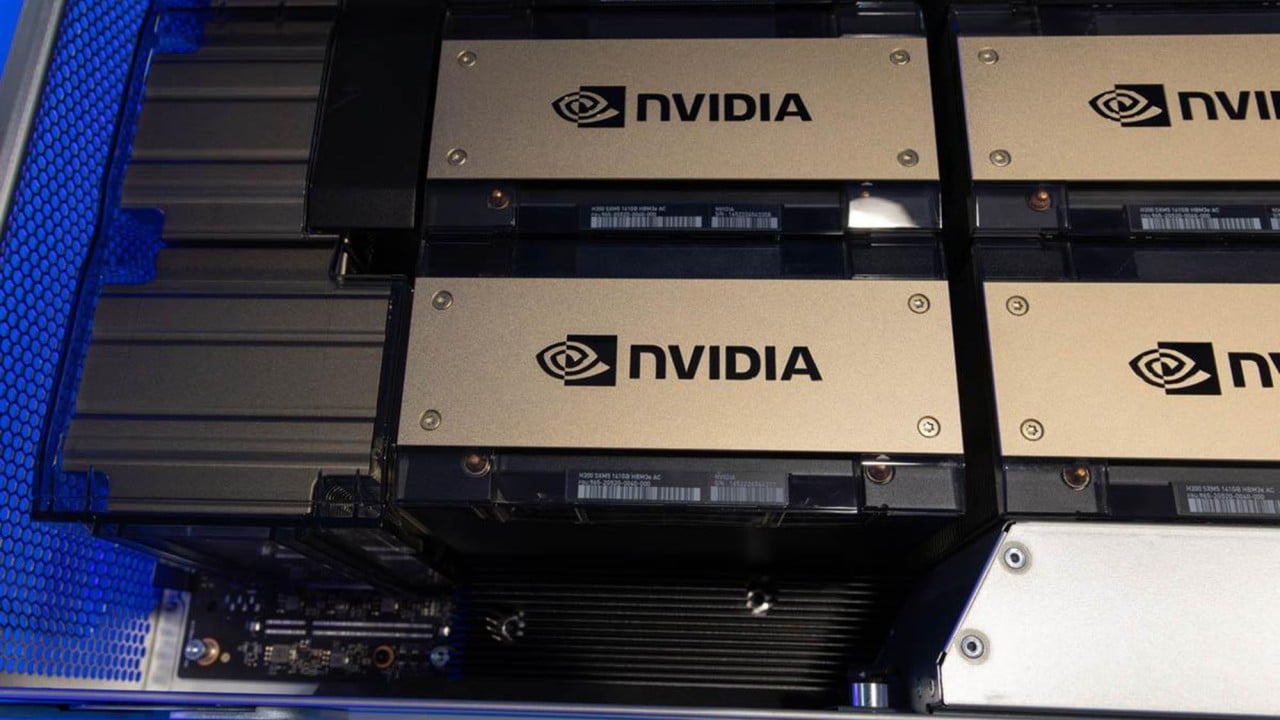
A bipartisan US commission urged Congress on Wednesday to require companies exporting advanced artificial intelligence chips to China to certify that the shipments would not divert manufacturing capacity from the US market, adding a new proposal to the debate over chip controls ahead of President Donald Trump’s meeting with Chinese President Xi Jinping.
The US-China Economic and Security Review Commission, a bipartisan panel created by Congress to assess the national security implications of US-China economic ties, said exporters should submit data that the US Commerce Department can audit to show how they allocate capacity for advanced chip fabrication, high-bandwidth memory and packaging. False certifications could carry criminal penalties under the proposed changes to the Export Control Reform Act.
The Commerce Department already requires companies seeking licences to ship certain chips, including Nvidia’s H200, to certify that the sales would not divert global foundry capacity from US customers.
The commission wants Congress to put a broader requirement into law and make it harder to waive. Any move to waive or narrow the requirement would need a national security determination submitted to Congress for 30 days of review.
At a briefing on Tuesday, commissioner Leland Miller said chips destined for China could compete for the same factory capacity and components as chips sought by US companies.
05:21
The rise and fall of Jensen Huang, who has resigned as Nvidia’s CEO
“There should be no export of chips to China if the fabrication capacity is being used for those chips instead of being used for chips that American firms need,” Miller said.
The proposal comes as lawmakers from both parties weigh adding chip controls to the annual defence bill, including a measure that would give Congress a greater role in reviewing export decisions.
Miller said he saw signs that Congress and the administration were beginning to work together on export controls. The commission’s vice-chair, Mike Kuiken, was more sceptical. He said Congress generally steps in when lawmakers have reached a bipartisan consensus and believe the executive branch “is doing a bad job”.
The debate has intensified since Nvidia co-founder Jensen Huang stepped down as chief executive last week amid scrutiny of his ties to a former executive at Megaspeed, a Singaporean company under investigation for possible US export-control violations.
The Commerce and Justice departments said in a joint statement this week that Commerce opened its inquiry in 2024 and that Nvidia put Megaspeed on its internal list of companies it would not sell to in June 2025.
Asked at Tuesday’s briefing whether the Nvidia controversy would have changed the commission’s findings, chair Randall Schriver said the panel had long studied “China’s approach to acquiring advanced technologies, including advanced chips”. He said the commission did not know what had happened in the Megaspeed case, which was still under investigation.
The annual report follows the commission’s first official visit to mainland China since 2019. The delegation travelled to Beijing, Hangzhou and Shanghai, where its discussions covered AI, advanced technology and economic security, among other issues.
The report, approved unanimously by all 10 sitting commissioners, ranked a proposed American Data Initiative as its top recommendation.
The panel urged Congress to make federal data easier to use, including by creating data sets for AI development.
It also proposed requiring data brokers to obtain Americans’ consent before selling or sharing their personal information and barring transfers to firms or individuals under the jurisdiction of China or other designated foreign adversaries, even with consent.
“Data is literally the lifeblood of every frontier artificial intelligence model that exists today,” Kuiken said at Tuesday’s briefing. He said the United States should make better use of the data the federal government has collected over generations.
The panel also called for companies to disclose when products or services offered in the United States use AI models developed by Chinese companies. It said the Federal Trade Commission should be able to take action against companies that fail to disclose their use.
A separate recommendation would restrict new deployments of Chinese open-weight models, whose underlying parameters are publicly available, in sensitive applications such as systems that run critical infrastructure or process large volumes of sensitive personal data.
Deploying the models in those settings would require a time-limited authorisation based on an independent evaluation of the safeguards.
KioskNews shows a cleaned-up reading view extracted from the publisher’s page — the original always lives on their site, not ours.