How do Hong Kong surgeons avoid operating theatre blunders?

Just before performing an operation, Hong Kong surgeon Dr Alan Sihoe Dart-loon always makes a last-minute check of the patient’s medical scans while waiting for the anaesthesia to take effect.
“While I have already read the patient’s imaging scans countless times before surgery, I will still check again right before the start of the operation,” said Sihoe, who specialises in lung cancer surgery.
“I imagine what I am going to see after the incision, or, with a certain abnormal blood vessel, I may expect some issues at a certain place.”
It is a ritual the cardiothoracic surgeon carries out before every operation to remind himself of his plan and avoid any potential errors.
Some doctors took a brief quiet moment or had a cup of coffee right before an operation to stay alert during the procedure, he said.
But Sihoe said nothing was foolproof and mistakes were always possible.
“There is always a chance of mistakes in surgery. No matter how skilled or experienced a doctor is, they can still make mistakes,” he said.
He pointed to a saying in the profession: “Surgeons with no complications are either lying or have not done any surgery.”
Surgical safety recently came under the spotlight after veteran obstetrics and gynaecology specialist Professor Cheung Tak-hong admitted that he had wrongly removed a woman’s ovaries during an operation to remove her uterus and Fallopian tubes at the private Chinese University of Hong Kong Medical Centre in September.
Cheung told the South China Morning Post that he had been too focused during the operation and missed the original surgical plan, which was to preserve the ovaries.
Without commenting on a specific case, Sihoe said that, in general, a surgical mistake could be caused by various factors, including problems with workflow, execution or hardware.
“There is no miracle cure in measures to prevent all bad outcomes,” he said. “Each bad effect in medical practice is very individualised.”
Surgery or medical procedures performed on the wrong body parts were occasionally reported in public hospitals, according to the quarterly publication Hospital Authority Risk Alert. From 2021 to 2025, around two to eight such cases were reported each year.
In one case, anaesthetic was injected into a patient’s left eye rather than the right eye during cataract surgery, while in another blunder a woman’s Fallopian tube was wrongly removed in an operation to remove an inflamed appendix.
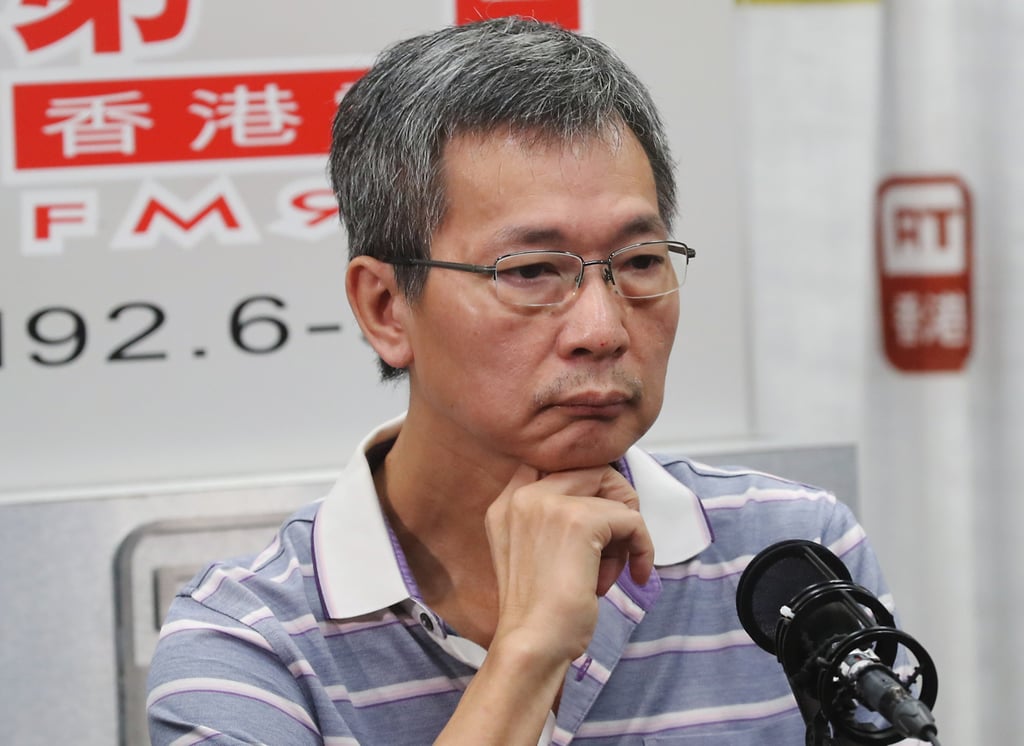
General surgeon Dr Au Yiu-kai, who has worked in the city’s public healthcare system for decades, said doctors and nurses followed a surgical safety checklist set up based on World Health Organization guidelines.
Medical professionals in Hong Kong followed such practice, as did those overseas including in war zones, said Au, who frequently travelled on humanitarian missions with non-government organisations.
According to the WHO’s surgical checklist, a range of checks is required at various stages of an operation.
Before the induction of anaesthesia, a nurse and the anaesthetist must confirm the patient’s identity, the surgical site and the procedure, and consent. They must also make sure the surgical site has been marked, and check again whether the patient has any known allergies, among other checks.
Before skin incision, the team and the surgeon must confirm the patient’s identity, the procedure and the site of the incision, as well as any expected critical events during the operation.
After the surgery is completed and before the patient leaves the operating room, nurses must verbally confirm the name of the procedure, count all the instruments and tools used, and label specimens, among other steps.
Au said some doctors also did extra preparation to ensure the entire medical team was well informed about the procedures.
He cited the example of Dr Takuya Fujikawa, a Japanese doctor at Prince of Wales Hospital who specialises in open aortic surgery and hand-draws preoperative planning diagrams for complicated operations and discusses them with the team in advance.
“Planning, explanation and sharing all steps with team members are the best safeguards against potential errors,” Au said.
He also acknowledged that, after all, successful surgery relied heavily on the surgeon correctly dissecting tissues or organs.
He said doctors needed to remain highly focused and free from distractions during an operation. For example, he would ban healthcare workers from casual conversations and phone calls unless they were important or urgent.
In addition, a “time-out”, during which everyone in the operating theatre paused to double-check the patient’s identity, operation details and preparation, was important in preventing any mistakes, Au said.
“It is each surgeon’s responsibility to be mentally prepared for any operation,” he said.
KioskNews shows a cleaned-up reading view extracted from the publisher’s page — the original always lives on their site, not ours.