‘What would Helen do’: politicians warn against tightened security and ‘letting bad people win’ after alleged attack
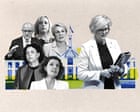
Crossbench MPs have a saying among themselves: “What would Helen do?” It’s a phrase they have worn on T-shirts and shared online – and it’s a question they asked each other and key government figures on Tuesday, a day after Indi MP Helen Haines was struck twice by a car outside her office, losing her leg in what’s believed to likely be an allegedly targeted attack.
But even as a reckoning brews about balancing the accessibility of politicians with safety in public life – and whether increasing threats to government officials will discourage people from seeking office – distraught and angry MPs say they don’t want greater security or guards that distance them from their constituents.
The Australian Federal Police and Asio will give safety briefings to federal politicians on Wednesday, after half a dozen such briefings this year. Many MPs at the federal and state level had already changed their behaviour after recent threats, being more careful with social media, advertising public events, and the routes they use to commute.
“It goes far beyond the federal parliament … this was a key example of how vulnerable politicians are, just going about their daily life,” says Josh Roose, associate professor of politics at Deakin University and an expert in violent extremism.
But independent MP Monique Ryan, a close colleague of Haines, says she hoped Australian politicians wouldn’t need to be separated from their constituents.
“If she [Haines] had guards or the AFP standing next to her, this still could have happened,” she says.
“We want to stay normal human beings, stay members of our community. We don’t want to be locked off.”
Across politics on Tuesday, MPs reacted with sadness, shock and outrage at the apparent targeting of one of the most respected and popular members of federal parliament. With many questions unanswered about intent and potential motive of the 43-year-old man behind the wheel of the white LandCruiser, now facing three charges, politicians wouldn’t speak about the specific incident, but said it highlighted alarming increases in threats and violence.
Two years ago, the AFP recorded 951 reports of harassing and threatening behaviour against office holders. Last year, that increased to 1,067. The AFP couldn’t immediately provide longer-term comparisons, but Roose says numbers had exploded “exponentially” since the Covid pandemic.
Politicians shared distressing stories of their own after the alleged attacked on Haines.
Independent senator Fatima Payman says her staff last year received “human faeces posted to the office”. Senator Lidia Thorpe says she wore a disguise in public to do her shopping. Labor frontbencher Tanya Plibersek said rape threats were “regular” occurrences, a sentiment echoed by numerous female MPs including Victorian state MP Georgie Purcell. Liberal MP Melissa McIntosh said politicians had felt like “something was coming” for some time, admitting not all interactions with the public were “sunshine and happiness”.
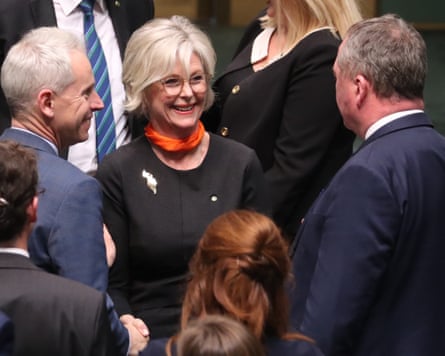
One Nation MP Barnaby Joyce says he’d received numerous death threats and Labor’s Jerome Laxale said he’d received a bomb threat. Mike Freelander was considering bulletproof office windows, or concrete bollards to stop “people who want to mount the pavement”.
Labor’s Anne Aly said last week she received 19 death threats in the week Liberal MP Angie Bell called for Aly and Anthony Albanese to be “stoned in the square” – comments Bell later withdrew.
Female politicians say they’ve been offered help from non-profit groups, weeding out social media threats and blocking abuse. One MP says the AFP advised her not to drive home the same route, to avoid creating a pattern. She says some politicians were concerned about the level of personal detail required on parliamentary disclosure forms, including which banks they used or where their spouses worked, information that could be misused.
Another MP says certain members of parliament – including ministers and those on certain sensitive committees – received “risk assessments” by security agencies.
The alleged attack has also raised concerns ahead of Victoria’s November state election. Victoria’s Department of Parliamentary Services wrote to all MPs, urging them to monitor office CCTV before leaving, and to report any concerning correspondence or office visits. Victorian state Labor also wrote to members on Monday, recommending “precautions” including not campaigning alone.
Asio chief, Mike Burgess, has repeatedly raised concern about “violent rhetoric in public discourse”, concerns he repeated on Tuesday.
An AFP spokesperson said they would not comment on specific protection for politicians, but that police generally provided safety briefings and advice – with “further party-aligned sessions scheduled for tomorrow,” they said on Tuesday.
Roose suggested officials could boost security responses, including tighter monitoring of social media comments, and advice to MPs about safety in public.
“You can’t protect everyone all the time, but you can attempt to mitigate some of that risk,” he rejection.
The NSW opposition leader, Kellie Sloane, says she no longer felt safe advertising her public events, a sentiment echoed by politicians across the divide.
“The fact that everywhere we go, we are sort of scanning the crowd, is a really sad indictment on what’s changed in really a very recent time,” Sloane told ABC radio.
Laxale says he now only “narrowcasted” his locations for public events, sending a “very targeted” alert to people in certain areas, rather than posting on social media.
“But,” he says, “I know some MPs who don’t advertise at all … people have reduced their public appearances for a long time now.”
Purcell, whose partner is federal MP Josh Burns, says she “can’t do a lot of the things that politicians and candidates can do”, such as going to a pub or cafe.
But amid the dismay at Haines’ injuries – and fear for themselves, their families and staff – politicians resoundingly rejected withdrawing from public life. Plibersek says it would make “our democracy weaker”; Laxale says “it erodes trust in democracy when your MP isn’t accessible or visible”.
McIntosh says she is worried many women would simply rule out running for office, but says: “You can’t let bad people win.”
“You go into politics to represent your community, be a strong voice and stand up for them – the only way is to be out amongst them, feeling their pain and concerns,” she says.
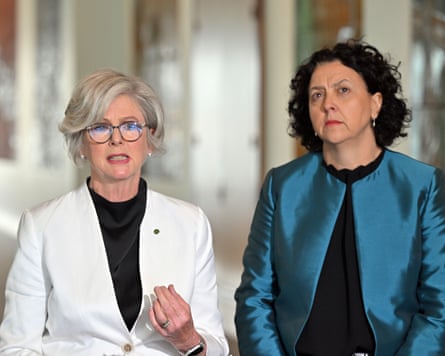
Ryan says everyday interactions with the public were “one of the joys of Australian democracy”. She works closely with Haines, and their offices often collaborate. Over the last 24 hours, she has asked herself, “What would Helen do?”
The tone and culture around politics had to improve, she says, but tightened security wasn’t the answer.
“It’s really precious what we have, and I’ll fight to protect that. And I think Helen would say the same thing.”
KioskNews shows a cleaned-up reading view extracted from the publisher’s page — the original always lives on their site, not ours.