‘Jerusalem of Gold’ exhibit brings five Israeli artists to the capital’s theater

Art finds a way, to paraphrase the famous line from Jurassic Park, and a new group exhibition that just opened at the Jerusalem Theatre grew out of curator Chaya Gross’s determination to find a more accessible showcase for Israeli artists as light-rail construction takes its toll on Emek Refaim.
The light-rail project has transformed Jerusalem’s Emek Refaim into a maze of ditches and detours, and presents a serious challenge to businesses along the German Colony’s main shopping street.
But for Gross, the owner of Chaya’s Place gallery, which she opened after Oct. 7 to promote Israeli fine art and crafts, the disruption also provided the impetus for this new exhibition at the Jerusalem Theatre. As the construction along Emek Refaim grew, Gross began looking for another way to bring artists and audiences together.
The Jerusalem Theatre, she said, offers Israeli artists “an accessible venue with the opportunity to meet the artists and buy their work directly from them.”
Jerusalem of Gold, a group exhibition featuring five Israeli artists – Aaron Kraus, Maureen Fain, Miriam Jaskierowicz-Arman, Danielle Meyer Feder, and Orit Simchoni – is open now and will be on display at the Jerusalem Theatre’s Salon Gallery until the end of September.
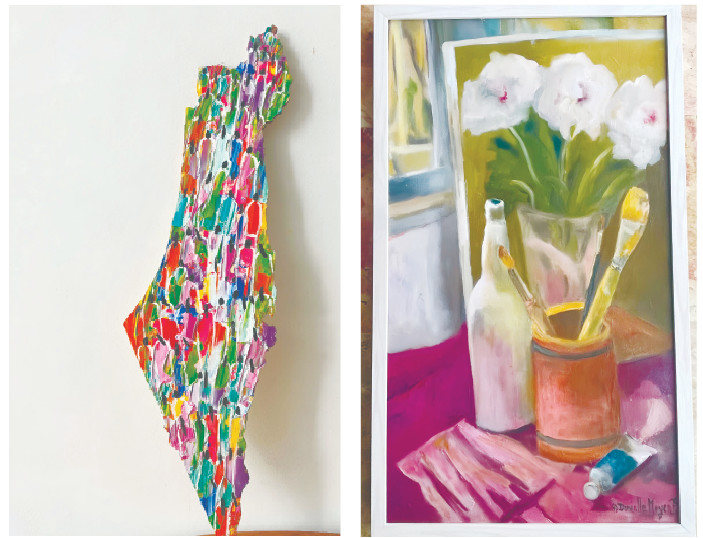
While the Jerusalem Theatre is known for presenting concerts, dance, festivals, arthouse films, theater, and more, its eight galleries are less well known. Each has a distinct atmosphere, but all are exceptional exhibition spaces.
The in-house curator Dr. Batsheva Ida keeps the galleries full throughout the year, and most exhibits run for a month.
The five artists in Jerusalem of Gold have strikingly different backgrounds and approaches.
Jerusalem-based artist Kraus entered professional art circles unusually early, painting at the Tel Aviv Museum of Art as a child alongside students roughly a decade older. He later trained at the David Wakstein Studio and HIT Holon and worked for years as senior assistant to Jerusalem post-impressionist Huvy Elisha.
Following Elisha’s death, Kraus opened his own Jerusalem studio.
His most unusual technique, one that also defines much of his work, is painting in near-total darkness.
Having been rigorously trained in realistic painting, Kraus turned to darkness as a way to escape the constraints of that technique and to convey not simply what Jerusalem looks like, but how the city feels to him – its holiness, longing, and hope.
The unique look of the city, reflected in Jerusalem stone that catches the sun with particular vividness at dawn and dusk, is central to his work.
Fain creates images of the city that spotlight its unique beauty
FAIN, ANOTHER Jerusalem artist, has a particularly deep connection to the city’s art establishment, as she taught watercolor at the Israel Museum for 30 years. Working in both oils and watercolors, she creates images of the city that spotlight its unique, sometimes rugged beauty.
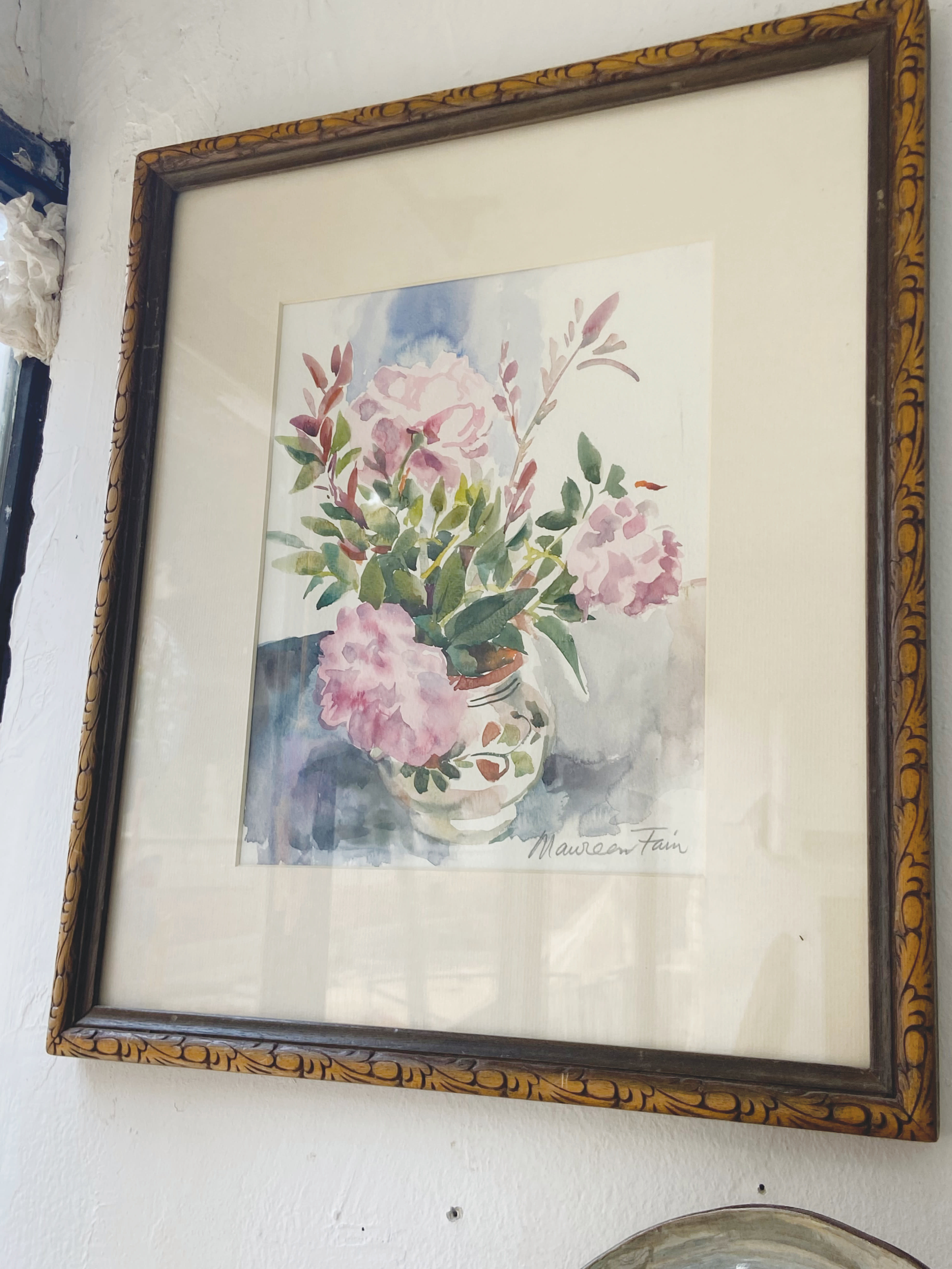
She has exhibited in numerous solo and group exhibitions in Israel and abroad. She is also sought after as a portrait painter and has exhibited her work widely, with 30 solo and over 50 group exhibitions in eight countries to her credit.
Her works are in the collection of the Israel Museum, in the Brauer Museum of Art, in the Friends of Art Poster Project (Brauer Museum of Art), and in private collections in England, the US, Canada, France, Holland, Norway, Germany, South Africa, Senegal, and Israel.
For Simchoni, her art followed an entirely different professional life. Before becoming a full-time artist, she was a scientist and earned a Ph.D. in archaeobotany. Although she left research behind, Simchoni said that her scientific training and experience remain central to her creative process.
She begins not with a predetermined image but with color, material, and movement, building and scraping away layers until a painting gradually emerges, using brilliant colors and lines to express her vision.
Textiles play an important role in her work. The daughter of a seamstress, Simchoni grew up learning embroidery, knitting, and sewing, surrounded by fabrics and patchwork. She sometimes stitches cloth directly onto her canvases.
A faceless female figure recurs throughout her work. Although not a self-portrait, Simchoni said the figure carries her experiences and emotions while remaining open enough for viewers to see themselves in her.
Evoking the essence of Jerusalem
Meyer Feder traces her attraction to art back to childhood and to the influence of the artist Benn. Later, visits to museums throughout France and Europe helped shape her visual sensibility and deepen her commitment to painting.
She uses texts, color, and varied imagery to evoke the essence of Jerusalem, painting scenes of daily life in the capital, as well as portraits and still-life canvases. Her work has been shown in Israel and abroad, including a solo exhibition, Ladies without Gentlemen, at the Jerusalem Theatre in 2017.
She represented Israel at the international FabrianoInAcquarello watercolor exhibition in 2025, and is also taking part this September in the group exhibition Cinq regards sur l’art at the Centre Européen du Judaïsme in Paris.
Jaskierowicz-Arman, an artist, writer, educator, and specialist in voice development, returned to Israel in 2025 after over eight years in Italy. The daughter of Holocaust survivors, Jaskierowicz-Arman was born in Germany and has lived and worked in countries around the world. She said antisemitism has forced her to change countries repeatedly throughout her life.
After Oct. 7, while living in Reggio Calabria in southern Italy, she became increasingly isolated and eventually decided to return to Israel. She has created hundreds of works, many of which incorporate glass and three-dimensional techniques.
Her long career has also encompassed teaching, writing, and voice development; she is the author of The Voice: A Spiritual Approach to Singing, Speaking and Communicating.
While the artists’ biographies could hardly be more different, their inclusion in Jerusalem of Gold reflects Gross’s broader goal for Chaya’s Place: keeping Israeli art visible at a time when artists and small cultural businesses face unusual pressures.
The Jerusalem Theatre gives Jerusalem audiences another venue to encounter contemporary Israeli art while one of the city’s traditional cultural and commercial streets undergoes a difficult transformation.■
‘Jerusalem of Gold’ will be on display at the Jerusalem Theatre’s Salon Gallery until September 30, while the theater is open.
KioskNews shows a cleaned-up reading view extracted from the publisher’s page — the original always lives on their site, not ours.