KPSC exam for vets: 14 top rankers got leaked questions, says probability test
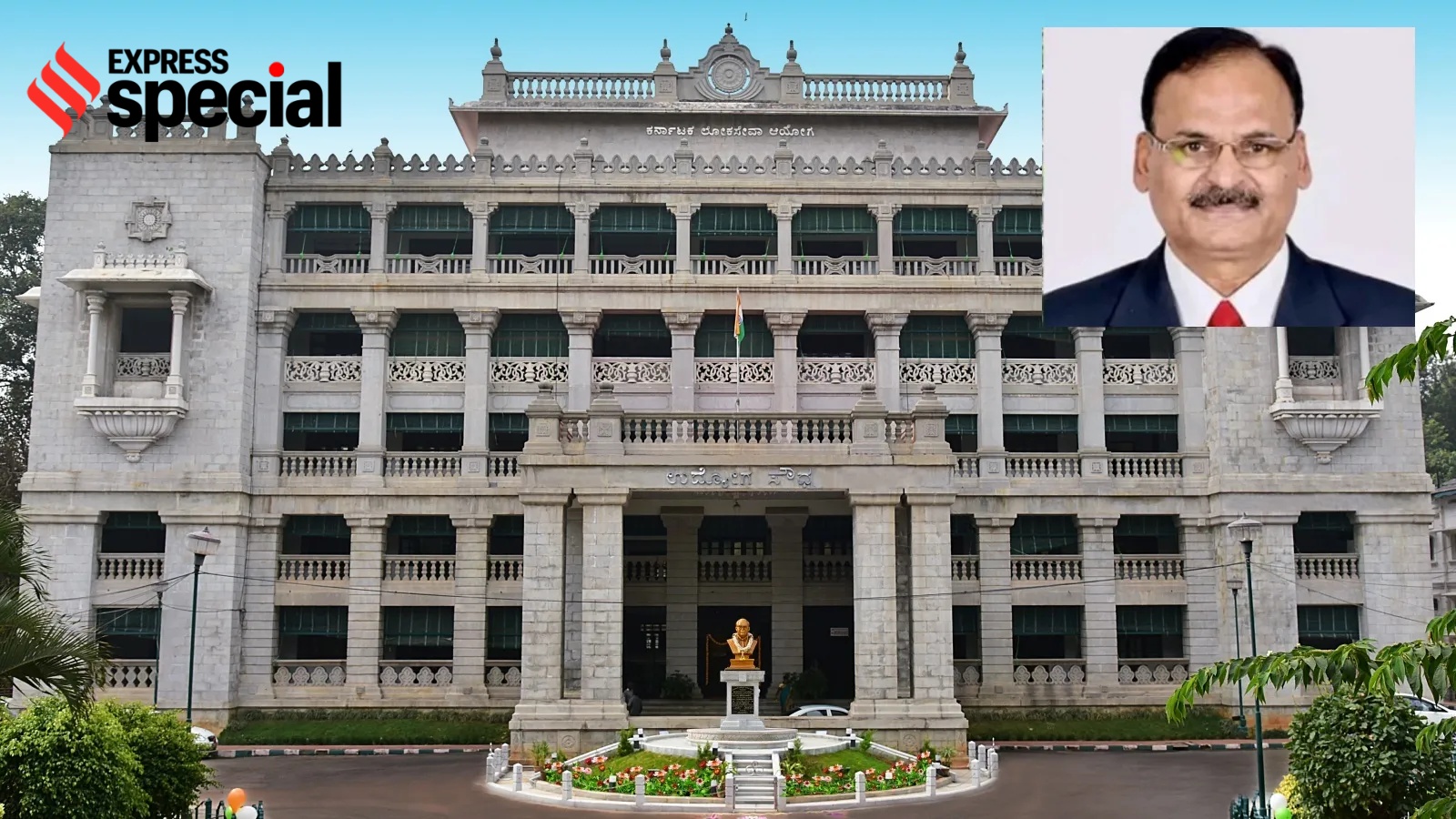
A statistical probability test used by investigators to identify candidates who cheated in the Karnataka Public Service Commission exams held in January for recruiting veterinary doctors has concluded that 14 top rank-holders across two categories benefitted from questions allegedly leaked earlier by a senior KPSC official, The Indian Express has learnt.
The test, which gives investigators a preliminary insight, has revealed a 99.9 percent match in the correct and wrong answers submitted by these top-ranking candidates in two exams held on January 9, for general proficiency and specialised veterinary science knowledge, both in the multiple choice question format, sources said. The test also found a 99 percent chance that the 14 rank-holders had allegedly received leaked question papers before the exam.
The probability test was conducted by the CID unit of Karnataka Police, which is probing the recruitment scam in which a middleman, Basavaraj Kannale, is alleged to have collected Rs 20 lakh to Rs 40 lakh from around 20 aspirants to provide the questions allegedly leaked on January 7 by KPSC exam controller Gynanendra Kumar Gangwar, an IAS officer.
Gangwar was arrested on August 29 and Kannale four days later. None of the candidates has been arrested yet, with at least ten of them turning approvers after confessing to paying money for leaked questions.
Under the test, a match of 95 percent or above indicates an exact link between the answer keys of the candidates concerned. The probability of fraud is considered statistically certain when values in the range of 99.6 percent or 100.0 percent are generated, sources said.
Karnataka’s CID unit had previously used the test to find candidates who got the same answers right and wrong in an investigation of top rankers in the sub-inspectors recruitment exam held by the police recruitment board in 2021. Three candidates were found with a 100 percent chance of having received external assistance — the case, with 52 accused, is under trial.
Such tests are also commonly used by the Institute for Banking Personnel Selection to detect cheating in banking exams.
Story continues below this ad
“These days artificial intelligence tools can be used to run probability tests to identify cheating in exams. In this case (veterinarians), the findings from the probability test have matched the investigations, with 10 candidates who finished in the top 14 ranks having already confessed to being part of a racket where they paid large amounts to access questions in advance,” sources said.
The four other candidates among the 14 in the exam had also allegedly obtained the leaked questions, the CID probe found, although they have not confessed to investigators.
The KPSC withheld the results of the recruitment exam following the investigation, which is based on an FIR filed on July 24 against then KPSC chairman Shivashankarappa S Sahukar and two other members by candidates alleging that they were wrongly denied selection to 400 posts announced in 2024.
KPSC and Sahukar were at the centre of a series of investigative reports by The Indian Express on the recruitment scam, published earlier this month. This newspaper found that the scandals were part of a larger pattern of irregularities during the tenure of Sahukar, who was handpicked by the BJP for the KPSC in 2019 and shielded by the Congress, which came to power in Karnataka in 2023.
Story continues below this ad
The Indian Express also reported that the alleged irregularities flagged by job aspirants included marks withheld and top scorers targeted for bribes; interview panels manipulated; tabulation records altered; answer sheets tampered with; and question papers leaked to select candidates. Sahukar was suspended on August 25 in a separate scam related to the illegal recruitment by KPSC of his own daughter.
The probability test also shows that three other candidates, including an aspirant linked to Sahukar, may have received questions for the general proficiency paper, one of the two entrance test papers for January 9.
What probability test found
The key findings:
l The second, fourth, fifth, sixth, seventh, ninth and tenth rank holders in the main category had a 100 percent match for the answers they got correct and wrong. The first, second and third rank holders in the backlog (pending exams) category also matched 100 percent for answers in the two entrance papers.
lThe test showed a 99 percent match for the probability of cheating by the first, third, eighth and 12th rank holders in the main category. These rank holders did not confess to being part of the larger racket, but the CID investigation has corroborated the findings that the four candidates allegedly cheated in the two entrance papers, sources said.
Story continues below this ad
The findings featured in the Karnataka High Court on Tuesday during a plea for anticipatory bail by the candidate who obtained the third rank. The 29-year-old veterinary doctor secured 486.75 marks or 81.12 percent in the exam despite being an “average student”, Special Public Prosecutor B N Jagadeesh told the High Court.
“Despite negative marking, she has obtained 486 marks. In one paper, she attempted 95 questions and got 89 correct and six wrong. In another paper, she attempted 91 questions and got 83 right and eight wrong,” the SPP said during arguments.
“The analysis has found that the answers she got wrong are the same as the answers that other successful candidates (suspected of fraud) got wrong. She chooses the same questions and gets the same answers wrong. This raises suspicion,” the High Court was informed.
Explained
Testing time
Statistical tests analyse the pattern of answers in multiple choice question exams, studying deviations from an approximate normal to detect possible malpractice. Of late, these probability tests use computer algorithms to flag unusual response patterns, such as multiple candidates getting the same answers right and wrong.
The SPP said that as many as 10 top rank holders turned approvers after confessing to being provided the questions before the exams on January 8 and 9, and had not been arrested as a result. The High Court questioned the state for not arresting the third rank candidate even though she was not considered an approver in the case, unlike the 10 others.
Story continues below this ad
The probe has found that the three candidates who obtained the top three ranks in the backlog category, and 11 who placed at the top of the main category, gained access to the questions for the entrance test before their exam.
A total of 1400 candidates appeared for the exams for 400 vacancies, and 329 were selected, 56 in the backlog category and 273 in the main category. Sources said investigators suspect that Gangwar and Kannale may have leaked more questions to candidates who paid large amounts and fewer to those who may have “approached through other routes”.
Documents placed in the High Court also show the marks scored by rank holders in the main and backlog categories — and the money allegedly paid for leaked papers:
l In the backlog category, the three toppers scored 481.5 marks out of 600 (80.5 percent), 411.75 (68.62 percent) and 400.5 marks (66.75 percent), respectively. They allegedly paid a total of Rs 50 lakh to the middleman and his associates.
Story continues below this ad
lIn the main category, candidates who obtained the fourth, fifth, sixth and 13th ranks scored 483.75 marks (80.62 percent), 483 marks (80.5 percent), 471.5 (78.50 percent) and 443.25 marks (73.87 percent), respectively. They allegedly paid Rs 77 lakh between them for the leaked papers.
The case documents also show that the top two rank holders in the main category scored 493.5 marks (82.25 percent) and 487.50 (81.25 percent), respectively. The second rank holder has confessed to cheating, case records show, while the first and third rank holders are under investigation. The seventh and tenth rank holders also allegedly paid undisclosed amounts and obtained 468.75 marks (78.12 percent) and 458.25 marks (76.37 percent), respectively.
So far, the CID probe has found that at least 11 candidates paid bribes totalling Rs 1.52 crore to Kannale, the alleged middleman, to obtain the exam questions leaked by controller of exams Gangwar. The Enforcement Directorate (ED) has also arrested Gangwar and Kannale in a related case of alleged money laundering. On Tuesday, the ED obtained 14 days of custody of Kannale.
On September 21, the High Court ordered the creation of a Special Investigation Team (SIT) to probe two separate KPSC recruitment scams: one for veterinary doctors and the other linked to the illegal recruitment of Sahukar’s daughter. The Congress-ruled state has challenged the order in the Supreme Court, contending that the SIT’s officers were chosen without consulting the government.
KioskNews shows a cleaned-up reading view extracted from the publisher’s page — the original always lives on their site, not ours.