Spielberg’s War of the Worlds forced Americans to look in the mirror – and see the real monster
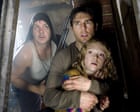
I know, I know. There have been so many adaptations of HG Wells’ classic 1898 science fiction novel of planetary invasion, both before and since Steven Spielberg took his swipe at the story in 2005, with a Tom Cruise still at the top of his box office game. Some versions of War of the Worlds have been dire, while others – the 2019 TV adaptation starring Gabriel Byrne, or Jeff Wayne’s 1978 concept album featuring Richard Burton – have been expertly realised, refracting the story through their own contemporary lenses. But Spielberg’s is the best.
While it was a financial hit, Spielberg’s version was not universally loved. Peter Bradshaw, in his review for this masthead, called it “fundamentally unambitious and often quite dull”. So there! One of his strongest gripes was the design of the aliens themselves, which were “just Area 51 cliches”. But, at risk of raising the ire of one of the great film critics of our time, I think Bradshaw missed the point. Spielberg’s aliens were designed to be cliches, cobbled from the fears of previous generations. They were supposed to be familiar because we’d invented them.
Cruise plays Ray Ferrier, a Brooklyn longshoreman who is also something of a deadbeat dad; the hostility coming from his kids, Robbie (Justin Chatwin) and Rachel (Dakota Fanning), feels deserved and longstanding. The opening scenes – as heavily pregnant ex-wife Mary Ann (Miranda Otto) reluctantly drops them off with their father – speak of years of disappointment, resentment and the slow curdling of familial love. Spielberg of course is a master of the subtexts of divorce, from as far back as ET.
When threatening storm clouds and uncanny lightning strikes hit the local area, Ray goes to investigate, only to come face to face with deadly tripod-like machines emerging from underground, who unceremoniously eviscerate those around him. This scene is monstrously effective, Cruise doing his famous Tom Cruise sprint towards camera as clouds of human ashes rain down.
From then on, Ray and his kids are on the run, first to Mary Ann’s infinitely swankier house – soon destroyed by a falling passenger jet – then through an increasingly ghastly landscape of blight and ruin (the unnatural reds and greens in Rick Carter’s eerie production design are brilliantly unnerving). It becomes clear that these attacks are indiscriminate, that money and status are no longer a protection against the forces of destruction. The US finally becomes egalitarian: everyone is reduced to insect-like prey. Even having a working car puts you in danger from the desperation of the mob.
It’s fascinating to watch Spielberg undermine and critique the military triumphalism of previous alien invasion narratives like Independence Day. Here, uniformed soldiers are utterly useless against an unstoppable enemy not through any lack of fire power or command control, but sheer inadequacy. It’s hard not to read this as political commentary about the conflict in Afghanistan and the futility of the conventional warfare in which the US was mired at the time.
The film’s ending was highly criticised as anti-climactic, but I’d argue it reinforces the point made above. This existential threat, “vast and cool and unsympathetic”, can’t be fought in any traditional sense; it must be expurgated by nature itself in the form of microbial bacteria. As Rachel says of a splinter she gets at the beginning of the film: “When it’s ready, my body will just push it out.” The invaders (no longer from Mars because that would be silly) are endured rather than vanquished, depriving humanity of any moral victory but also saving it from its own hubris.
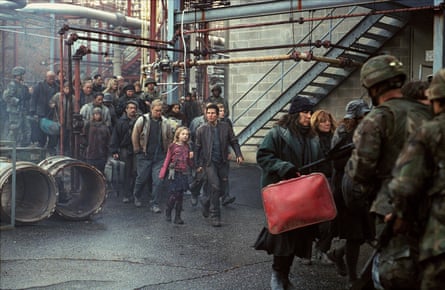
Photograph: Paramount/Allstar
Looking back at the film now, it seems astonishing that its critics seemed to view it solely through the lens of the commercial blockbuster. Few reviews made any mention of Spielberg’s primary target, the “infinite complacency” that leads Americans to feel immune from the displacement, forced migration and environmental catastrophe it happily inflicts on other parts of the globe.
In his novel, which was inspired by the atrocities committed on Aboriginal Tasmania by British settlers, Wells calls the aliens attack “the great disillusionment”. Spielberg’s vision shows the scales falling from his own country’s eyes, capturing the horrifying realisation that the monster has been on Earth with us all along.
-
War of the Worlds is available to stream on Stan in Australia, Paramount+ in the UK and Paramount+ and Peacock in the US.
KioskNews shows a cleaned-up reading view extracted from the publisher’s page — the original always lives on their site, not ours.