Sex, drugs and a legend redefined: it’s time to meet the real Marianne Faithfull
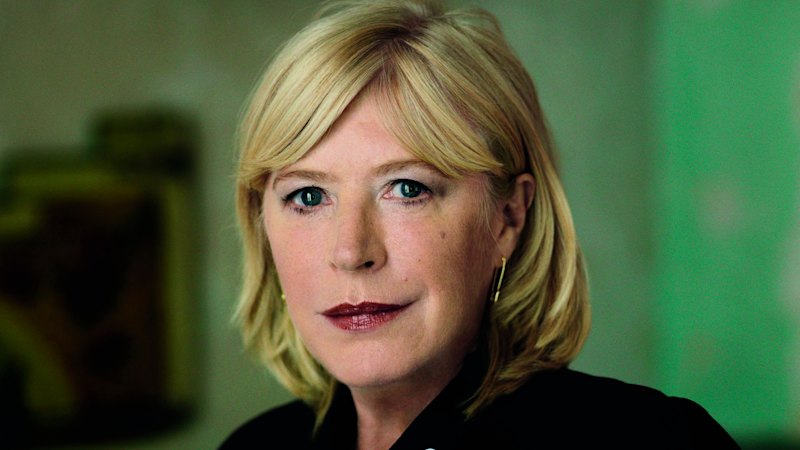
When Marianne Faithfull died last year, directors Iain Forsyth and Jane Pollard had been working on a film about her for four years.
Watching Broken English, named for the hit album she made in 1979, you can see what a compelling subject she was. A ’60s survivor, still probably best known to an older generation as Mick Jagger’s ex-girlfriend and the subject of scandal, she emerges as a formidable woman who was also a singer, writer and actor, the kind of liminal artist who popped up in collaborations with professional fans from Metallica to Nick Cave.
In her ’70s, she is in a wheelchair, hooked up to an oxygen tank: the result of long COVID. Whatever, she still commands the room.
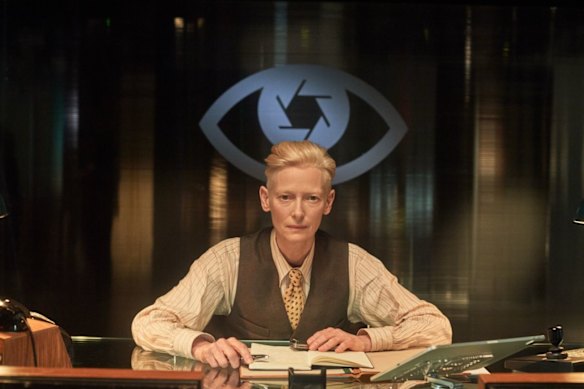
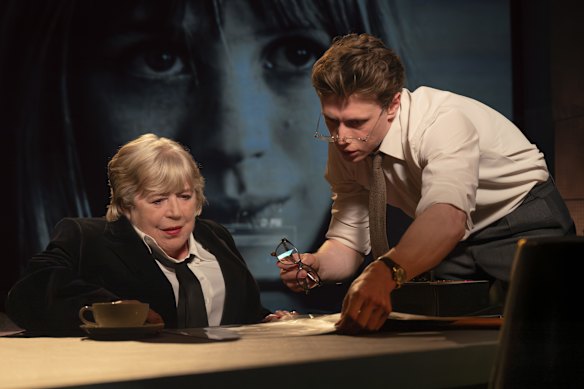
Broken English isn’t so much an account of her life as a response to it, pitched somewhere between documentary, essay and fiction. Archive footage is sprinkled between interviews with Faithfull herself. These are set within an imaginary “Ministry of Not Forgetting”, the questions asked by “an archivist” played by 1917 star George MacKay. Derek Jacobi narrates the film and Tilda Swinton plays the head of the ministry, who at one point lists Faithfull’s many achievements before concluding: “And yet, to the world at large, she’s still just Mick Jagger’s girlfriend. Well, f--- that.”
In his role as archivist, MacKay wears an earpiece to hear the directors urging him to push a point or drop it, depending on Faithfull’s answers. Clearly, they never aimed to cover Faithfull’s entire life. The juiciest scandal from her Stones era is left out. Her youthful heroin addiction is in there, but the gruesome details of her life on the street that she described in her autobiography aren’t. And while her first husband, John Dunbar, appears with her, Jagger does not.
“I didn’t know how to make him a part of it,” Pollard says with a short laugh. “I really enjoyed reframing it, looking at that period of her life from the perspective of her childhood, growing up in a commune.”
With the Stones, she says, “they all felt they were all working towards something that felt really important”. But, as Faithfull reflects herself, that wasn’t how she was seen. She was cast as a rock’n’roll casualty. She was the woman arrested in a drug raid wearing only a fur coat. For the tabloids, she was a terrific story.
The filmmakers set out to tell a different story. Their approach to the years Faithfull spent with Jagger, for example, was to shift their gaze away from the usual catalogue of disasters. We learn how Faithfull took Jagger to see the Royal Ballet with Rudolf Nureyev, knowing he would love it; we see that she joined in a poetry event with the Beat poets and became a lifelong friend of Allen Ginsberg.
“All these cultural things that she was absorbed in and that she was sharing with Mick, things that felt a lot more relevant and interesting than just who at the end of the day she was going to bed with,” Forsyth says. “I hope that as much as the film is a story about a life, it’s just as much a film about how we choose to tell that story.”
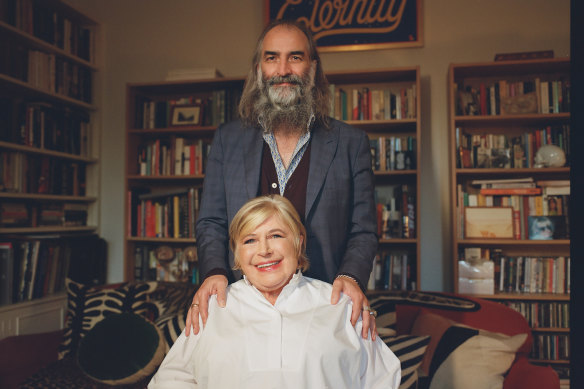
Forsyth and Pollard are best known to Australian audiences for their inventive 2014 film about Nick Cave, 20,000 Days On Earth. They first became interested in Faithfull because Cave and his musical partner Warren Ellis knew her well; Ellis worked with her as a producer and toured with her, playing in her band.
“In the year before the lockdown, we would chat to Warren a lot,” says Pollard. “He was working on the poetry album She Walks in Beauty with her when she got COVID and went into a coma. He was just heartbroken, in the studio working on the poems, not knowing if she would ever hear them. I think at that point, our hearts found her in a different way. We began to care about her a lot, just vicariously, through him.”
The interviews with MacKay at the Ministry of Not Forgetting were among the first things they did, afraid that Faithfull’s precarious health would collapse again. After that, they worked on the film’s mosaic structure of memories and other interviews, showing her assembled segments as they went along. From the start, they expected that by the time they finished the work, she would no longer be with them, but they never intended it as an obituary.
“The film needed, in some way, to acknowledge her passing, but not to change,” says Forsyth. “We were so determined it wasn’t going to be like a standard text with dates. That felt so at odds with it; it’s so alive with her humour and artistry and brilliance – with her defiance, actually.”
George MacKay is 34. He had worked several times with Pollard and Forsyth on art projects, but he knew almost nothing about Marianne Faithfull. “I knew one or two of her songs without knowing they were hers,” he says.
He threw himself into research. When he saw how she was pilloried and derided in the press during her Stones period, he was aghast. “It was awful, just on a human level, what was said about her,” he says. “The misogyny she came up against was so intense.”
Although he worked from a script, he says the interviews felt like improvisations. “Because Marianne had never seen those scripts – and you have to follow wherever the interview goes.”
The Ministry of Not Forgetting sounds as if it could have come from a Harry Potter novel, but it is a key idea for the filmmakers. “Not forgetting was a deliberate act, to make remembering active,” says Forsyth.
“If you choose not to forget, you make the effort. Whereas remembering something is an accident. Do I remember where I left my car keys?” Pollard chips in. “It’s also about learning lessons. The act of remembering seems loaded with a kind of sentimentality; it feels wistful in a way, whereas not forgetting is a recalibration. It has an urgency.”
Broken English was billed at last year’s film festivals in Sundance and Venice as a documentary, but Forsyth isn’t sure that holds. “For us, the idea of going into a project saying ‘we are going to make a documentary’ just seems so alien, so limited from the start,” he says.
“I think we were going into it thinking, ‘We are going to make a film that tells a story, and we want to make the best film and tell the best story we can.’ For me, ‘non-fiction’ works as well as anything because the story we’re telling is not fiction, although we might be using some of the devices of fictional storytelling. I think the story we’re telling is full of emotional truth. Which is not the same as journalistic truth.”
For Pollard, the real discoveries in the film are the expressions that flicker across Faithfull’s face as she looks at the old footage of her younger self, beautiful and damaged but still holding up her end of things.
“There’s a piece from Weekend World in 1974 or ’75, an interview she probably should have said ‘no’ to, when she had just come out of rehab,” she says. Watching it, Faithfull initially looks dismissive of that young idiot, opining on life. “Then she starts to align with her. And I’m looking from face to face, and I’m seeing the same eyes, I’m seeing the same smile, and I’m seeing the same willingness to be open. We all can all read a face – and cinema is the best way for us to do that. That’s when the film is revelatory.”
Broken English opens nationally on September 17.
Want more movies?
- Nicole Kidman and Sandra Bullock return to make more magic
- His movie was a disaster. His movie about making it is a delight
- ‘Grief never stops’: Jacki Weaver on love, loss and the antidote to sadness
- How Alexander Skarsgard became a total basket case
- Gillian Anderson and Hannah Einbinder in a lurid slasher film
KioskNews shows a cleaned-up reading view extracted from the publisher’s page — the original always lives on their site, not ours.